
Shinestriker
Uncommon · Creature — Elemental · At the table
A green deck can cast a green-white hybrid creature and gain white for vivid without playing Plains.
The set’s mechanics with worked examples, then every word on the cards.
Vivid abilities count the distinct colors among permanents you control.
A green deck can cast a green-white hybrid creature and gain white for vivid without playing Plains.
To blight N, put N -1/-1 counters on one creature you control.

An expendable token can absorb the whole blight cost, preserving the attacker you want to keep.
A card with changeling has every creature type in every zone.
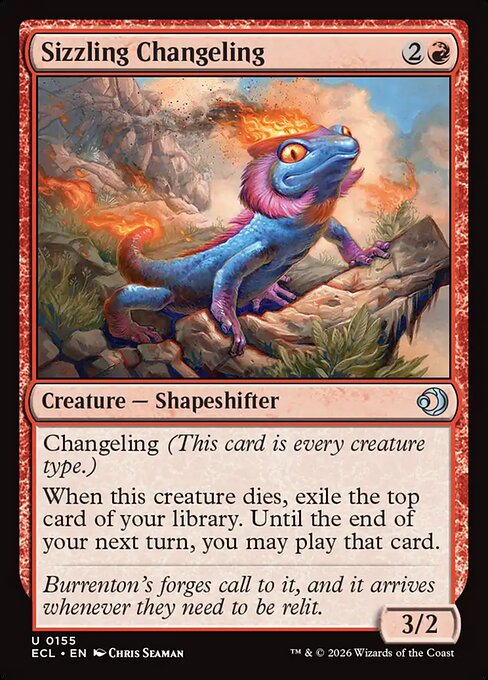
A changeling in hand can satisfy the appropriate behold requirement.
Kindred lets a noncreature card have creature subtypes.

Separate “Goblin” counts from “Goblin creature” counts when checking a payoff.
Cast the front face. A transform instruction changes the battlefield permanent to its other face.
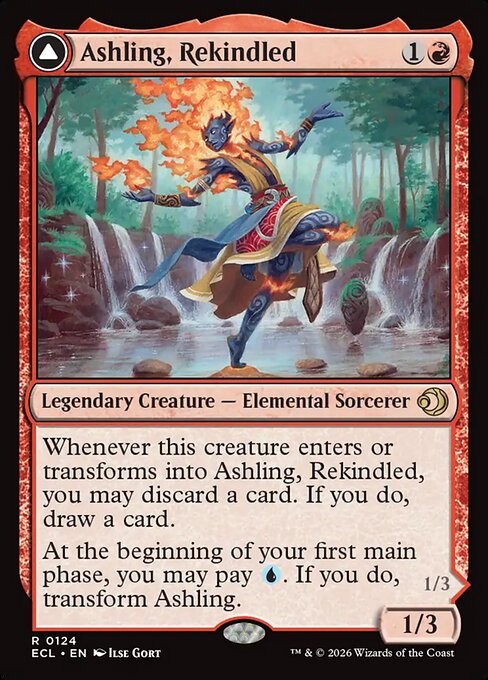
Choose whether to pay the first-main-phase trigger with the mana needs of the coming turn in mind.
Tap creatures while paying for a spell to pay one generic mana, or one mana of a tapped creature’s color, per creature.
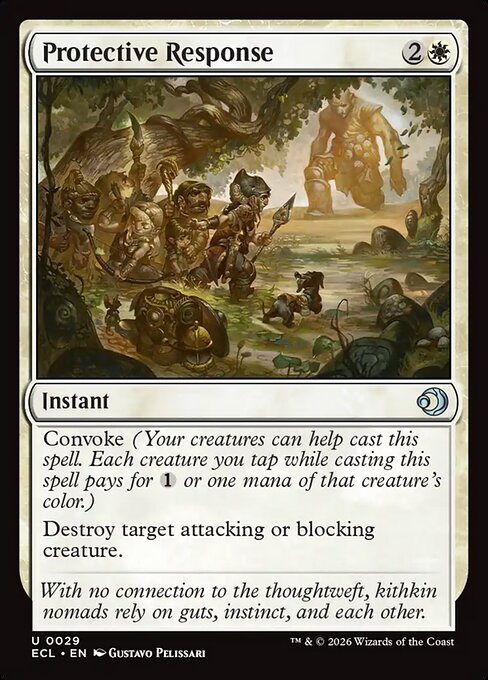
Declare blockers first, then use an untapped blocker to help cast Protective Response.
Choose a matching permanent you control or reveal a matching card from your hand, following the printed requirement.
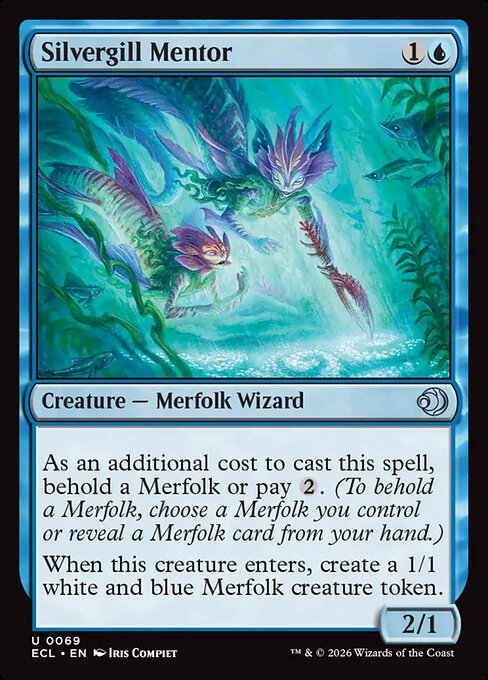
Reveal another Merfolk to cast Silvergill Mentor without paying its extra two mana.
Cast for the alternative evoke cost; when the permanent enters, an ability makes you sacrifice it.

Use evoke when the immediate enter effect is more valuable than waiting for the whole creature.
When a creature with persist dies without a -1/-1 counter on it, return it under its owner’s control with one.
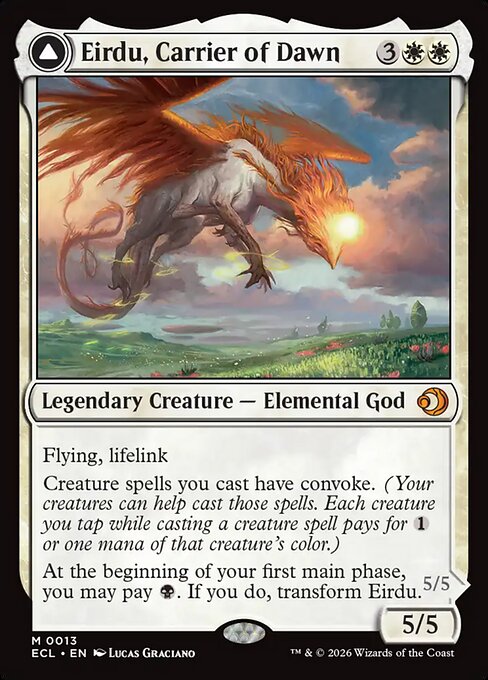
Consider whether blighting this creature will turn off its chance to return.
Every word on the cards and in the deck plans, defined once. Find a term, read its wording, then see it on a card.
A +1/+1 counter adds one power and one toughness; a −1/−1 counter subtracts one of each. These counters stay until removed or the object changes zones.
Watch out: If a permanent has both kinds, matching pairs are removed as a state-based action. A temporary +1/+1 effect is not a counter.
Reduce the generic part of this spell’s cost by one for each permanent of the specified kind you control.
Watch out: It does not reduce the colored mana symbols. Check exactly what the card has affinity for.
Show a card of the specified kind from your hand, or choose a permanent of that kind you control.
Watch out: Beholding does not cast the card or sacrifice the permanent. Read the spell to see why the choice matters.
Choose a matching permanent you control or reveal a matching card from your hand, following the printed requirement.
To blight N, put N -1/-1 counters on one creature you control.
When this permanent enters, sacrifice it unless you exile another matching permanent you control. When the champion leaves, return the exiled card under its owner’s control.
A card with changeling has every creature type in every zone.
These named counters track whatever the card’s abilities say. Their names alone do not give a universal bonus or penalty.
Watch out: For example, vanishing uses time counters as a countdown. Read the particular card before deciding what adding another counter will do.
While paying for this spell, each untapped creature you tap can cover one generic mana, or one mana of that creature’s color.
Watch out: You may tap a creature you just played. A colorless creature can cover only generic mana.
Tap creatures while paying for a spell to pay one generic mana, or one mana of a tapped creature’s color, per creature.
To counter a spell or ability is to remove it from the stack without its effects resolving. A countered spell normally goes to its owner’s graveyard.
Watch out: This use of “counter” is different from placing a marker such as a +1/+1 counter on a card.
Enough useful low-cost plays to act before your expensive threats.
From your hand, pay the cycling cost and discard this card to draw a card.
Watch out: Cycling is an activated ability, not casting the card. Typecycling searches for a specified kind of card instead.
Any positive amount of damage this source deals to a creature is enough to make that damage lethal.
Watch out: It works with a fight or other noncombat damage. Indestructible still prevents destruction.
Move a permanent from the battlefield to its owner’s graveyard because an effect or lethal damage destroys it.
Watch out: Indestructible stops destruction. Sacrificing, exiling, and reducing toughness to 0 are different ways for a creature to leave.
Move a card from your hand to your graveyard.
Watch out: Discarding is not casting. It does not pay the card’s mana cost or produce its normal spell effect.
Follow what is being doubled. Doubling power or toughness adds a modifier based on its current value; doubling counters adds as many of that kind as are already present.
This creature deals combat damage in the first-strike damage step and again in the normal damage step if it is still in combat.
Watch out: If its blocker dies in the first step, a blocked attacker does not hit the player in the second step unless an ability such as trample allows it.
An Aura’s enchant line tells you what it may be attached to.
Watch out: An Aura cast as a spell targets what it will enchant. If it later becomes illegally attached, it normally goes to the graveyard.
Pay the equip cost to attach this Equipment to a target creature you control. Normally, activate equip only in your main phase when the stack is empty.
Watch out: The Equipment usually stays on the battlefield when the creature leaves. Moving it to another creature normally costs another equip activation.
Cast for the alternative evoke cost; when the permanent enters, an ability makes you sacrifice it.
Move the object to the exile zone. It is separate from the graveyard.
Watch out: A card in exile cannot normally be played. You need a rule or effect giving permission, such as a resolved Adventure.
The two creatures each deal damage equal to their power to the other at the same time.
Watch out: This is not combat. First strike and double strike do not add damage steps; deathtouch and lifelink still affect damage.
This creature deals combat damage in an earlier step, before creatures without first strike or double strike.
Watch out: A creature killed in that early damage step usually cannot deal its normal combat damage.
You may cast this spell when you could cast an instant, including during another player’s turn when you have priority.
Watch out: Flash changes when you may cast it. It does not let you cast from a different zone or avoid its costs.
You may cast this instant or sorcery from your graveyard by paying its flashback cost.
Watch out: Follow its normal timing. A spell cast with flashback is exiled when it leaves the stack, even if it is countered.
An attacking creature with flying can be blocked only by creatures with flying or reach.
Watch out: A flying creature can block a creature without flying.
This creature may attack and use abilities with the tap or untap symbol even if you have not controlled it since your turn began.
Watch out: It still needs to be untapped to attack or pay a tap cost.
A permanent with hexproof cannot be targeted by spells or abilities its controller’s opponents control.
Watch out: Its controller may target it. Effects that do not target can still affect it.
Each split mana symbol can be paid using either half. For example, {W/U} costs one white or one blue mana; {2/B} costs two mana of any type or one black mana.
Watch out: Choose separately for each symbol. A {W/U} card is both white and blue even if you use only one color to cast it.
This permanent cannot be destroyed by lethal damage or an effect that says “destroy.”
Watch out: It can still be exiled or sacrificed. A creature with toughness 0 or less still goes to the graveyard.
A keyword counter grants its named ability, such as trample, to the object it is on.
Watch out: A trample counter is not a +1/+1 counter. The named ability and the creature’s size are separate.
This label groups abilities that reward a land entering under your control. The rest of each card tells you its effect.
Watch out: A land entering from a spell can trigger landfall too. The label itself adds no rules; read the actual ability.
When this source deals damage, its controller gains that much life at the same time.
Watch out: This also works for noncombat damage. It uses the damage actually dealt, not simply the creature’s printed power.
A planeswalker’s loyalty is the number of loyalty counters on it. Its loyalty costs add or remove counters, and damage removes that much loyalty.
Watch out: A planeswalker with 0 loyalty goes to the graveyard. Adding more counters does not let you activate it a second time in the same turn.
This attacking creature cannot be blocked by just one creature; at least two blockers are needed.
Watch out: It can still go unblocked. Losing one blocker after blocks are declared does not undo the original block.
Put the stated number of cards from the top of the named player’s library into that player’s graveyard.
Watch out: Milling is not drawing. An empty library makes you lose when you must draw from it, not merely when its last card is milled.
When a creature with persist dies without a -1/-1 counter on it, return it under its owner’s control with one.
Choose any number of permanents or players that already have counters. Give each chosen one another counter of every kind it already has.
Watch out: You cannot add the first counter of a kind this way. If a chosen permanent has a harmful counter, that kind increases too.
This creature may block creatures with flying.
Watch out: Reach does not give it flying or make its own attacks harder to block.
Move a permanent you control from the battlefield to its owner’s graveyard.
Watch out: Sacrifice is not destruction: indestructible does not stop it. You cannot sacrifice a teammate’s permanent unless an effect specifically permits it.
This permanent or player cannot be targeted by any spells or abilities, including your own. Effects that do not target can still affect it.
Repeated useful late cards may suggest an open color; one card is weak evidence.
If a permanent with a stun counter would untap, remove one stun counter instead and leave it tapped.
Watch out: The counter does not tap an untapped permanent by itself. Several stun counters can stop several separate untaps.
The actual cards and mana that let a payoff work.
Look at the stated number of cards from the top of your library. Put any number into your graveyard and the rest back on top in your chosen order.
Watch out: Surveil does not draw a card. Unlike scry, unwanted cards go to the graveyard instead of the bottom.
Tap means turn a permanent sideways; untap means return it upright. A tap symbol in a cost means you must tap that permanent to pay.
Watch out: Being tapped by another effect does not activate an ability or produce mana. Creatures normally cannot pay their own tap-symbol costs until you have controlled them since your turn began.
An attacking creature can assign excess combat damage to what it is attacking after assigning lethal damage to every blocker.
Watch out: It does not automatically send all damage past a small blocker. Trample on a blocking creature does not send damage to the attacking player.
Cast the front face. A transform instruction changes the battlefield permanent to its other face.
A standard Treasure token is an artifact you can tap and sacrifice to add one mana of any color.
Watch out: A Treasure is not a land. Using it spends the token; it does not remain for another turn.
From your hand, pay the listed cost and discard the card. Search your library for the named kind of card, reveal it, put it into your hand, then shuffle.
Watch out: Basic landcycling finds a basic land. Mountaincycling finds a Mountain card; Halflingcycling finds a Halfling card. This does not put the found card onto the battlefield.
Attacking does not tap this creature.
Watch out: It must still be untapped to be declared as an attacker. Vigilance does not remove summoning sickness.
Vivid abilities count the distinct colors among permanents you control.
When an opponent’s spell or ability targets this permanent, ward triggers. That spell or ability is countered unless the opponent pays the ward cost.
Watch out: Ward is not hexproof: the opponent can target it and choose whether to pay. An effect that does not target does not trigger ward.
Damage this source deals to creatures is given as -1/-1 counters instead of being marked on them. The counters remain after the turn.
 Barbed Bloodletter
 Bile-Vial Boggart
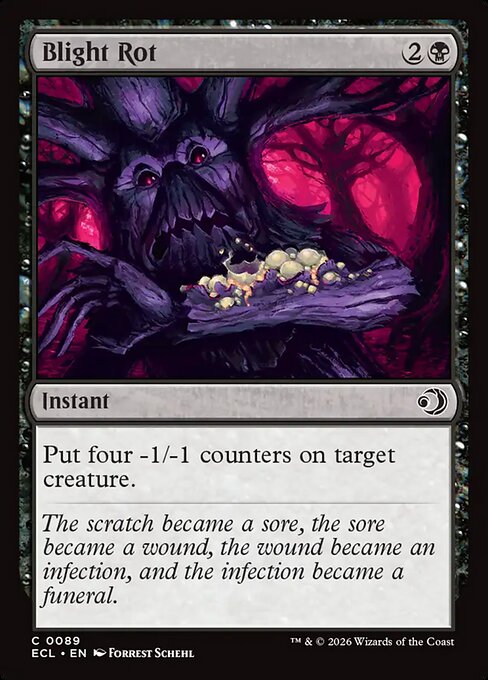 Blight Rot
 Sapling Nursery
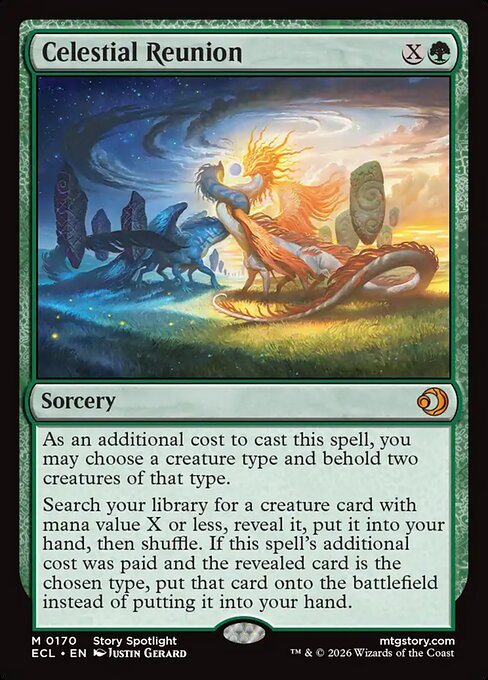 Celestial Reunion
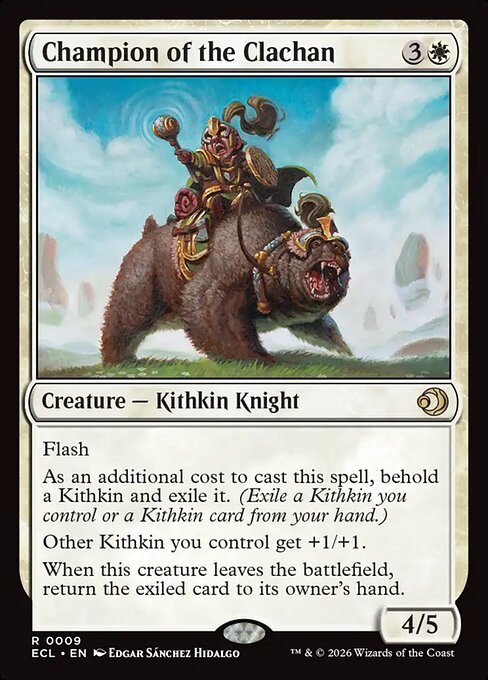 Champion of the Clachan
 Champion of the Path
 Blighted Blackthorn
 Bogslither's Embrace
 Mistbind Clique
 Wanderwine Prophets
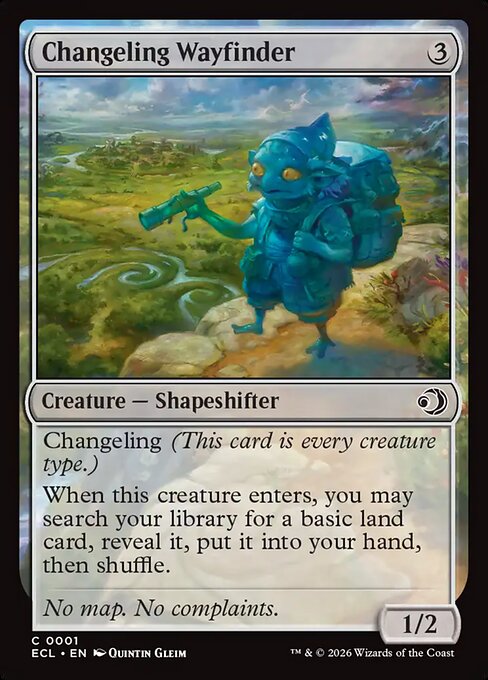 Changeling Wayfinder
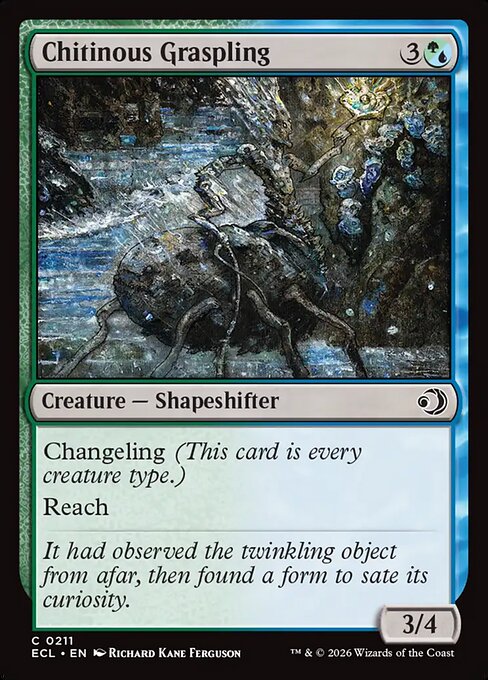 Chitinous Graspling
 Chomping Changeling
 Door of Destinies
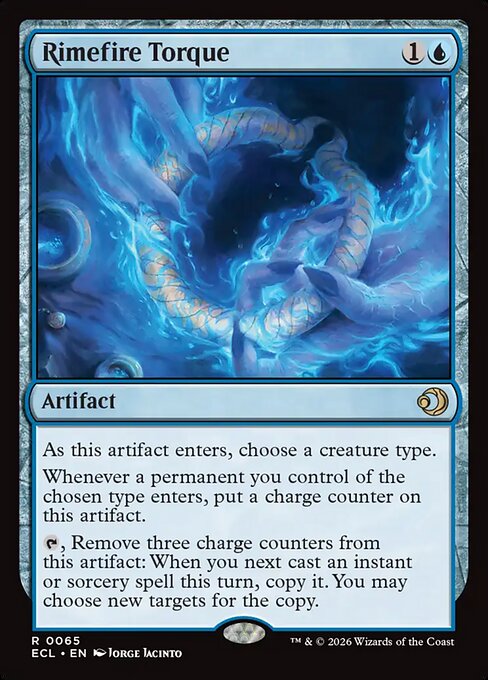 Rimefire Torque
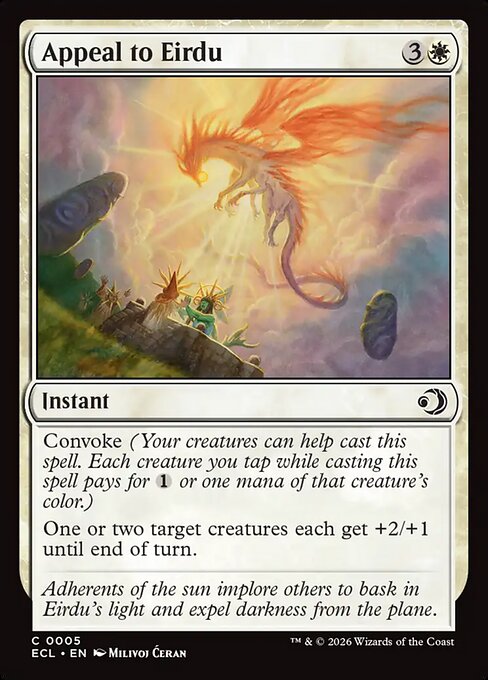 Appeal to Eirdu
 Bloodline Bidding
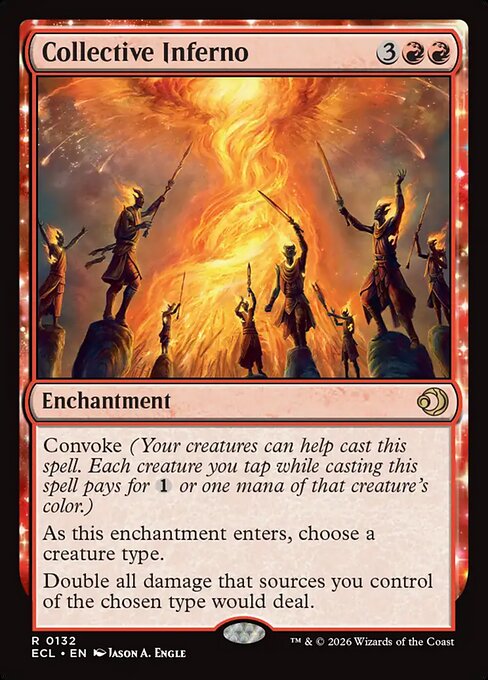 Collective Inferno
 Glen Elendra Guardian
 Glen Elendra's Answer
 Hexing Squelcher
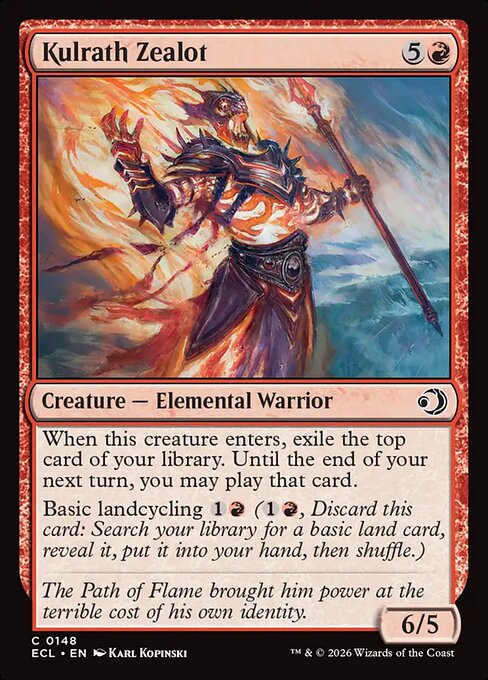 Kulrath Zealot
 Stratosoarer
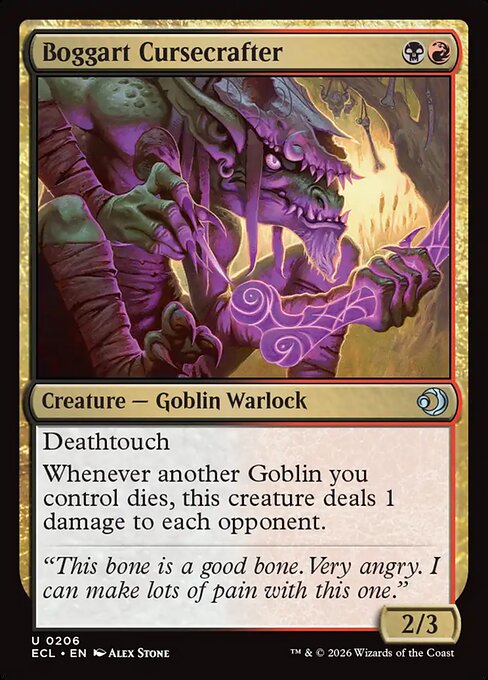 Boggart Cursecrafter
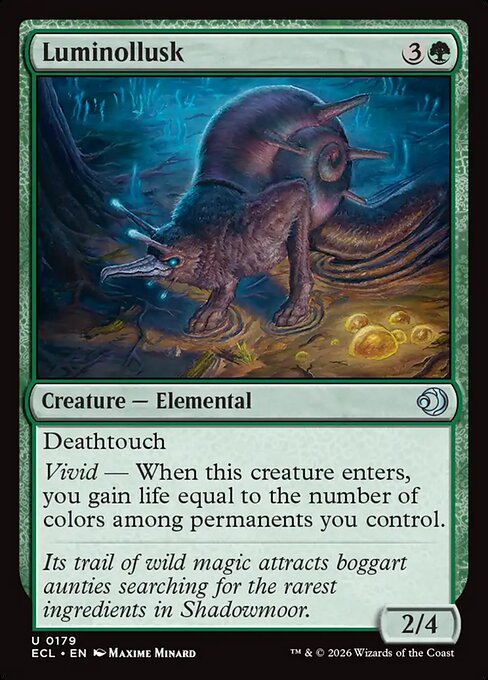 Luminollusk
 Scarblade's Malice
 Burdened Stoneback
 Giantfall
 Auntie's Sentence
 Deceit
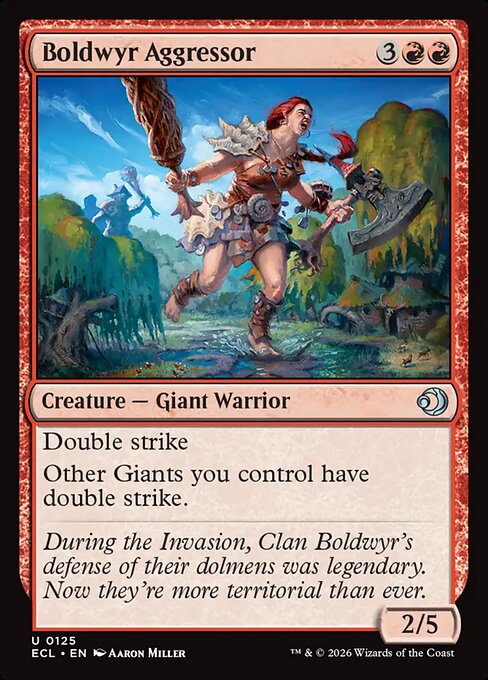 Boldwyr Aggressor
 Kinsbaile Cavalier
 Squawkroaster
 Aquitect's Defenses
 Blossombind
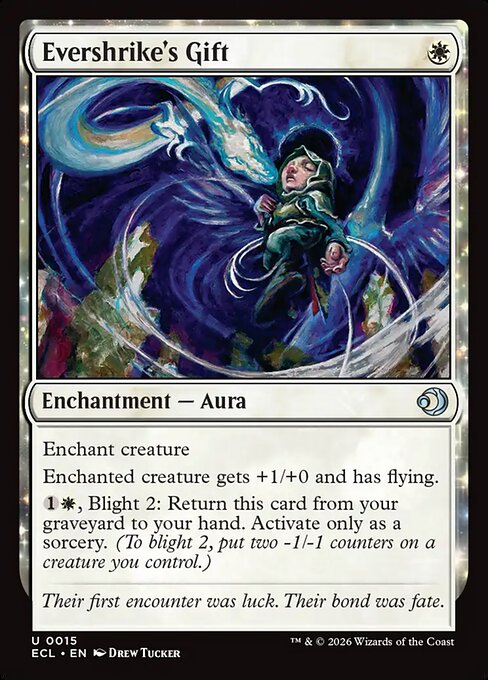 Evershrike's Gift
 Bark of Doran
 Mirrormind Crown
 Catharsis
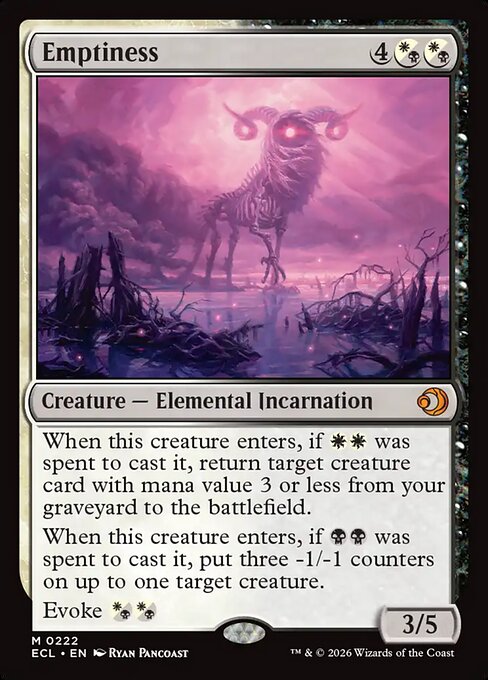 Emptiness
 Bre of Clan Stoutarm
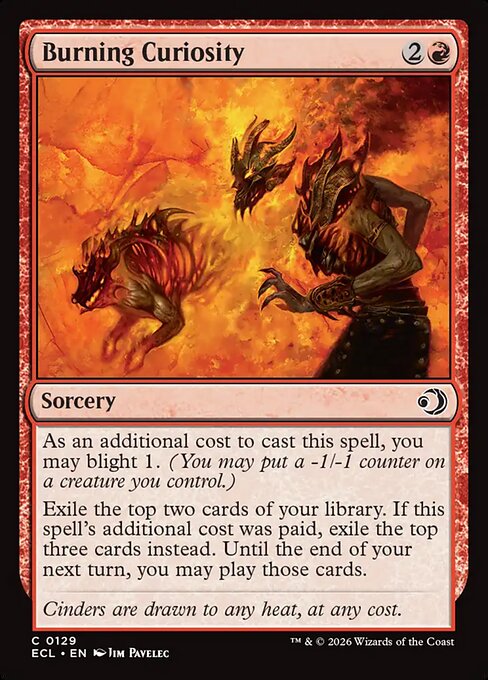 Burning Curiosity
 Brigid's Command
 Pitiless Fists
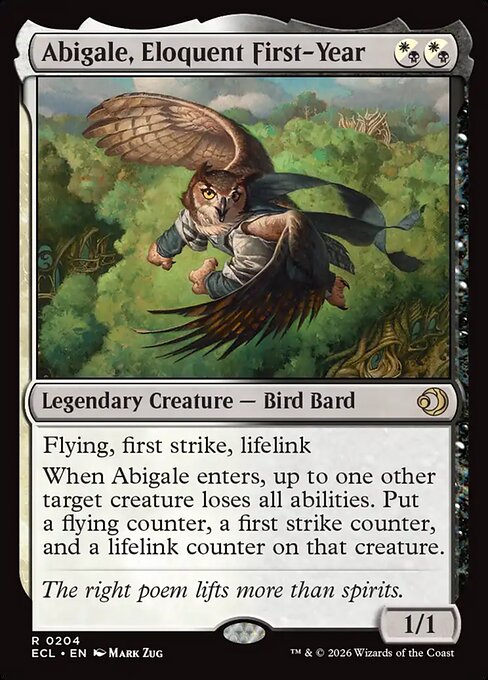 Abigale, Eloquent First-Year
 Chronicle of Victory
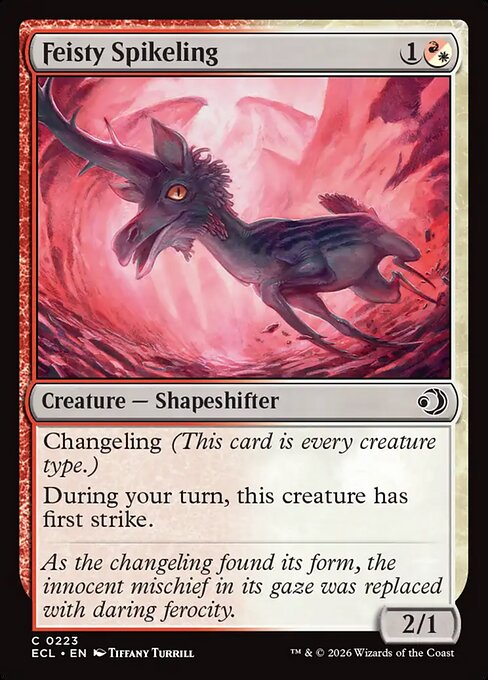 Feisty Spikeling
 Bitterbloom Bearer
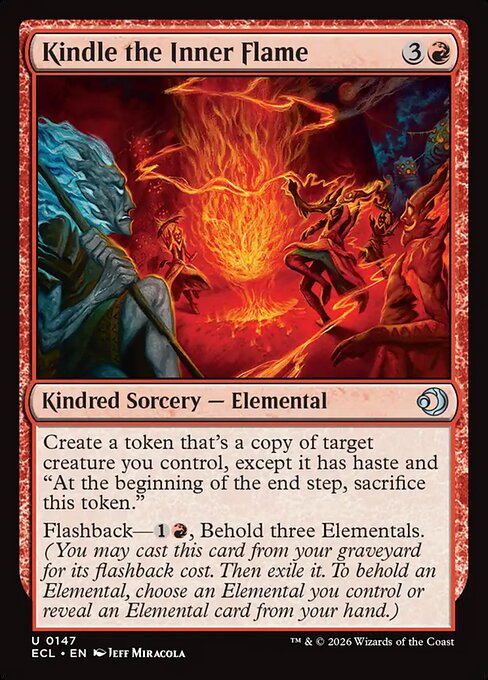 Kindle the Inner Flame
 Bitterblossom
 Goatnap
 Goblin Chieftain
 Blossoming Defense
 Illusion Spinners
 Chaos Spewer
 Adept Watershaper
 Gilt-Leaf's Embrace
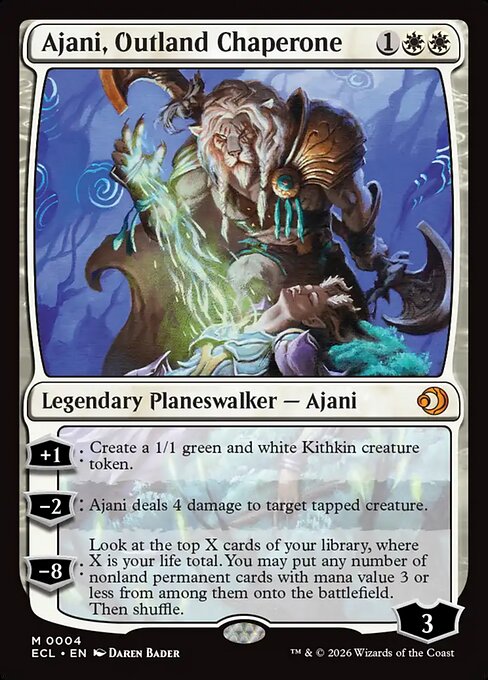 Ajani, Outland Chaperone
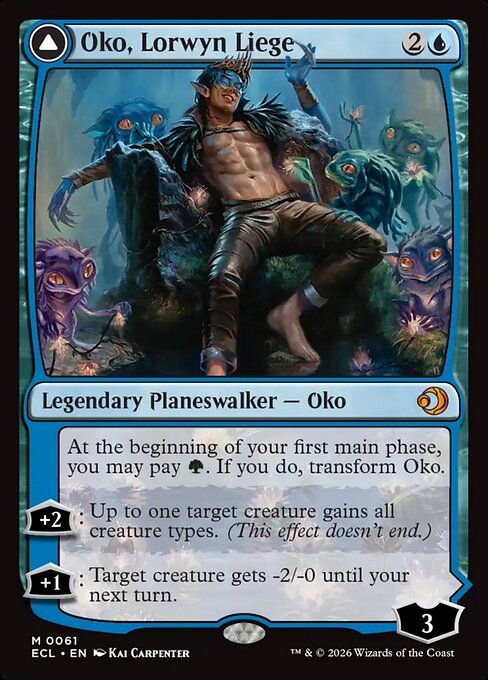 Oko, Lorwyn Liege // Oko, Shadowmoor Scion
 Dawnhand Eulogist
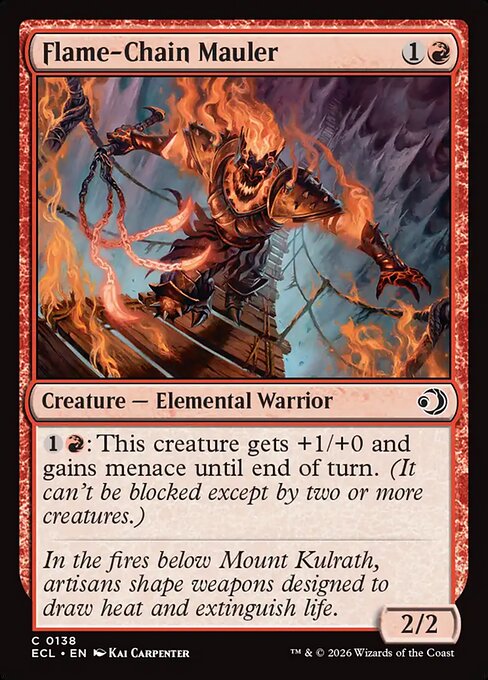 Flame-Chain Mauler
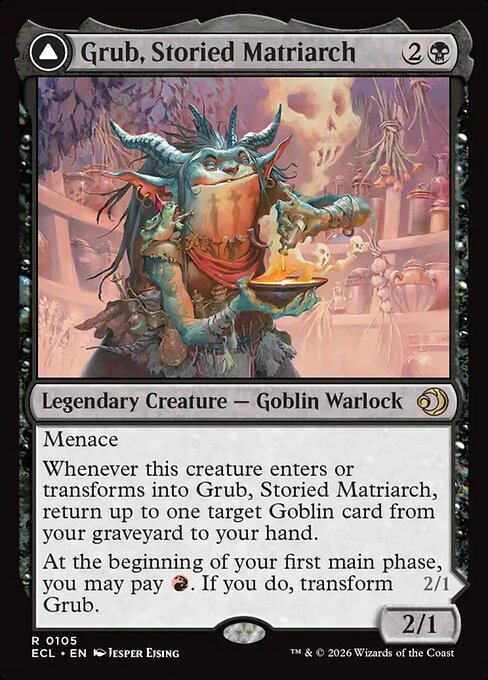 Grub, Storied Matriarch // Grub, Notorious Auntie
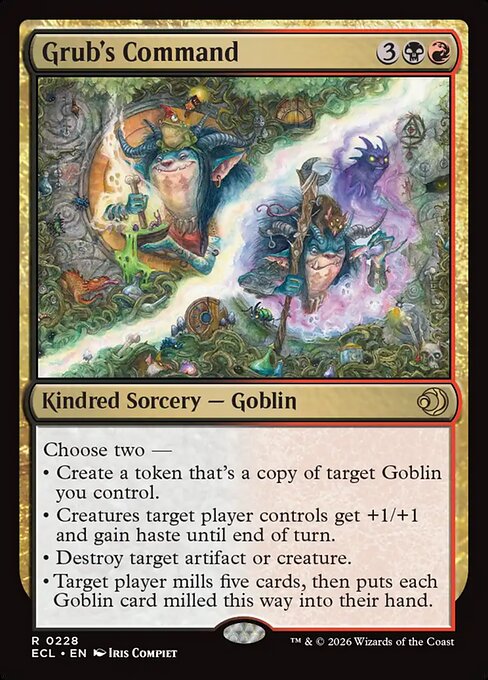 Grub's Command
 Lluwen, Imperfect Naturalist
 Rhys, the Evermore
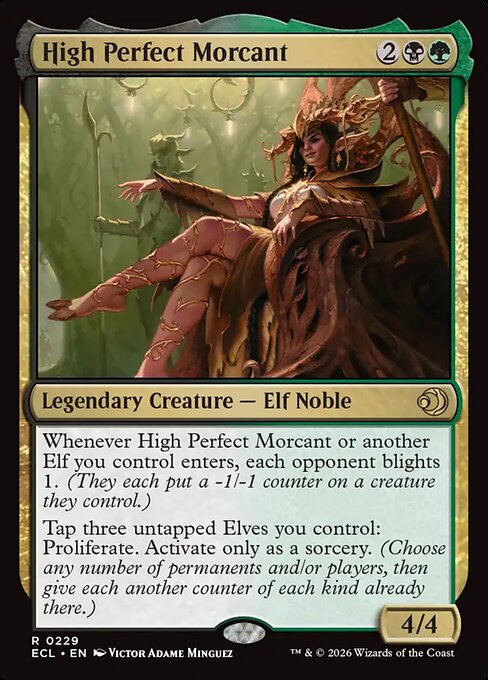 High Perfect Morcant
 Dawn's Light Archer
 Enraged Flamecaster
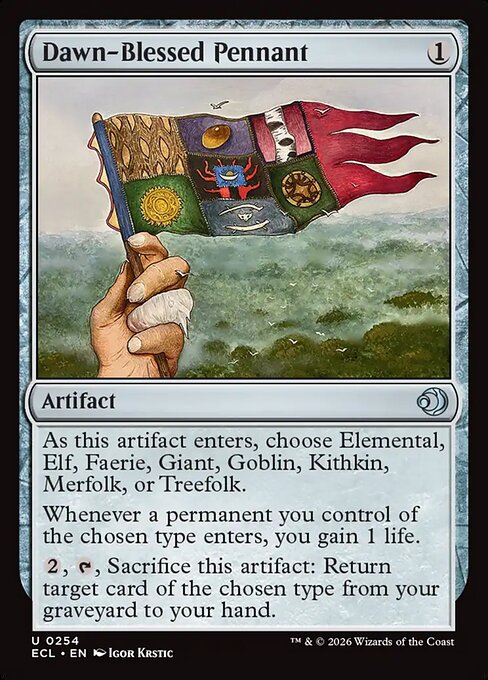 Dawn-Blessed Pennant
 Evolving Wilds
 Flamekin Gildweaver
 Helix Pinnacle
 Champions of the Shoal
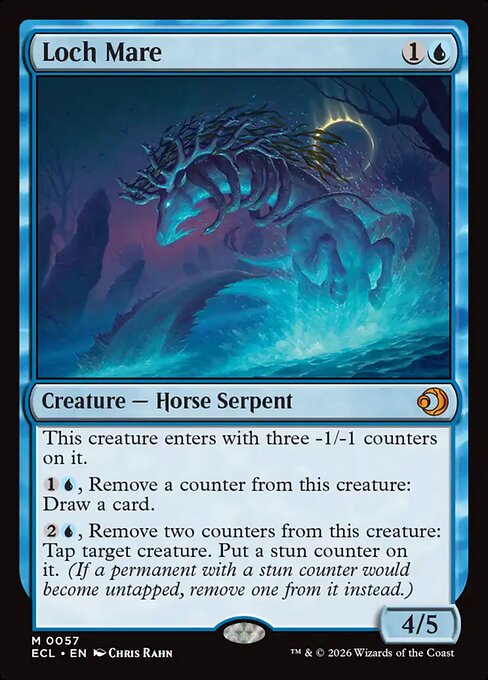 Loch Mare
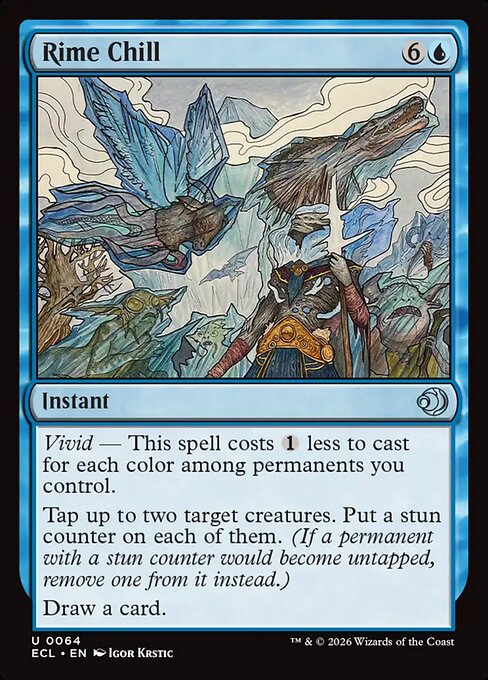 Rime Chill
 Foraging Wickermaw
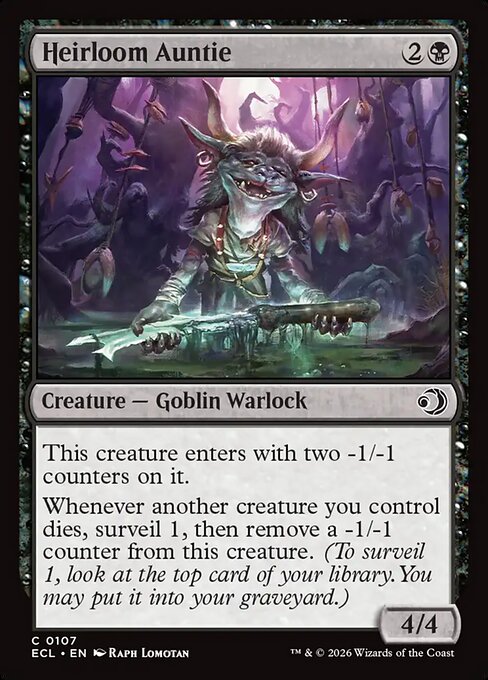 Heirloom Auntie
 Aurora Awakener
 Bristlebane Battler
 Brigid, Clachan's Heart // Brigid, Doun's Mind
 Ashling's Command
 Noggle Robber
 Gravelgill Scoundrel
 Kulrath Mystic
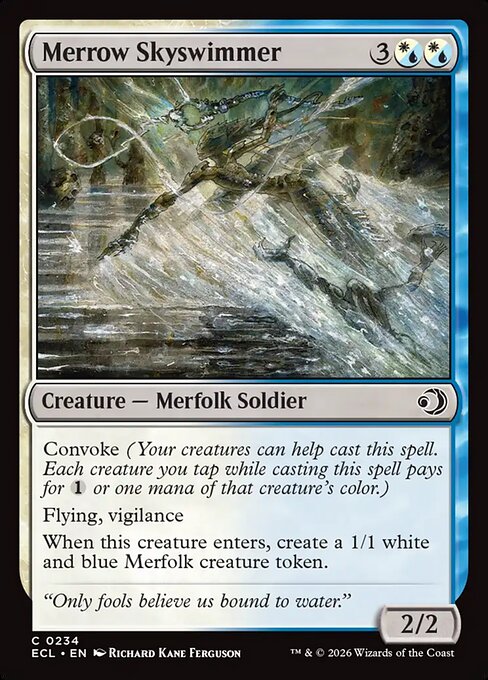 Merrow Skyswimmer
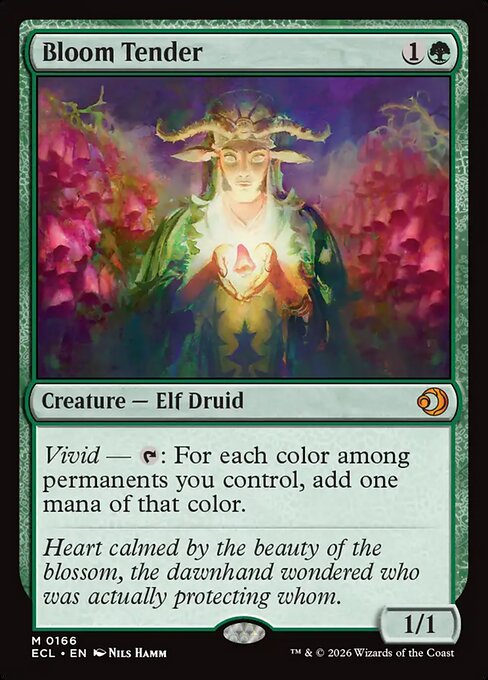 Bloom Tender
 Explosive Prodigy
 Pummeler for Hire
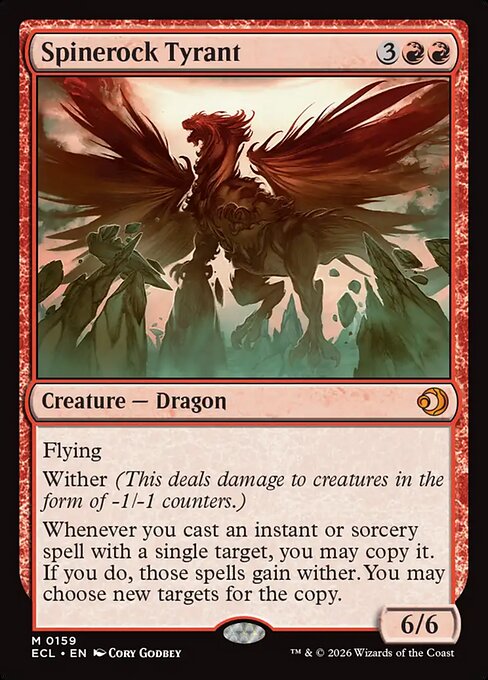 Spinerock Tyrant