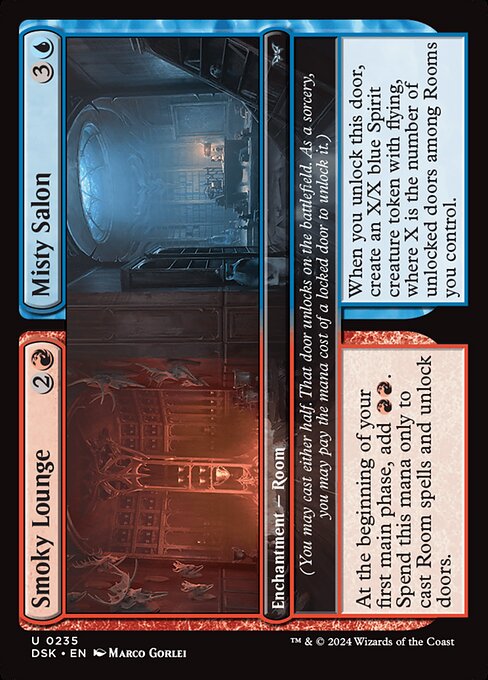
Smoky Lounge
Uncommon · Enchantment — Room · At the table
You may cast Misty Salon for four mana with blue even without red mana. Unlocking Smoky Lounge later is a separate red payment; sacrificing the Room loses both doors.
The set’s mechanics with worked examples, then every word on the cards.
A Room is one enchantment card with two doors. Cast either door for its own mana cost; that door becomes unlocked when the Room enters.
You may cast Misty Salon for four mana with blue even without red mana. Unlocking Smoky Lounge later is a separate red payment; sacrificing the Room loses both doors.
Eerie triggers when an enchantment enters under your control or when you fully unlock a Room. Fully unlocked means both doors are unlocked.

Grand Entryway enters and then makes a Glimmer enchantment creature, supplying two separate entry events for an existing Gremlin Tamer. Unlocking Elegant Rotunda later can give another eerie event.
Look at your top two cards, put one onto the battlefield face down as a colorless 2/2 creature, and put the other into your graveyard.
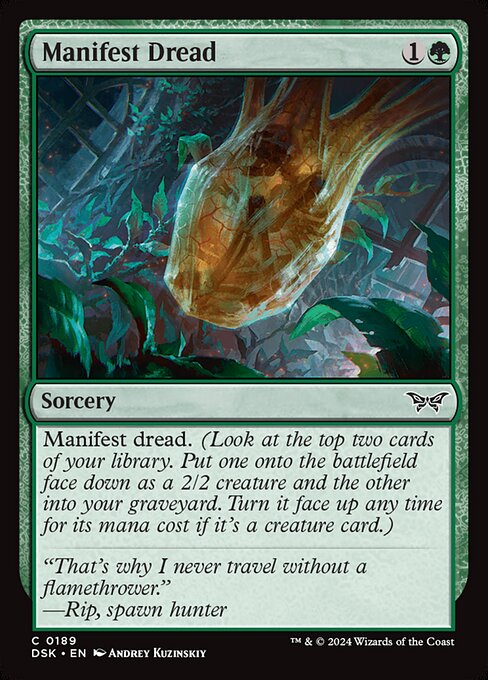
Growing Dread supplies a face-down body; turning a creature card face up later triggers its counter ability but does not repeat that creature's entry trigger.
Survival rewards a creature that is tapped as your second main phase begins. The tapped condition is checked again when its trigger resolves.

Use Clobbering before the second main phase to tap a Survivor while removing a threat. It can collect survival without being sent into an unfavorable attack.
Casting an Overlord for its impending cost still casts an enchantment creature spell. It enters with time counters and is a noncreature enchantment while those counters remain.
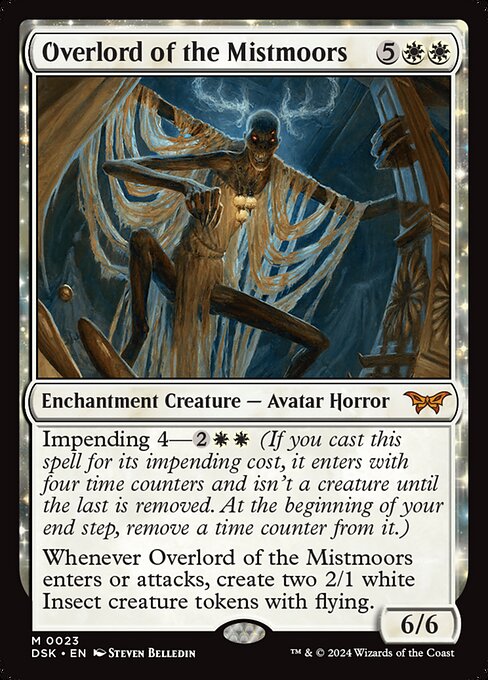
An impending Mistmoors gives two flying Insects immediately. The Overlord itself waits for its counters to run out before it can attack or block.
Delirium requires at least four card types among cards in your graveyard. Several cards of one type still provide only that type.

A creature, instant and enchantment artifact can provide four types across three cards. Drag to the Roots still requires black and green after its generic discount.
Every word on the cards and in the deck plans, defined once. Find a term, read its wording, then see it on a card.
A +1/+1 counter adds one power and one toughness; a −1/−1 counter subtracts one of each. These counters stay until removed or the object changes zones.
Watch out: If a permanent has both kinds, matching pairs are removed as a state-based action. A temporary +1/+1 effect is not a counter.
These named counters track whatever the card’s abilities say. Their names alone do not give a universal bonus or penalty.
Watch out: For example, vanishing uses time counters as a countdown. Read the particular card before deciding what adding another counter will do.
While paying for this spell, each untapped creature you tap can cover one generic mana, or one mana of that creature’s color.
Watch out: You may tap a creature you just played. A colorless creature can cover only generic mana.
An ability word that introduces voting. Follow the printed choices and resolve the effects for every vote, rather than only a winning majority. Expropriate gives an extra turn for each time vote and takes a permanent for each money vote.
To counter a spell or ability is to remove it from the stack without its effects resolving. A countered spell normally goes to its owner’s graveyard.
Watch out: This use of “counter” is different from placing a marker such as a +1/+1 counter on a card.
Tap other untapped creatures you control with enough total power to turn this Vehicle into an artifact creature until the turn ends.
Watch out: The crew creatures do not become the Vehicle’s attackers. A newly played Vehicle still needs haste to attack that turn.
Enough useful low-cost plays to act before your expensive threats.
From your hand, pay the cycling cost and discard this card to draw a card.
Watch out: Cycling is an activated ability, not casting the card. Typecycling searches for a specified kind of card instead.
Any positive amount of damage this source deals to a creature is enough to make that damage lethal.
Watch out: It works with a fight or other noncombat damage. Indestructible still prevents destruction.
This creature cannot attack.
Watch out: It can still block and use its abilities unless something else prevents that.
Delirium requires at least four card types among cards in your graveyard. Several cards of one type still provide only that type. Returning or exiling the only card of one type can turn delirium off, even when many cards remain in the graveyard.
Move a permanent from the battlefield to its owner’s graveyard because an effect or lethal damage destroys it.
Watch out: Indestructible stops destruction. Sacrificing, exiling, and reducing toughness to 0 are different ways for a creature to leave.
Move a card from your hand to your graveyard.
Watch out: Discarding is not casting. It does not pay the card’s mana cost or produce its normal spell effect.
Follow what the card doubles: power adds a matching power increase, counters add as many of each named kind as already exist, and a damage replacement changes that damage event. Doubling zero counters still adds zero.
This creature deals combat damage in the first-strike damage step and again in the normal damage step if it is still in combat.
Watch out: If its blocker dies in the first step, a blocked attacker does not hit the player in the second step unless an ability such as trample allows it.
Eerie triggers when an enchantment enters under your control or when you fully unlock a Room. Fully unlocked means both doors are unlocked. Unlocking only one door of a Room with both doors locked is not a full unlock and does not itself trigger eerie.
An Aura’s enchant line tells you what it may be attached to.
Watch out: An Aura cast as a spell targets what it will enchant. If it later becomes illegally attached, it normally goes to the graveyard.
Pay the equip cost to attach this Equipment to a target creature you control. Normally, activate equip only in your main phase when the stack is empty.
Watch out: The Equipment usually stays on the battlefield when the creature leaves. Moving it to another creature normally costs another equip activation.
Move the object to the exile zone. It is separate from the graveyard.
Watch out: A card in exile cannot normally be played. You need a rule or effect giving permission, such as a resolved Adventure.
If a permanent with a finality counter would go from the battlefield to a graveyard, exile it instead.
Watch out: It does not die when this replacement sends it to exile, so ordinary “dies” abilities do not trigger.
This creature deals combat damage in an earlier step, before creatures without first strike or double strike.
Watch out: A creature killed in that early damage step usually cannot deal its normal combat damage.
You may cast this spell when you could cast an instant, including during another player’s turn when you have priority.
Watch out: Flash changes when you may cast it. It does not let you cast from a different zone or avoid its costs.
You may cast this instant or sorcery from your graveyard by paying its flashback cost.
Watch out: Follow its normal timing. A spell cast with flashback is exiled when it leaves the stack, even if it is countered.
An attacking creature with flying can be blocked only by creatures with flying or reach.
Watch out: A flying creature can block a creature without flying.
Pay the stated cost and discard this card to find a Forest card in your library, reveal it, put it into your hand, then shuffle. The found land goes to your hand, not directly onto the battlefield.
This creature may attack and use abilities with the tap or untap symbol even if you have not controlled it since your turn began.
Watch out: It still needs to be untapped to attack or pay a tap cost.
A permanent with hexproof cannot be targeted by spells or abilities its controller’s opponents control.
Watch out: Its controller may target it. Effects that do not target can still affect it.
Casting an Overlord for its impending cost still casts an enchantment creature spell. It enters with time counters and is a noncreature enchantment while those counters remain. An impending spell is still a creature spell on the stack, so it does not trigger prowess merely because it will enter as a noncreature.
This permanent cannot be destroyed by lethal damage or an effect that says “destroy.”
Watch out: It can still be exiled or sacrificed. A creature with toughness 0 or less still goes to the graveyard.
Pay the stated cost and discard this card to find a Island card in your library, reveal it, put it into your hand, then shuffle. The found land goes to your hand, not directly onto the battlefield.
A keyword counter grants its named ability, such as trample, to the object it is on.
Watch out: A trample counter is not a +1/+1 counter. The named ability and the creature’s size are separate.
When this source deals damage, its controller gains that much life at the same time.
Watch out: This also works for noncombat damage. It uses the damage actually dealt, not simply the creature’s printed power.
A planeswalker’s loyalty is the number of loyalty counters on it. Its loyalty costs add or remove counters, and damage removes that much loyalty.
Watch out: A planeswalker with 0 loyalty goes to the graveyard. Adding more counters does not let you activate it a second time in the same turn.
Put the instructed card onto the battlefield face down as a colorless 2/2 creature without a name, mana cost or abilities. A creature card can normally turn face up by paying its mana cost; manifest dread adds the look-at-two choice and graveyard card.
Look at your top two cards, put one onto the battlefield face down as a colorless 2/2 creature, and put the other into your graveyard. A manifested noncreature card cannot use the normal creature-mana-cost turn-up action, and you cannot respond to the special action itself.
This attacking creature cannot be blocked by just one creature; at least two blockers are needed.
Watch out: It can still go unblocked. Losing one blocker after blocks are declared does not undo the original block.
Put the stated number of cards from the top of the named player’s library into that player’s graveyard.
Watch out: Milling is not drawing. An empty library makes you lose when you must draw from it, not merely when its last card is milled.
Pay the ability cost, reveal this card from your hand and return an unblocked attacker you control to hand. Put the ninjutsu card onto the battlefield tapped and attacking; this is an activated ability, not casting a spell.
Pay the stated cost and discard this card to find a Plains card in your library, reveal it, put it into your hand, then shuffle. The found land goes to your hand, not directly onto the battlefield.
This creature may block creatures with flying.
Watch out: Reach does not give it flying or make its own attacks harder to block.
A Room is one enchantment card with two doors. Cast either door for its own mana cost; that door becomes unlocked when the Room enters. Central Elevator excludes a Room sharing a currently unlocked name. Promising Stairs requires eight different unlocked names; duplicate names do not add to that count.
Move a permanent you control from the battlefield to its owner’s graveyard.
Watch out: Sacrifice is not destruction: indestructible does not stop it. You cannot sacrifice a teammate’s permanent unless an effect specifically permits it.
A Saga normally enters with a lore counter and gains another as your first main phase begins. Reaching chapter numbers triggers those chapter abilities.
Watch out: The new lore counter is not added during upkeep. When its final chapter ability is no longer on the stack, you normally sacrifice the Saga.
Look at the stated number of cards from the top of your library. Put any number on the bottom and the rest back on top, choosing their order.
Watch out: Scry does not draw a card. Cards you move to the bottom do not go to the graveyard.
Repeated useful late cards may suggest an open color; one card is weak evidence.
If a permanent with a stun counter would untap, remove one stun counter instead and leave it tapped.
Watch out: The counter does not tap an untapped permanent by itself. Several stun counters can stop several separate untaps.
The actual cards and mana that let a payoff work.
Look at the stated number of cards from the top of your library. Put any number into your graveyard and the rest back on top in your chosen order.
Watch out: Surveil does not draw a card. Unlike scry, unwanted cards go to the graveyard instead of the bottom.
Survival rewards a creature that is tapped as your second main phase begins. The tapped condition is checked again when its trigger resolves. Destroying an already-tapped Cautious Survivor after its trigger exists does not stop the life gain; its last tapped status still satisfies the condition.
Pay the stated cost and discard this card to find a Swamp card in your library, reveal it, put it into your hand, then shuffle. The found land goes to your hand, not directly onto the battlefield.
Tap means turn a permanent sideways; untap means return it upright. A tap symbol in a cost means you must tap that permanent to pay.
Watch out: Being tapped by another effect does not activate an ability or produce mana. Creatures normally cannot pay their own tap-symbol costs until you have controlled them since your turn began.
An attacking creature can assign excess combat damage to what it is attacking after assigning lethal damage to every blocker.
Watch out: It does not automatically send all damage past a small blocker. Trample on a blocking creature does not send damage to the attacking player.
A standard Treasure token is an artifact you can tap and sacrifice to add one mana of any color.
Watch out: A Treasure is not a land. Using it spends the token; it does not remain for another turn.
From your hand, pay the listed cost and discard the card. Search your library for the named kind of card, reveal it, put it into your hand, then shuffle.
Watch out: Basic landcycling finds a basic land. Mountaincycling finds a Mountain card; Halflingcycling finds a Halfling card. This does not put the found card onto the battlefield.
Attacking does not tap this creature.
Watch out: It must still be untapped to be declared as an attacker. Vigilance does not remove summoning sickness.
When an opponent’s spell or ability targets this permanent, ward triggers. That spell or ability is countered unless the opponent pays the ward cost.
Watch out: Ward is not hexproof: the opponent can target it and choose whether to pay. An effect that does not target does not trigger ward.
 Central Elevator
 Grand Entryway
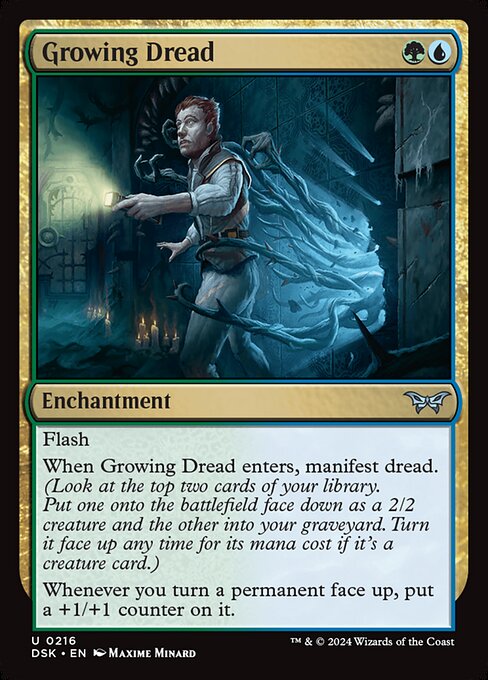 Growing Dread
 Weight Room
 Coordinated Clobbering
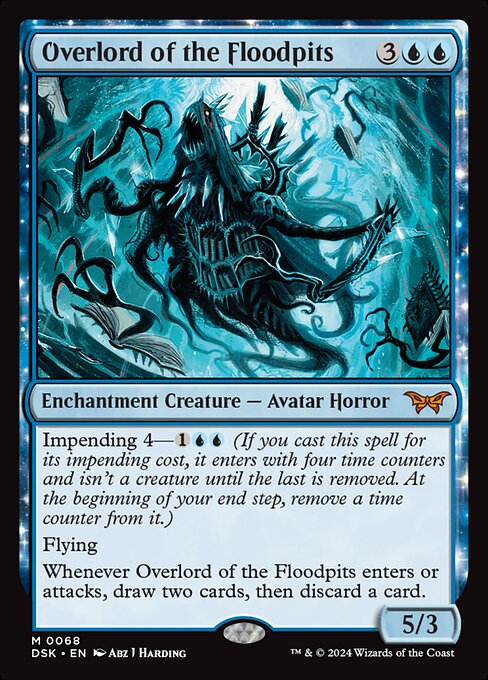 Overlord of the Floodpits
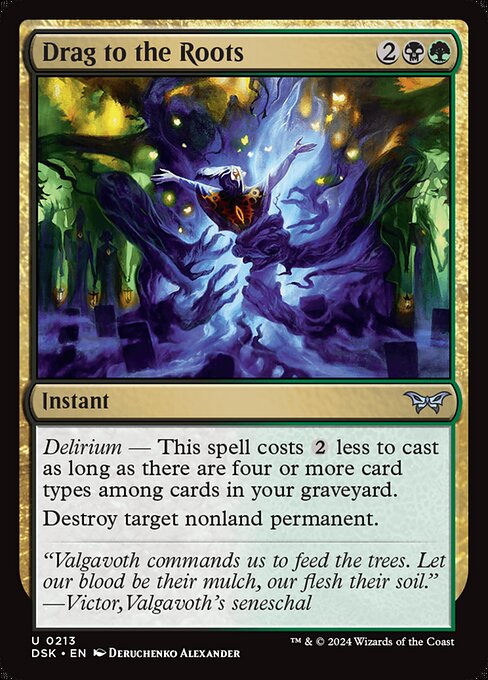 Drag to the Roots
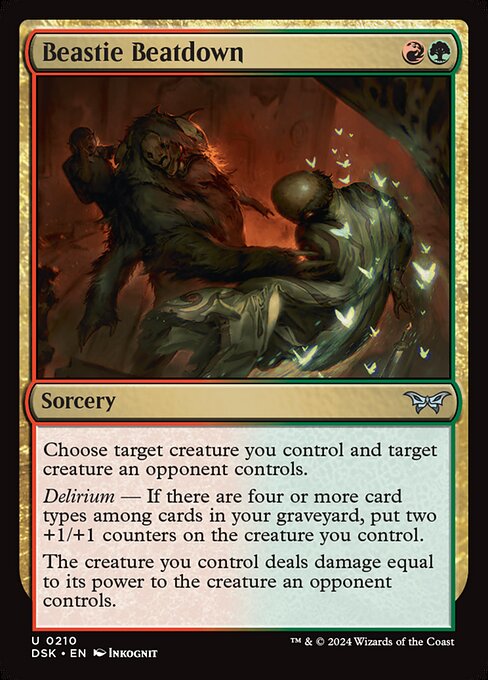 Beastie Beatdown
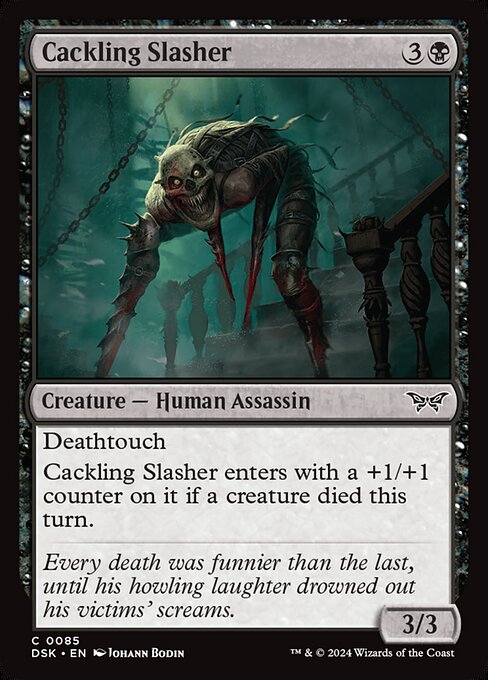 Cackling Slasher
 Cryptid Inspector
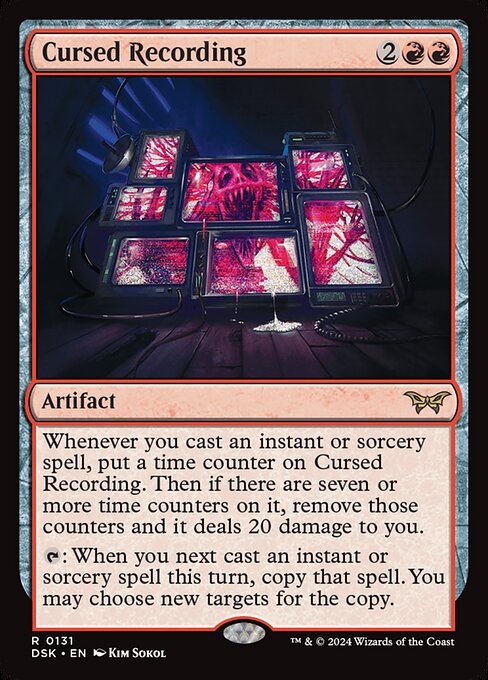 Cursed Recording
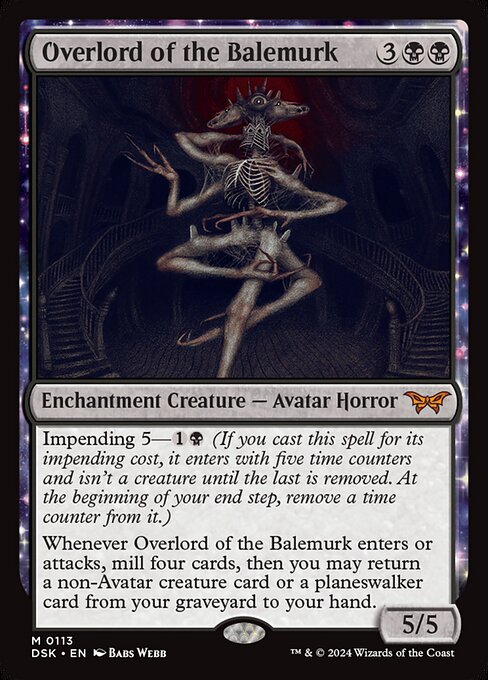 Overlord of the Balemurk
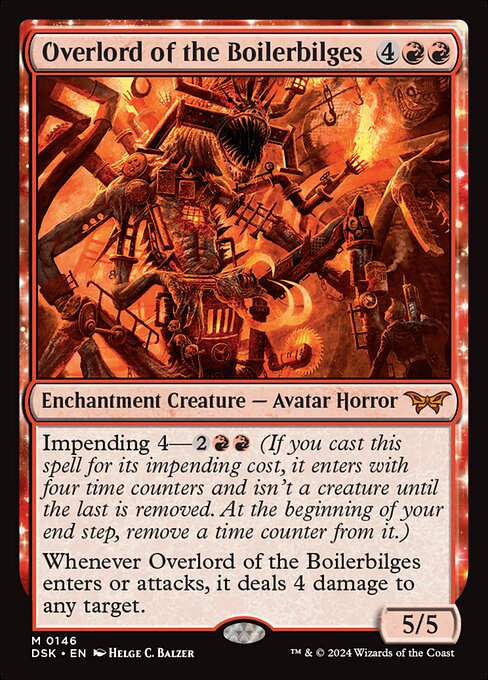 Overlord of the Boilerbilges
 Dazzling Theater // Prop Room
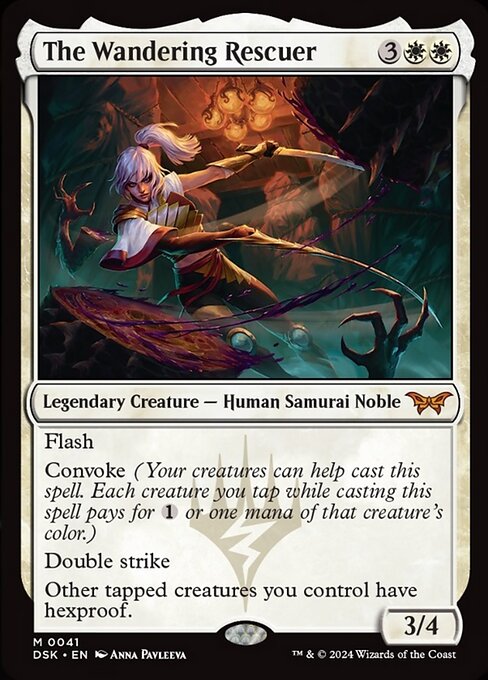 The Wandering Rescuer
 Expropriate
 Balustrade Wurm
 Don't Make a Sound
 Fear of Impostors
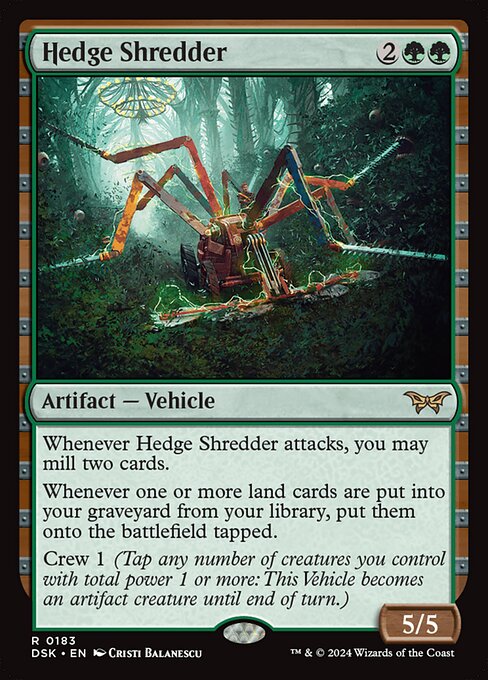 Hedge Shredder
 Unidentified Hovership
 Bedhead Beastie
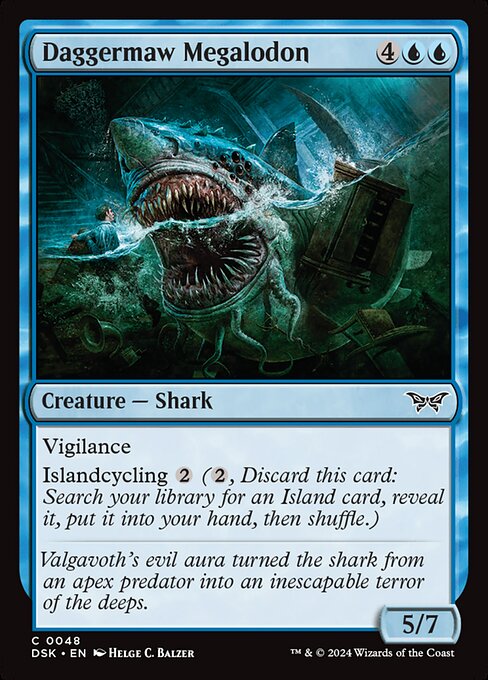 Daggermaw Megalodon
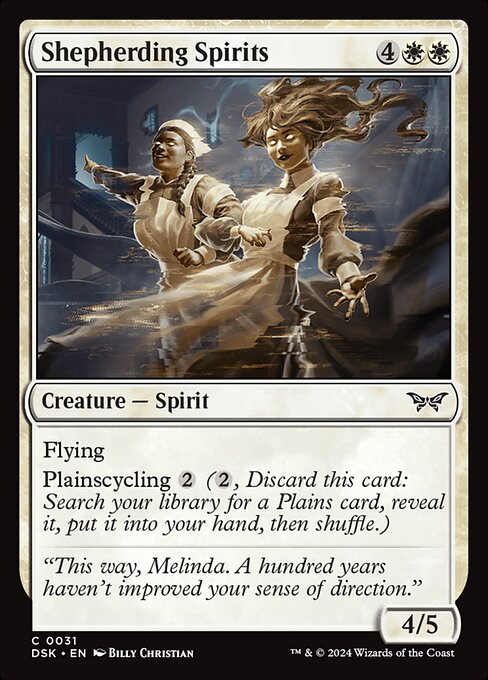 Shepherding Spirits
 Derelict Attic // Widow's Walk
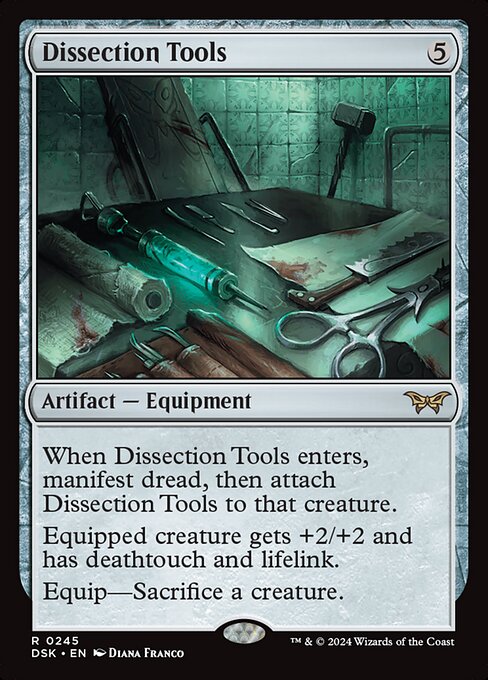 Dissection Tools
 Stalked Researcher
 Demonic Counsel
 Anthropede
 Come Back Wrong
 Cracked Skull
 Altanak, the Thrice-Called
 Omnivorous Flytrap
 The Rollercrusher Ride
 Patched Plaything
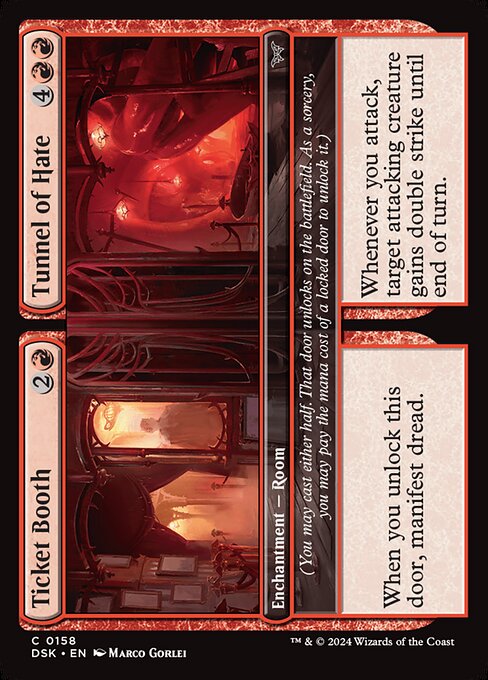 Ticket Booth // Tunnel of Hate
 Balemurk Leech
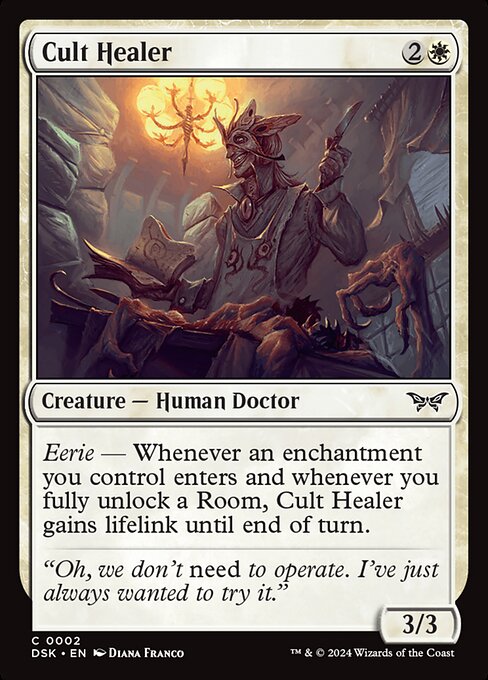 Cult Healer
 Dashing Bloodsucker
 Duskmourn's Domination
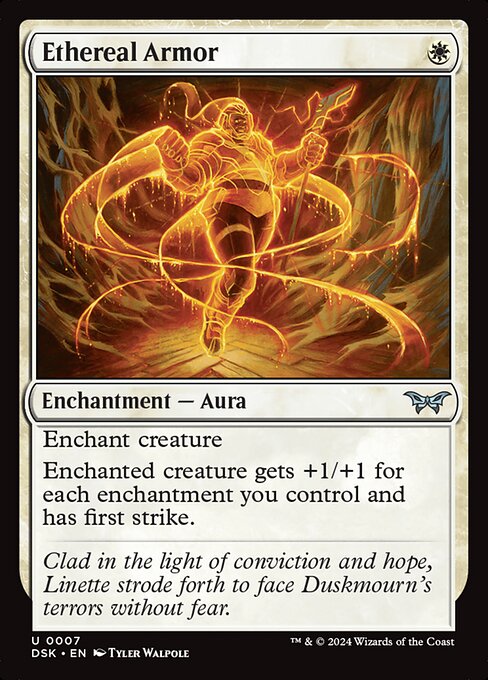 Ethereal Armor
 Baseball Bat
 Chainsaw
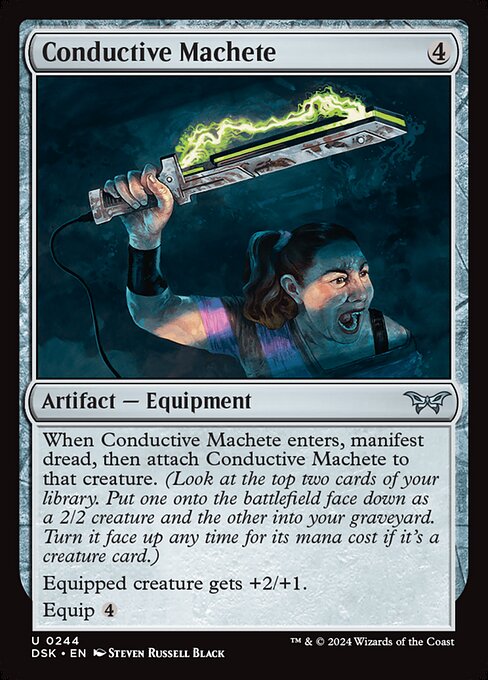 Conductive Machete
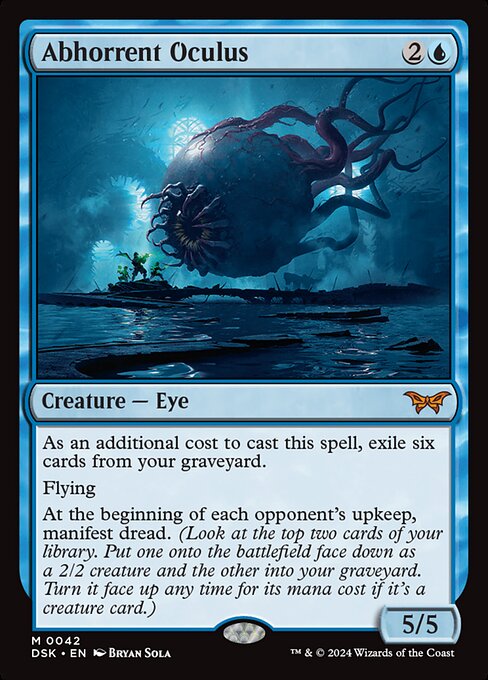 Abhorrent Oculus
 Betrayer's Bargain
 Break Down the Door
 Meathook Massacre II
 Resurrected Cultist
 Most Valuable Slayer
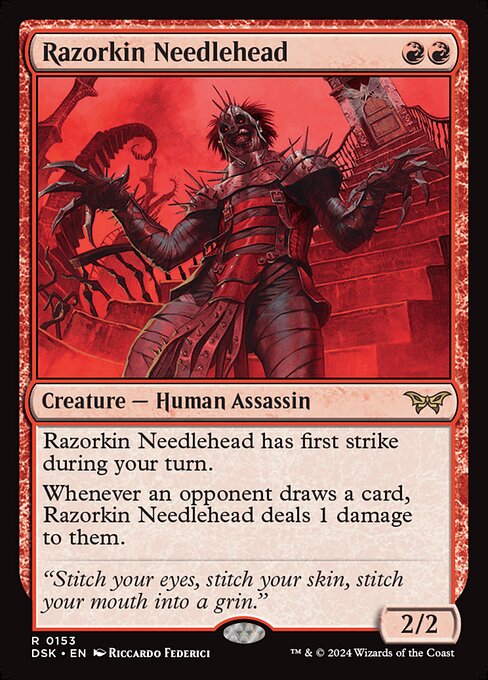 Razorkin Needlehead
 Appendage Amalgam
 Bear Trap
 Enduring Curiosity
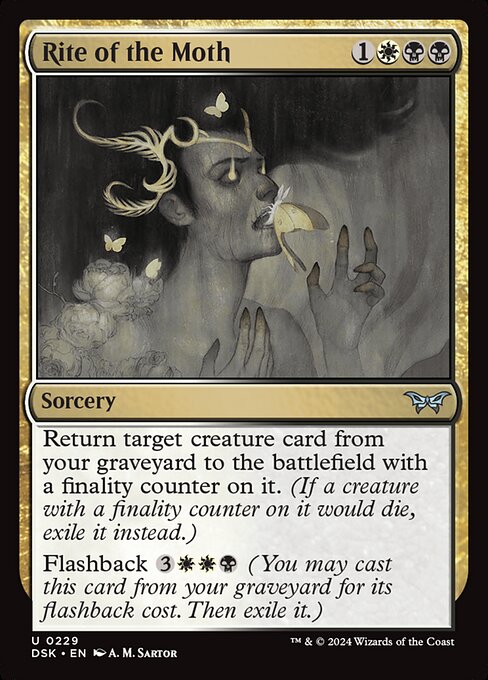 Rite of the Moth
 Acrobatic Cheerleader
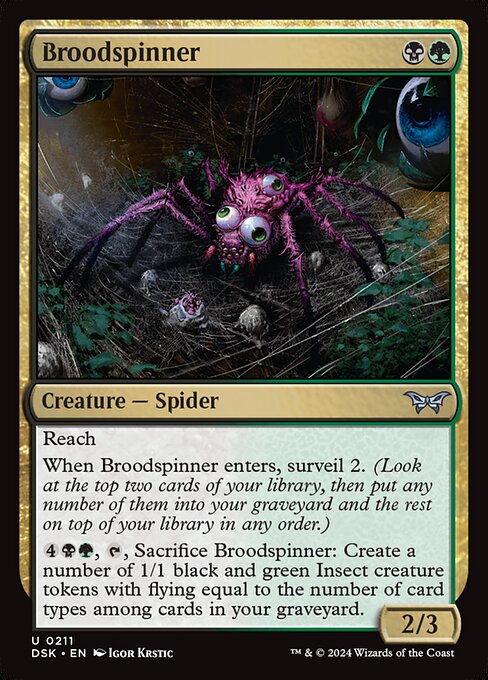 Broodspinner
 Slavering Branchsnapper
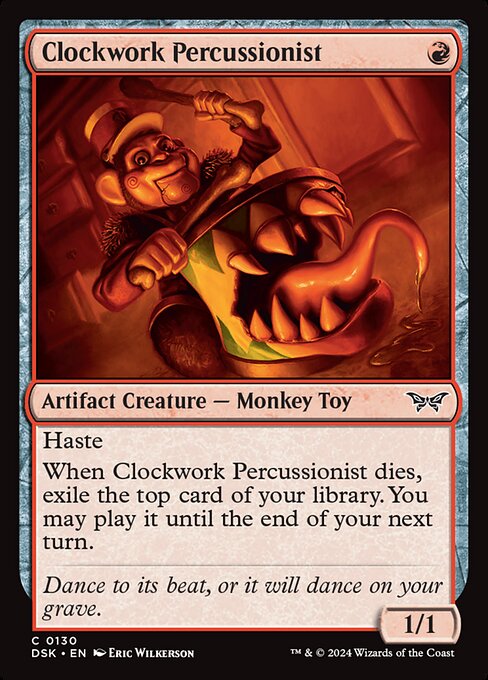 Clockwork Percussionist
 Enduring Courage
 Kaito, Bane of Nightmares
 Nowhere to Run
 Restricted Office // Lecture Hall
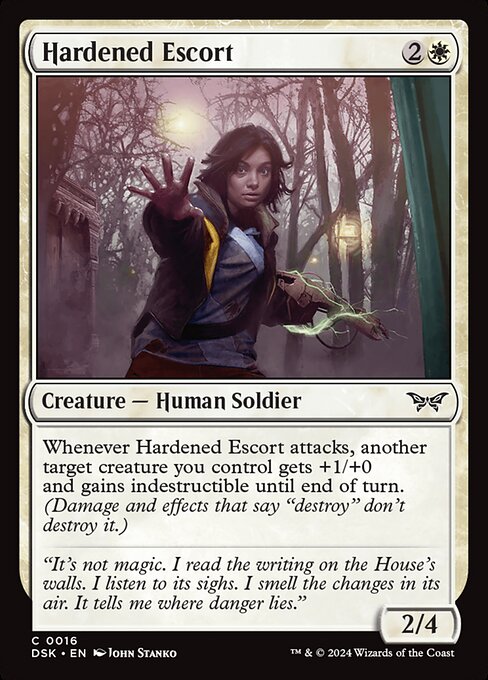 Hardened Escort
 Horrid Vigor
 Popular Egotist
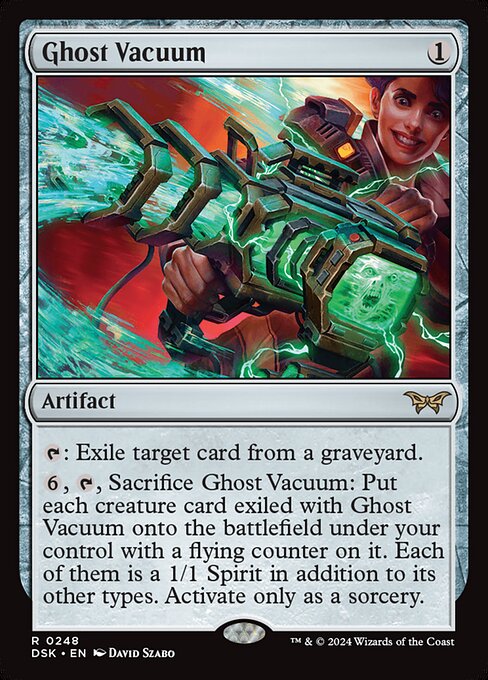 Ghost Vacuum
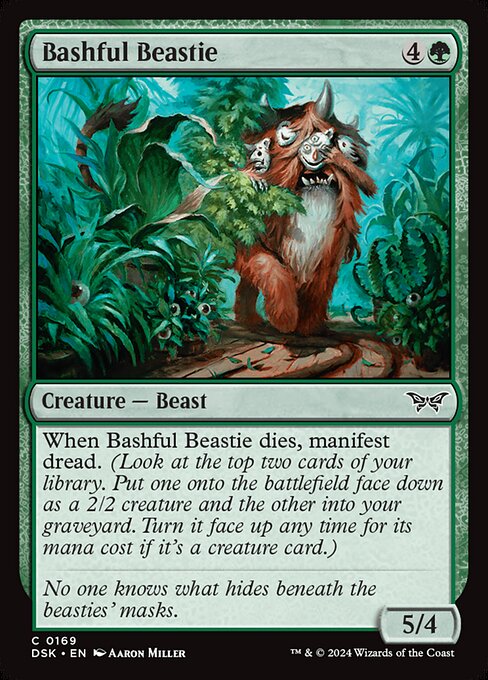 Bashful Beastie
 Diversion Specialist
 Fear of the Dark
 Greenhouse // Rickety Gazebo
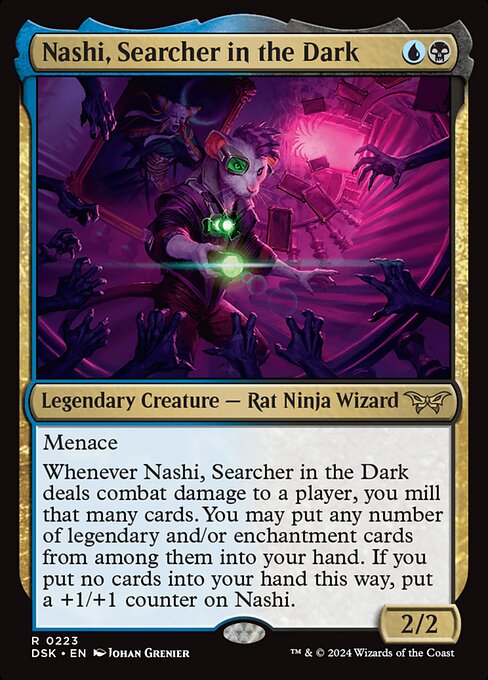 Nashi, Searcher in the Dark
 Grasping Longneck
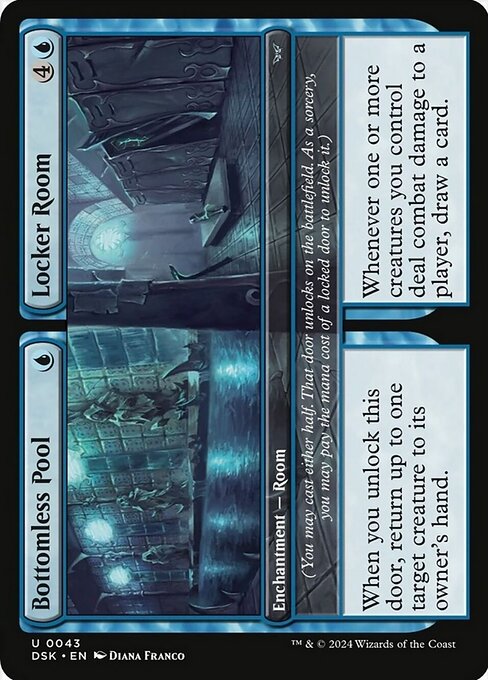 Bottomless Pool // Locker Room
 Charred Foyer // Warped Space
 Attack-in-the-Box
 The Tale of Tamiyo
 Niko, Light of Hope
 Fear of Immobility
 Floodpits Drowner
 Cynical Loner
 Spectral Snatcher
 Abandoned Campground
 Fear of Exposure
 Piggy Bank
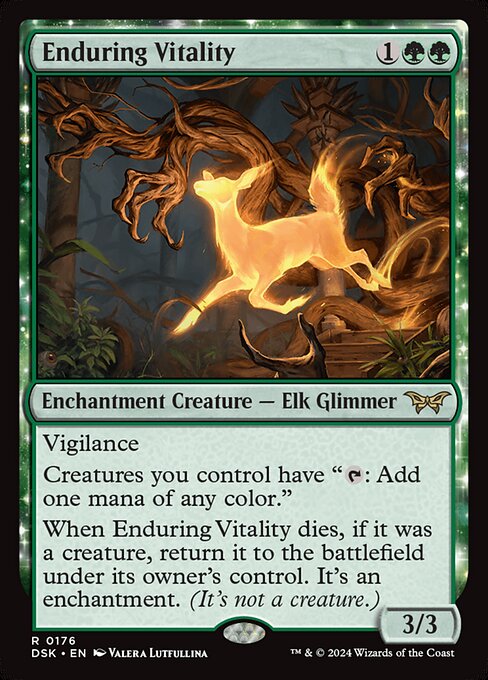 Enduring Vitality
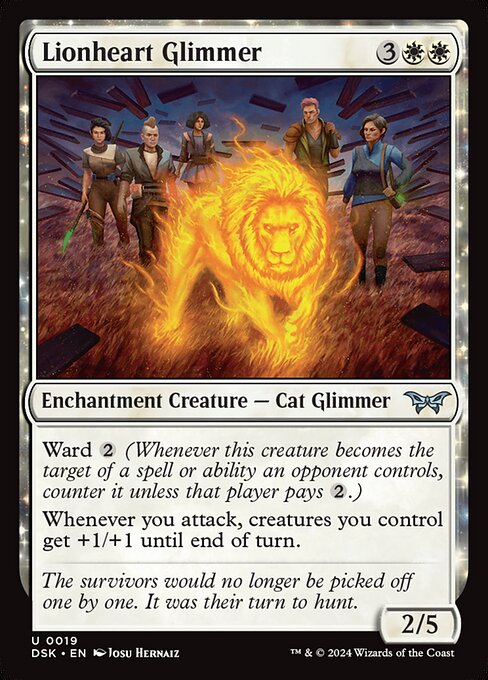 Lionheart Glimmer
 Sheltered by Ghosts