
Intrepid Rabbit
Common · Creature — Rabbit Soldier · At the table
Paying offspring gives you two Rabbits and two enter triggers. Their temporary boosts can prepare an attack.
The set’s mechanics with worked examples, then every word on the cards.
Pay an extra cost while casting the creature to make a 1/1 token copy when it enters.
Paying offspring gives you two Rabbits and two enter triggers. Their temporary boosts can prepare an attack.
Promise the named gift to an opponent as you cast the spell to unlock its other effects.
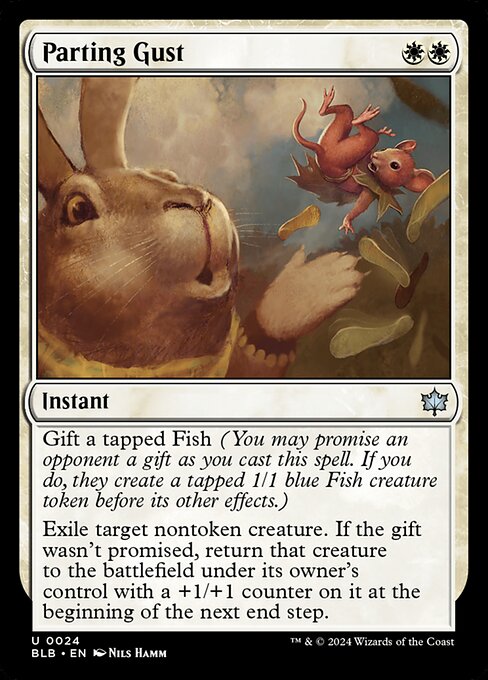
Promising a tapped Fish changes what Gust can do. The newly created Fish cannot be the target you already chose.
Choose one payment: exile three cards from your graveyard, or sacrifice a Food.
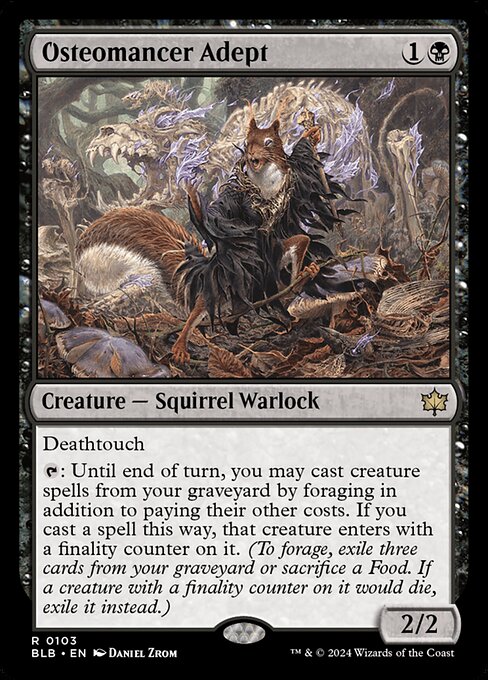
The Adept lets you cast creatures from the graveyard while adding a forage payment. Preserve enough graveyard cards or Foods to pay it.
The first time each turn this creature becomes the target of a spell or ability you control, its valiant ability triggers.
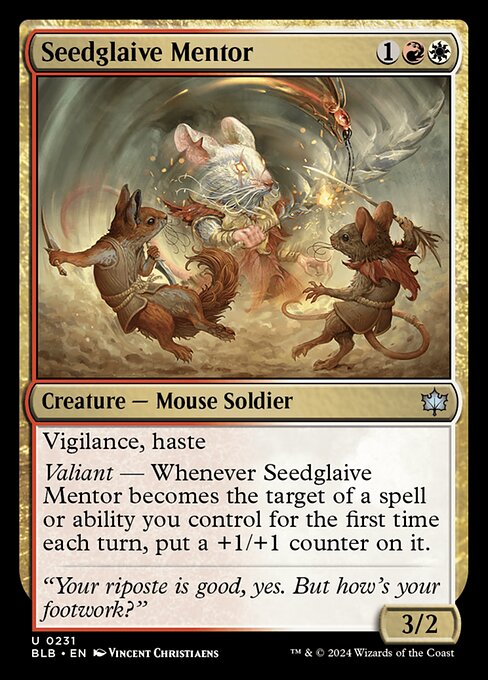
Target Mentor with a combat trick to earn its permanent counter as well as the trick’s effect.
Track the total mana you spend to cast spells during a turn. Expend N happens as you spend that turn’s Nth mana on spells.

With Mentor already in play, two two-mana spells can trigger expend 4 just as a four-mana spell can.
Choose modes whose pawprint symbols total no more than five. You may repeat a mode within that limit.
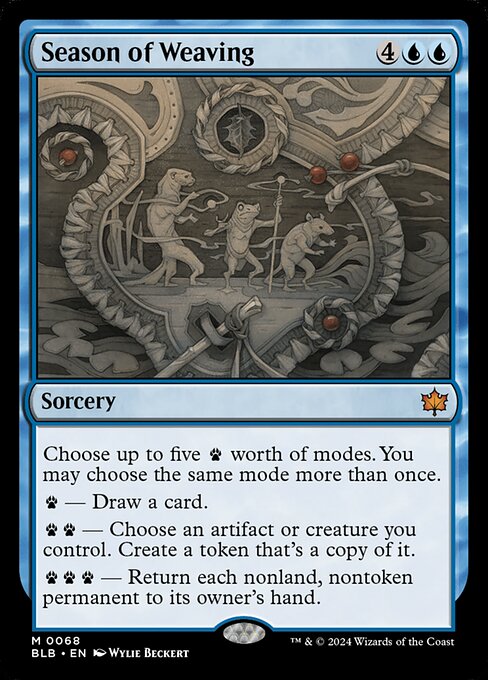
Mix card draw, copying and returning permanents according to the board. Repeating a low-cost mode is allowed.
A Class begins at level 1. Pay its next level’s cost at sorcery speed to add that level’s ability.
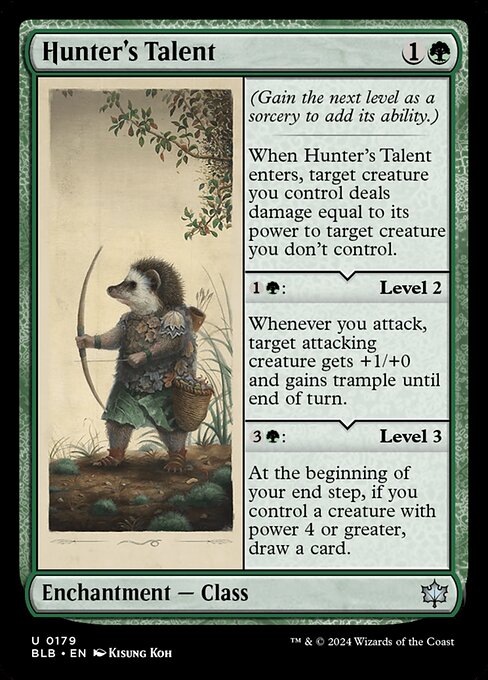
The first enter trigger deals damage. Level 2 improves an attacker, and level 3 can draw cards when you control enough power.
A Food token is an artifact you can pay two mana to tap and sacrifice for three life.
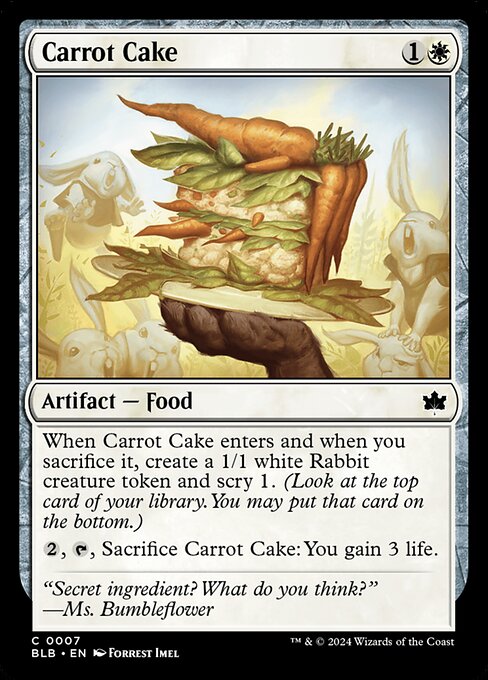
Cake makes a Rabbit on arrival and another when sacrificed, whether you sacrifice it for life or to forage.
Threshold abilities care about having at least seven cards in your graveyard right now.
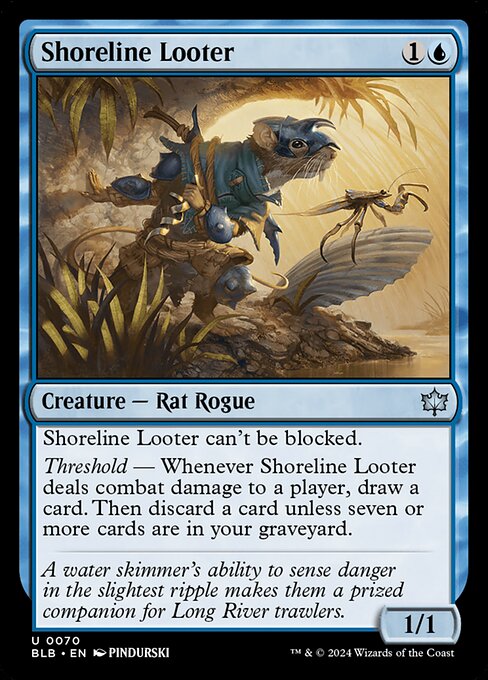
Before threshold, its hit draws and discards. With seven graveyard cards, you keep the drawn card without that discard.
Each noncreature spell you cast gives this creature +1/+1 until end of turn.

Its discount helps cast multiple instants and sorceries, and each can also grow Mentor for the turn.
Every word on the cards and in the deck plans, defined once. Find a term, read its wording, then see it on a card.
A +1/+1 counter adds one power and one toughness; a −1/−1 counter subtracts one of each. These counters stay until removed or the object changes zones.
Watch out: If a permanent has both kinds, matching pairs are removed as a state-based action. A temporary +1/+1 effect is not a counter.
Reduce the generic part of this spell’s cost by one for each permanent of the specified kind you control.
Watch out: It does not reduce the colored mana symbols. Check exactly what the card has affinity for.
This object has every creature type in every zone. It can support any animalfolk creature-type reward, but changeling does not grant noncreature types such as Food or Cave.
A Class begins at level 1. Pay its next level’s cost at sorcery speed to add that level’s ability.
Draw a card, then discard a card. If you discard a nonland card, put a +1/+1 counter on the conniving creature. Discarding a land still improves your hand but does not add the counter.
To counter a spell or ability is to remove it from the stack without its effects resolving. A countered spell normally goes to its owner’s graveyard.
Watch out: This use of “counter” is different from placing a marker such as a +1/+1 counter on a card.
A mix of costs that lets you use your mana on early and late turns.
Any positive amount of damage this source deals to a creature is enough to make that damage lethal.
Watch out: It works with a fight or other noncombat damage. Indestructible still prevents destruction.
This creature cannot attack.
Watch out: It can still block and use its abilities unless something else prevents that.
Move a permanent from the battlefield to its owner’s graveyard because an effect or lethal damage destroys it.
Watch out: Indestructible stops destruction. Sacrificing, exiling, and reducing toughness to 0 are different ways for a creature to leave.
Move a card from your hand to your graveyard.
Watch out: Discarding is not casting. It does not pay the card’s mana cost or produce its normal spell effect.
This creature deals combat damage in the first-strike damage step and again in the normal damage step if it is still in combat.
Watch out: If its blocker dies in the first step, a blocked attacker does not hit the player in the second step unless an ability such as trample allows it.
An Aura’s enchant line tells you what it may be attached to.
Watch out: An Aura cast as a spell targets what it will enchant. If it later becomes illegally attached, it normally goes to the graveyard.
Pay the equip cost to attach this Equipment to a target creature you control. Normally, activate equip only in your main phase when the stack is empty.
Watch out: The Equipment usually stays on the battlefield when the creature leaves. Moving it to another creature normally costs another equip activation.
Move the object to the exile zone. It is separate from the graveyard.
Watch out: A card in exile cannot normally be played. You need a rule or effect giving permission, such as a resolved Adventure.
Track the total mana you spend to cast spells during a turn. Expend N happens as you spend that turn’s Nth mana on spells.
The two creatures each deal damage equal to their power to the other at the same time.
Watch out: This is not combat. First strike and double strike do not add damage steps; deathtouch and lifelink still affect damage.
If a permanent with a finality counter would go from the battlefield to a graveyard, exile it instead.
Watch out: It does not die when this replacement sends it to exile, so ordinary “dies” abilities do not trigger.
This creature deals combat damage in an earlier step, before creatures without first strike or double strike.
Watch out: A creature killed in that early damage step usually cannot deal its normal combat damage.
You may cast this spell when you could cast an instant, including during another player’s turn when you have priority.
Watch out: Flash changes when you may cast it. It does not let you cast from a different zone or avoid its costs.
You may cast this instant or sorcery from your graveyard by paying its flashback cost.
Watch out: Follow its normal timing. A spell cast with flashback is exiled when it leaves the stack, even if it is countered.
An attacking creature with flying can be blocked only by creatures with flying or reach.
Watch out: A flying creature can block a creature without flying.
A standard Food token is an artifact with an ability costing two mana, tapping it, and sacrificing it to gain 3 life.
Watch out: Food is also an artifact type. Turning a card into a Food follows that effect’s text; the type alone does not grant an ability.
A Food token is an artifact you can pay two mana to tap and sacrifice for three life.
Choose one payment: exile three cards from your graveyard, or sacrifice a Food.
As you cast the spell, you may promise the named gift to an opponent. The card explains the gift and any benefit you receive for promising it.
Watch out: Choose while casting; you cannot wait to see whether the spell resolves. In Two-Headed Giant, your teammate is not an opponent.
Promise the named gift to an opponent as you cast the spell to unlock its other effects.
This creature may attack and use abilities with the tap or untap symbol even if you have not controlled it since your turn began.
Watch out: It still needs to be untapped to attack or pay a tap cost.
A permanent with hexproof cannot be targeted by spells or abilities its controller’s opponents control.
Watch out: Its controller may target it. Effects that do not target can still affect it.
Each split mana symbol can be paid using either half. For example, {W/U} costs one white or one blue mana; {2/B} costs two mana of any type or one black mana.
Watch out: Choose separately for each symbol. A {W/U} card is both white and blue even if you use only one color to cast it.
This permanent cannot be destroyed by lethal damage or an effect that says “destroy.”
Watch out: It can still be exiled or sacrificed. A creature with toughness 0 or less still goes to the graveyard.
A keyword counter grants its named ability, such as trample, to the object it is on.
Watch out: A trample counter is not a +1/+1 counter. The named ability and the creature’s size are separate.
This label groups abilities that reward a land entering under your control. The rest of each card tells you its effect.
Watch out: A land entering from a spell can trigger landfall too. The label itself adds no rules; read the actual ability.
When this source deals damage, its controller gains that much life at the same time.
Watch out: This also works for noncombat damage. It uses the damage actually dealt, not simply the creature’s printed power.
A planeswalker’s loyalty is the number of loyalty counters on it. Its loyalty costs add or remove counters, and damage removes that much loyalty.
Watch out: A planeswalker with 0 loyalty goes to the graveyard. Adding more counters does not let you activate it a second time in the same turn.
This attacking creature cannot be blocked by just one creature; at least two blockers are needed.
Watch out: It can still go unblocked. Losing one blocker after blocks are declared does not undo the original block.
Put the stated number of cards from the top of the named player’s library into that player’s graveyard.
Watch out: Milling is not drawing. An empty library makes you lose when you must draw from it, not merely when its last card is milled.
Pay an extra cost while casting the creature to make a 1/1 token copy when it enters.
Choose modes whose pawprint symbols total no more than five. You may repeat a mode within that limit.
Whenever you cast a noncreature spell, this creature gets +1/+1 until the turn ends.
Watch out: Lands are not spells. The prowess trigger can resolve even if the spell that triggered it is countered.
Each noncreature spell you cast gives this creature +1/+1 until end of turn.
This creature may block creatures with flying.
Watch out: Reach does not give it flying or make its own attacks harder to block.
Move a permanent you control from the battlefield to its owner’s graveyard.
Watch out: Sacrifice is not destruction: indestructible does not stop it. You cannot sacrifice a teammate’s permanent unless an effect specifically permits it.
Look at the stated number of cards from the top of your library. Put any number on the bottom and the rest back on top, choosing their order.
Watch out: Scry does not draw a card. Cards you move to the bottom do not go to the graveyard.
Repeated useful cards arriving late may indicate an open color; one card is weak evidence.
If a permanent with a stun counter would untap, remove one stun counter instead and leave it tapped.
Watch out: The counter does not tap an untapped permanent by itself. Several stun counters can stop several separate untaps.
Look at the stated number of cards from the top of your library. Put any number into your graveyard and the rest back on top in your chosen order.
Watch out: Surveil does not draw a card. Unlike scry, unwanted cards go to the graveyard instead of the bottom.
Cards helping each other do a useful job.
Tap means turn a permanent sideways; untap means return it upright. A tap symbol in a cost means you must tap that permanent to pay.
Watch out: Being tapped by another effect does not activate an ability or produce mana. Creatures normally cannot pay their own tap-symbol costs until you have controlled them since your turn began.
This label groups abilities that care about having seven or more cards in your graveyard.
Watch out: Count cards in your own graveyard. Read the ability to see when it checks the condition and what it changes.
Threshold abilities care about having at least seven cards in your graveyard right now.
An attacking creature can assign excess combat damage to what it is attacking after assigning lethal damage to every blocker.
Watch out: It does not automatically send all damage past a small blocker. Trample on a blocking creature does not send damage to the attacking player.
A standard Treasure token is an artifact you can tap and sacrifice to add one mana of any color.
Watch out: A Treasure is not a land. Using it spends the token; it does not remain for another turn.
The first time each turn this creature becomes the target of a spell or ability you control, its valiant ability triggers.
Attacking does not tap this creature.
Watch out: It must still be untapped to be declared as an attacker. Vigilance does not remove summoning sickness.
When an opponent’s spell or ability targets this permanent, ward triggers. That spell or ability is countered unless the opponent pays the ward cost.
Watch out: Ward is not hexproof: the opponent can target it and choose whether to pay. An effect that does not target does not trigger ward.
 Baylen, the Haymaker
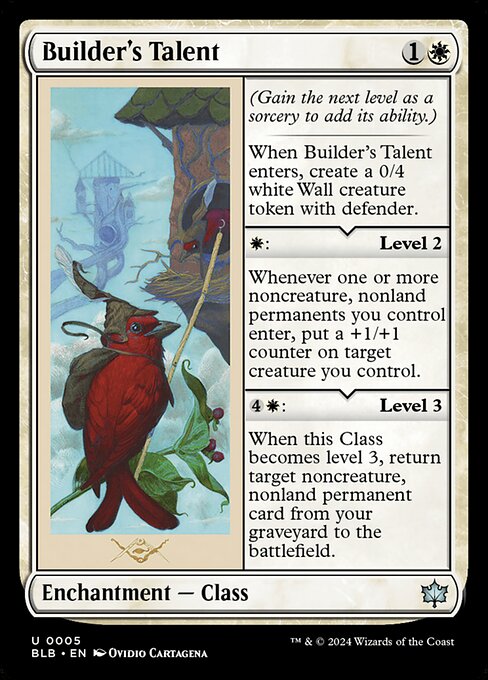 Builder's Talent
 Bushy Bodyguard
 Frogmite
 Polliwallop
 Scales of Shale
 Barkform Harvester
 Three Tree Mascot
 Bandit's Talent
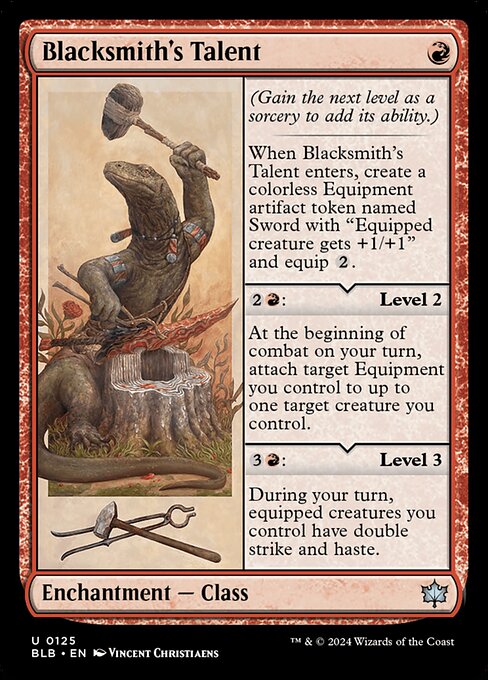 Blacksmith's Talent
 Ledger Shredder
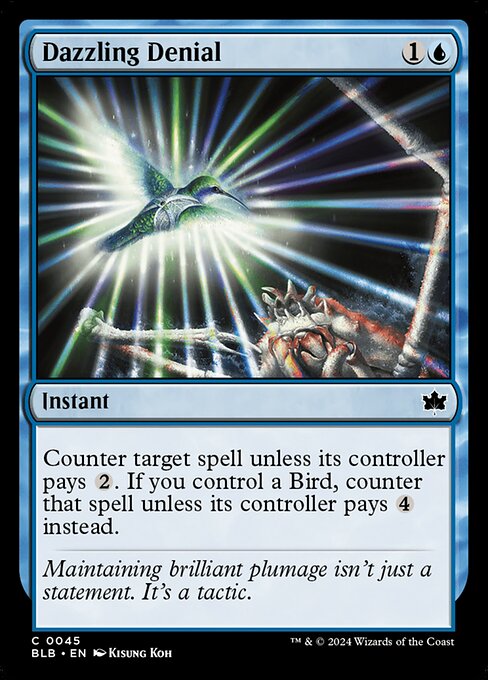 Dazzling Denial
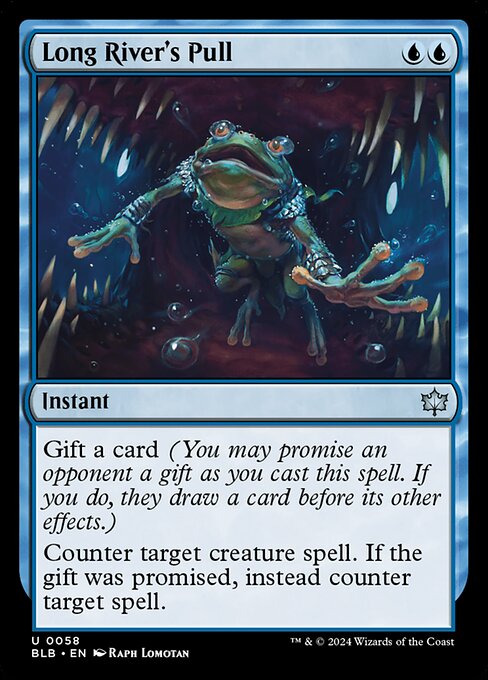 Long River's Pull
 Spellgyre
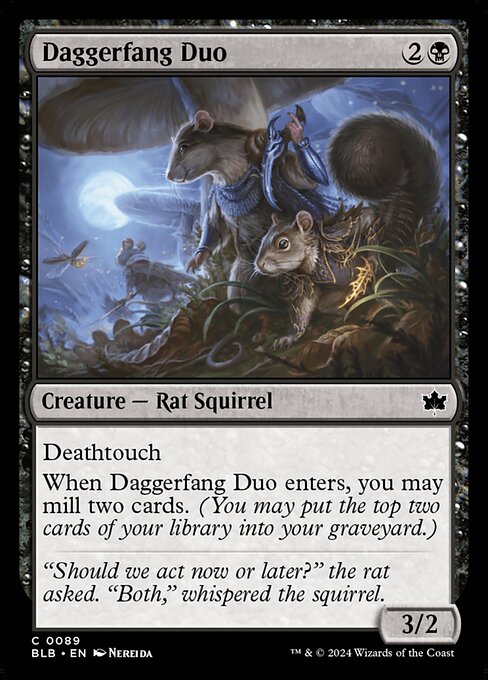 Daggerfang Duo
 Glarb, Calamity's Augur
 Hazardroot Herbalist
 Bumbleflower's Sharepot
 Downwind Ambusher
 Feed the Cycle
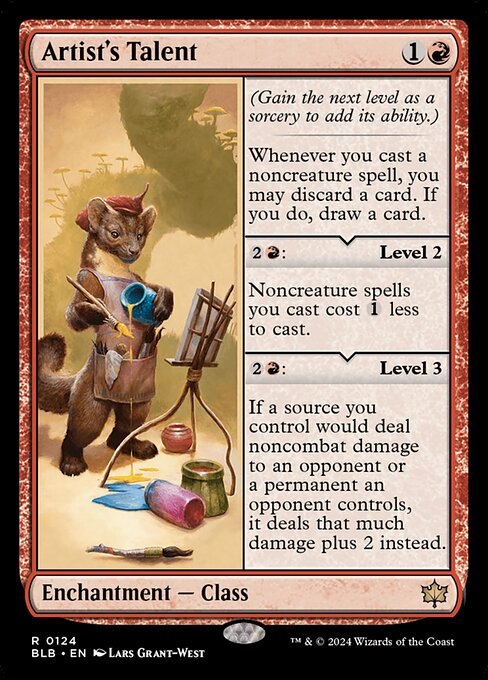 Artist's Talent
 Bellowing Crier
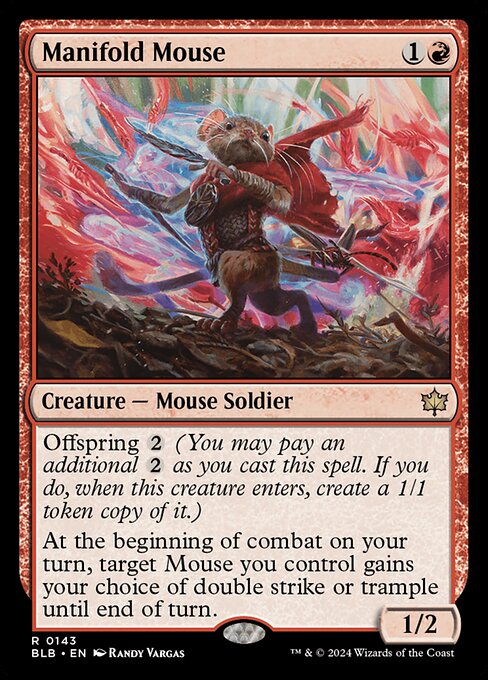 Manifold Mouse
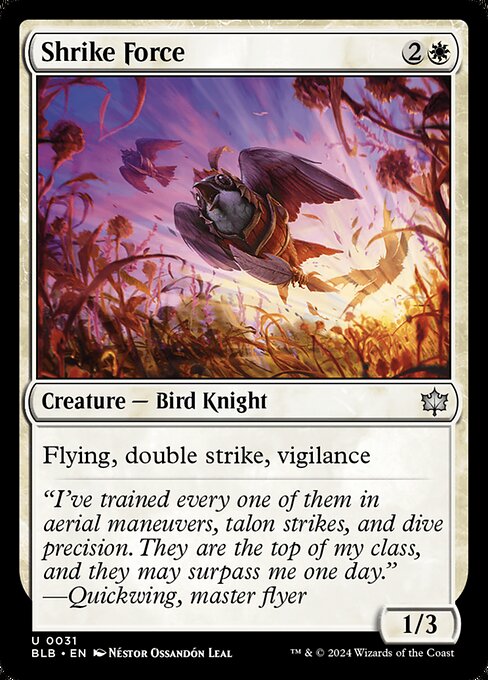 Shrike Force
 Feather of Flight
 Kitnap
 Sugar Coat
 Mabel, Heir to Cragflame
 Short Bow
 Agate Assault
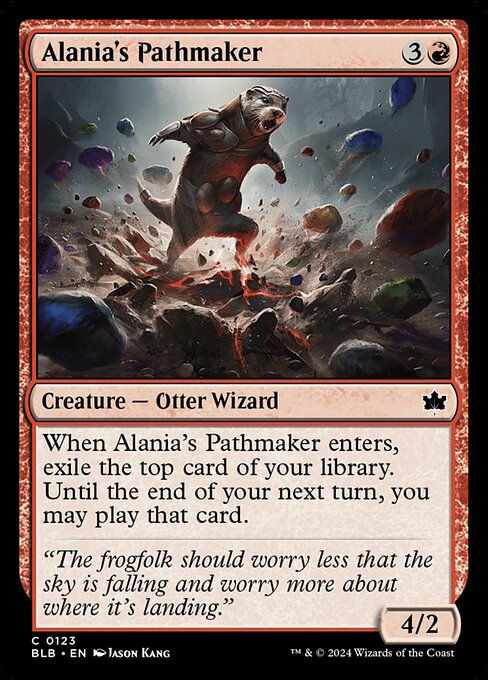 Alania's Pathmaker
 Banishing Light
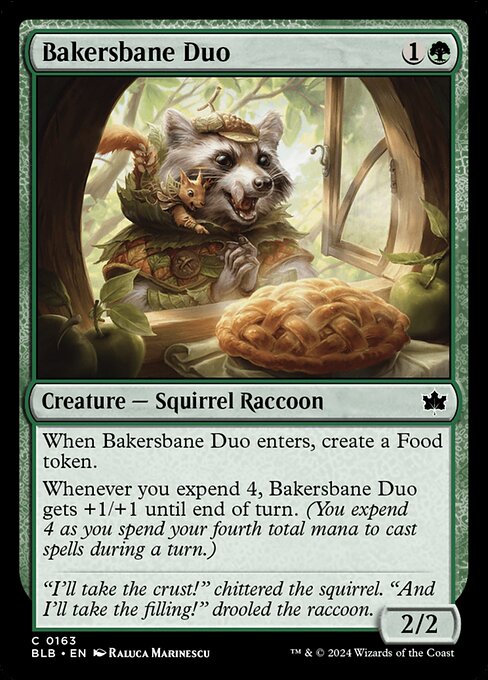 Bakersbane Duo
 Bark-Knuckle Boxer
 Brambleguard Veteran
 Hivespine Wolverine
 Longstalk Brawl
 Kastral, the Windcrested
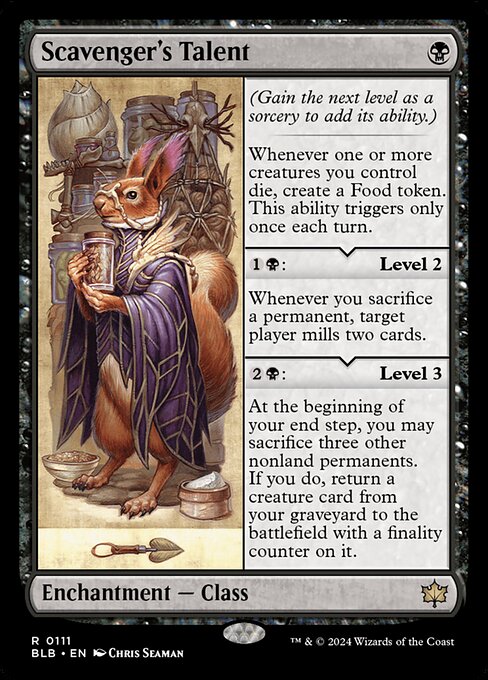 Scavenger's Talent
 Brazen Collector
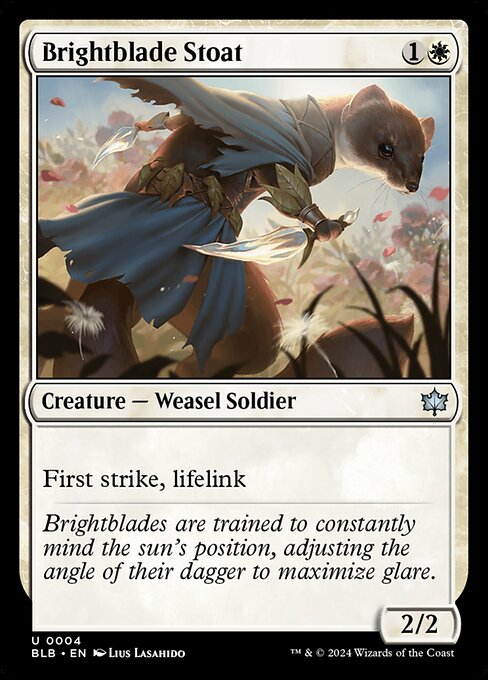 Brightblade Stoat
 Valley Rally
 Eddymurk Crab
 Otterball Antics
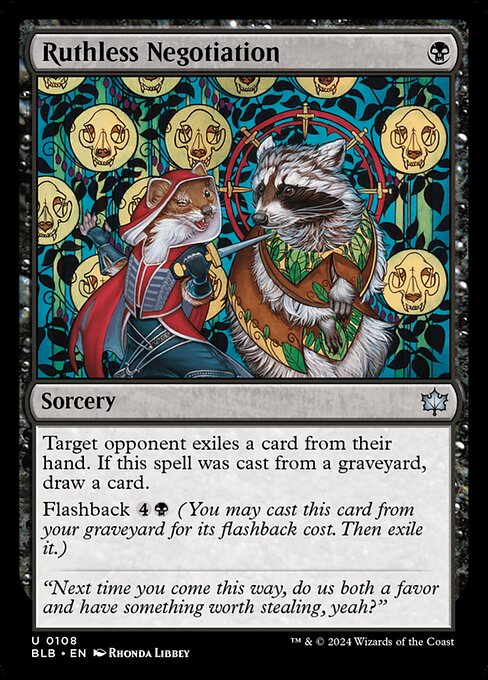 Ruthless Negotiation
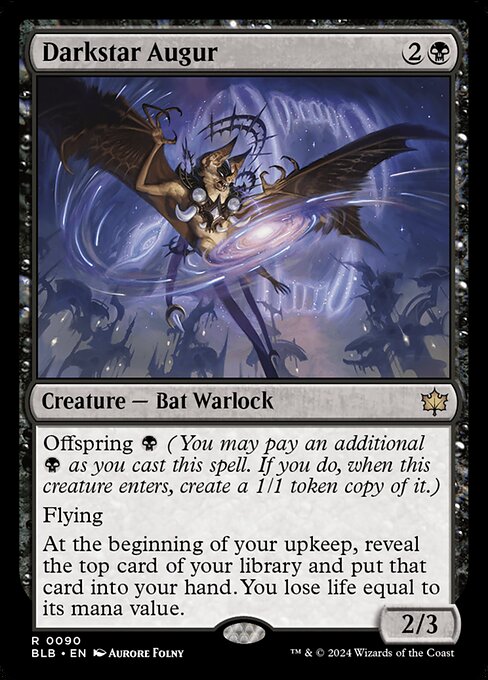 Darkstar Augur
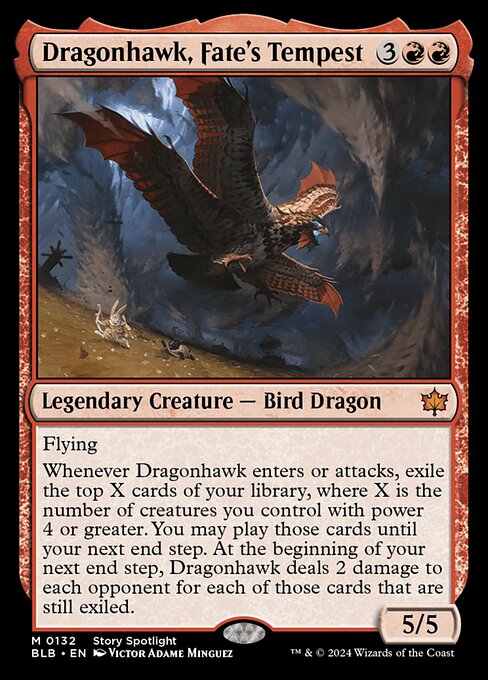 Dragonhawk, Fate's Tempest
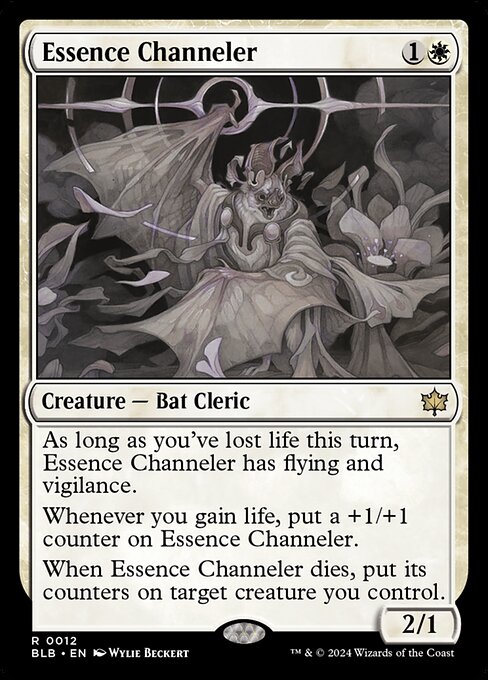 Essence Channeler
 Bonecache Overseer
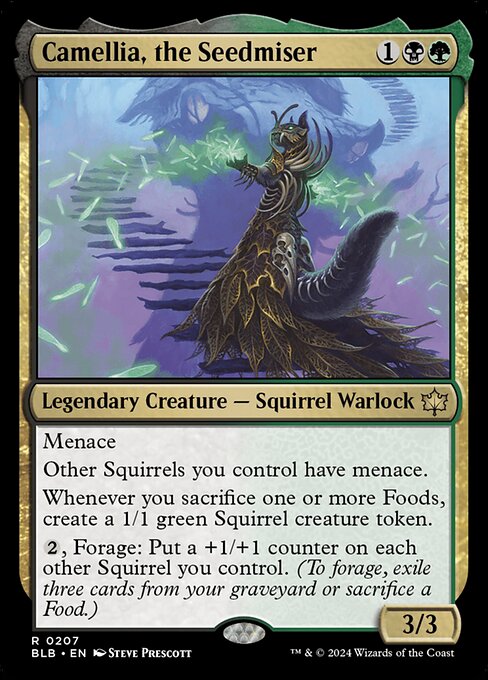 Camellia, the Seedmiser
 Corpseberry Cultivator
 Blooming Blast
 Coiling Rebirth
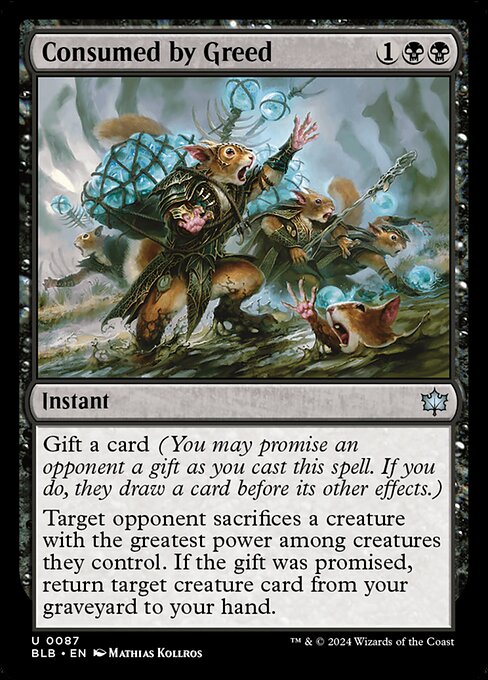 Consumed by Greed
 Emberheart Challenger
 Hearthborn Battler
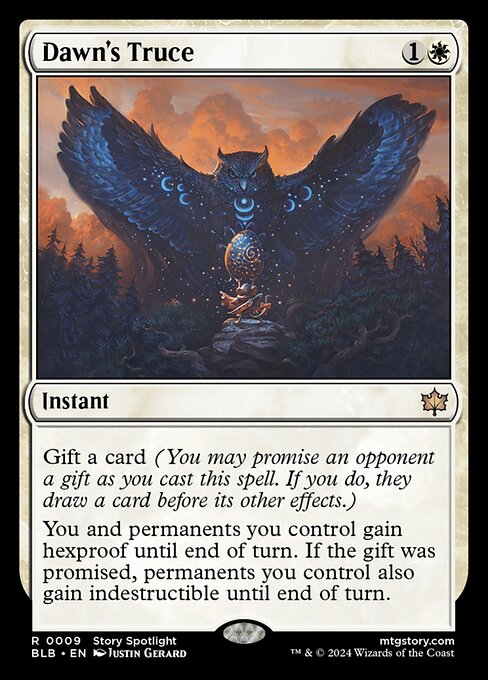 Dawn's Truce
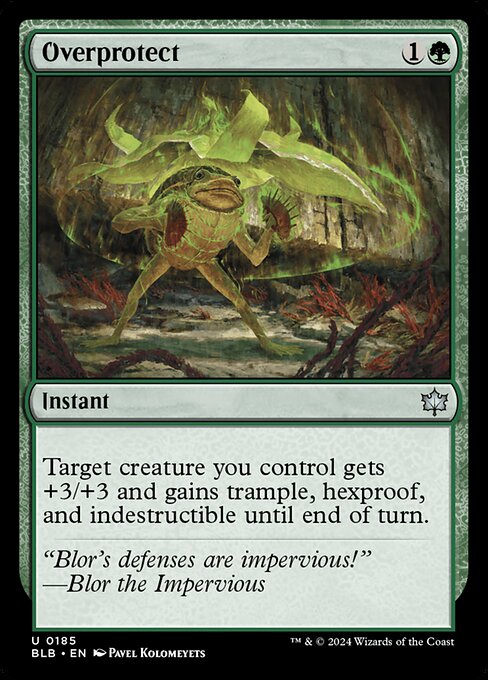 Overprotect
 Plumecreed Escort
 Cindering Cutthroat
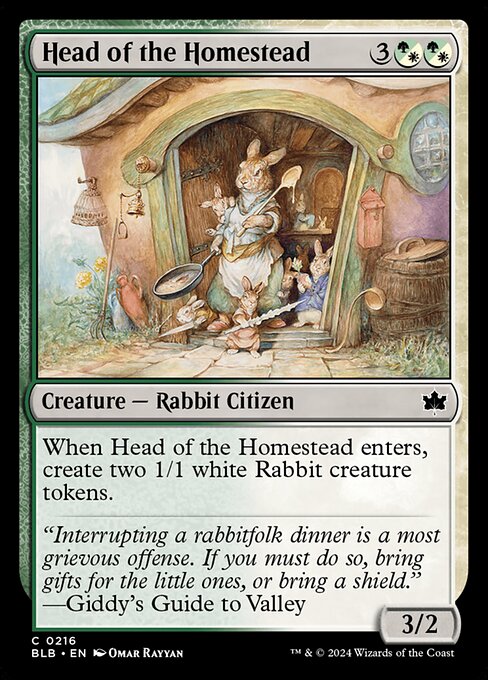 Head of the Homestead
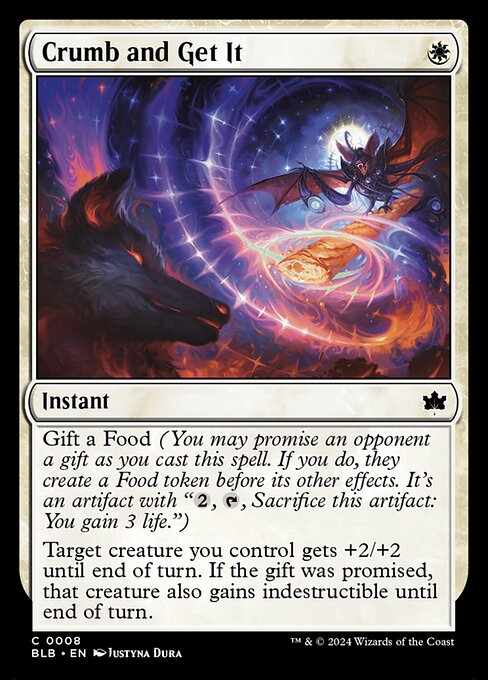 Crumb and Get It
 Salvation Swan
 Season of the Burrow
 Iridescent Vinelasher
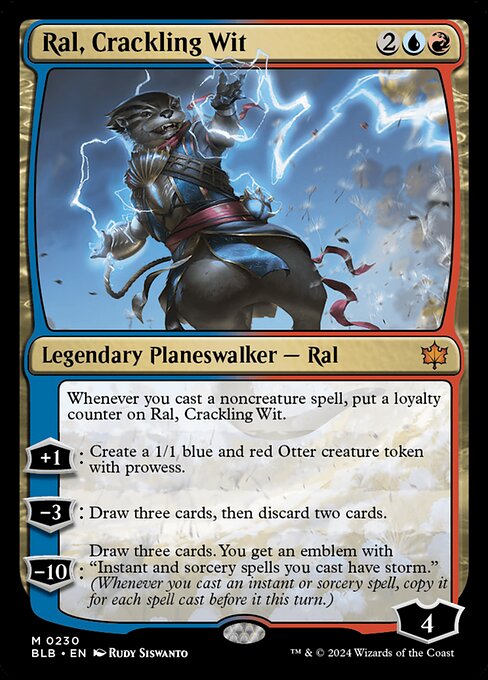 Ral, Crackling Wit
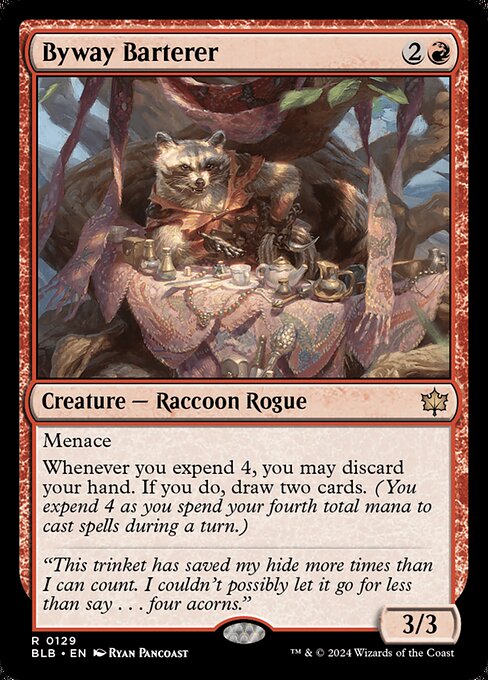 Byway Barterer
 Cache Grab
 Lumra, Bellow of the Woods
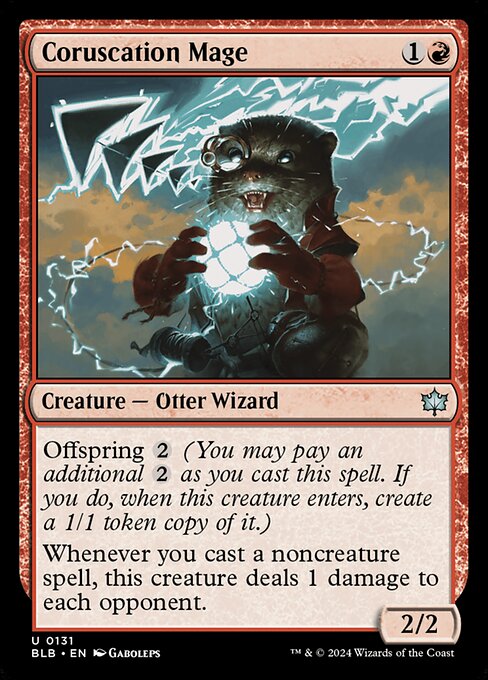 Coruscation Mage
 Season of Gathering
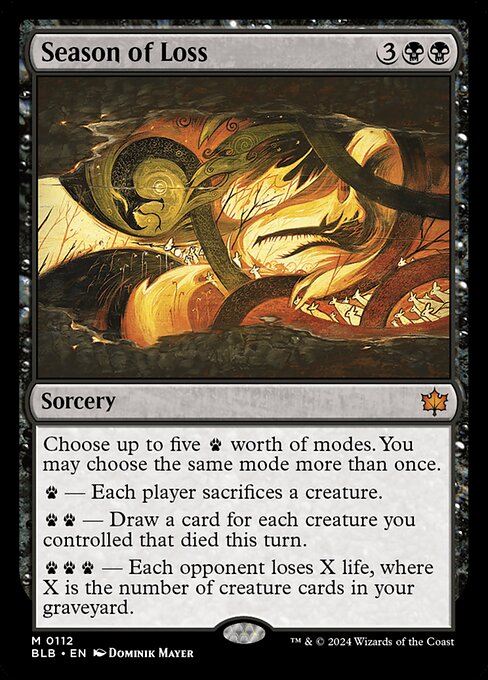 Season of Loss
 Season of the Bold
 Kitsa, Otterball Elite
 Lightshell Duo
 Clifftop Lookout
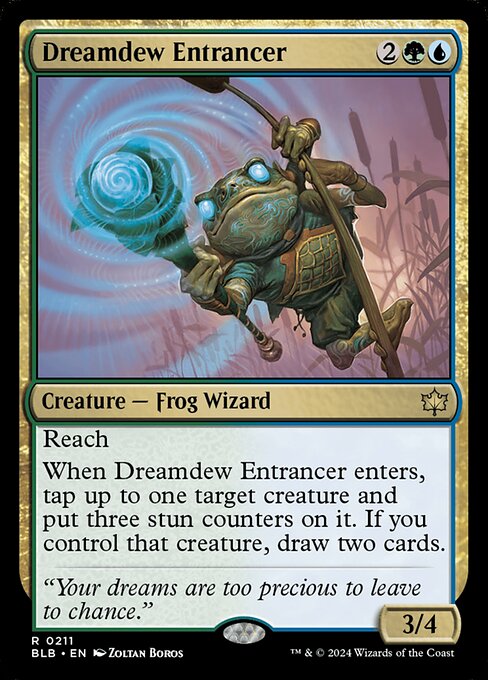 Dreamdew Entrancer
 Rabbit Response
 Valley Questcaller
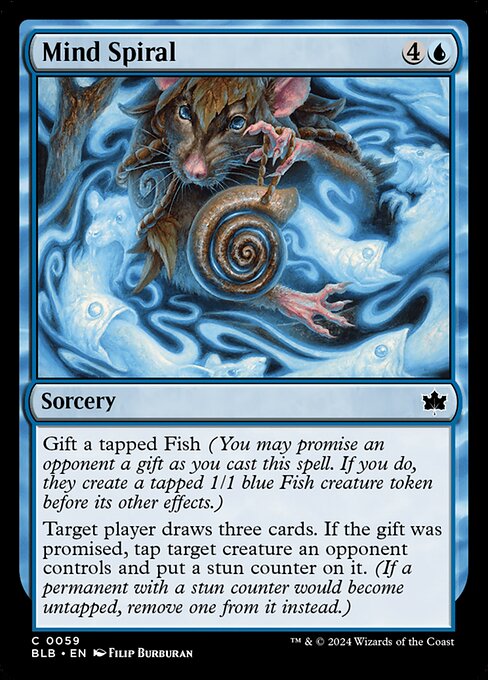 Mind Spiral
 Diresight
 Gossip's Talent
 Mind Drill Assailant
 Mindwhisker
 Nightwhorl Hermit
 Burrowguard Mentor
 Druid of the Spade
 Beza, the Bounding Spring
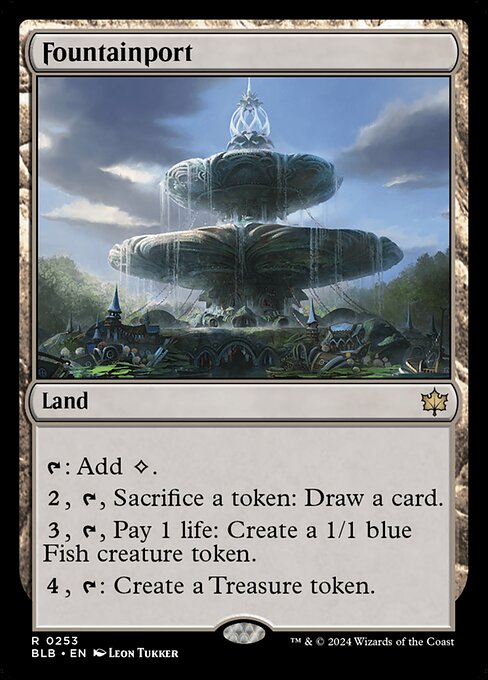 Fountainport
 Flowerfoot Swordmaster
 Heartfire Hero
 Azure Beastbinder
 Clement, the Worrywort
 Gev, Scaled Scorch
 Innkeeper's Talent
 Long River Lurker