
Birthday Escape
Common · Sorcery · At the table
Birthday Escape can give your bearer the second ability. Attack to draw and discard before blocks; Prince Imrahil makes a Soldier if that is your second draw this turn.
The set’s mechanics with worked examples, then every word on the cards.
Advance your Ring emblem by one level, then choose a creature you control as Ring-bearer. Your progress lasts all game, even if that creature dies.
Birthday Escape can give your bearer the second ability. Attack to draw and discard before blocks; Prince Imrahil makes a Soldier if that is your second draw this turn.
Add the stated number of +1/+1 counters to one Army. If you have no Army, first make a 0/0 black Orc Army token.
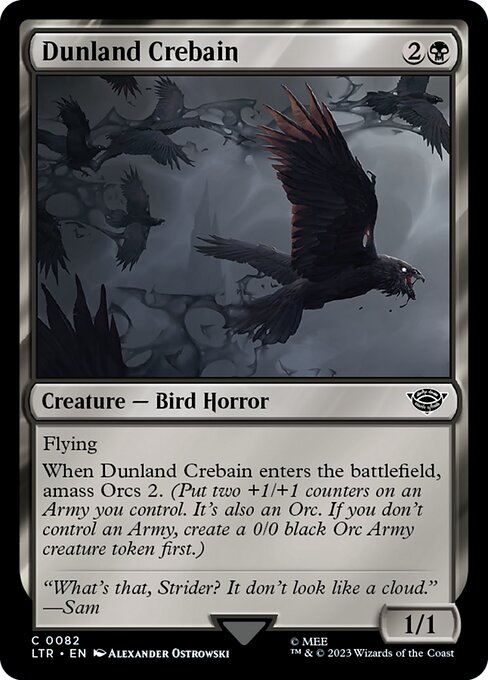
Dunland Crebain makes a 2/2 Army when you have none. A second Crebain normally grows it to 4/4 instead of making another Army.
A Food token is an artifact you can use for life: pay two mana, tap it and sacrifice it to gain three life. Other cards offer different ways to spend Food.
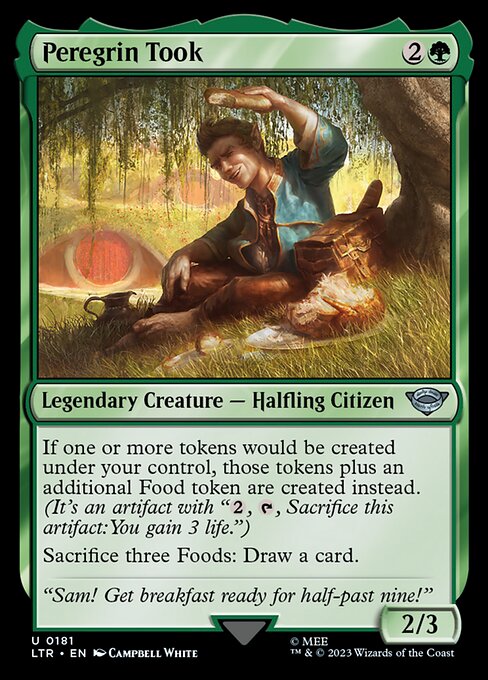
Peregrin Took can sacrifice three Foods to draw a card without paying the Food tokens’ own two-mana costs. You do not also gain nine life.
Discard this card and pay its landcycling cost to search for a land with the stated basic land type, reveal it and put it into your hand. Then shuffle.

Troll of Khazad-dûm can find a Swamp for one mana early. Later, Rise of the Witch-king can return the discarded Troll to the battlefield.
Look at that many cards from the top of your library. Put any on the bottom and the rest back on top in the order you choose.

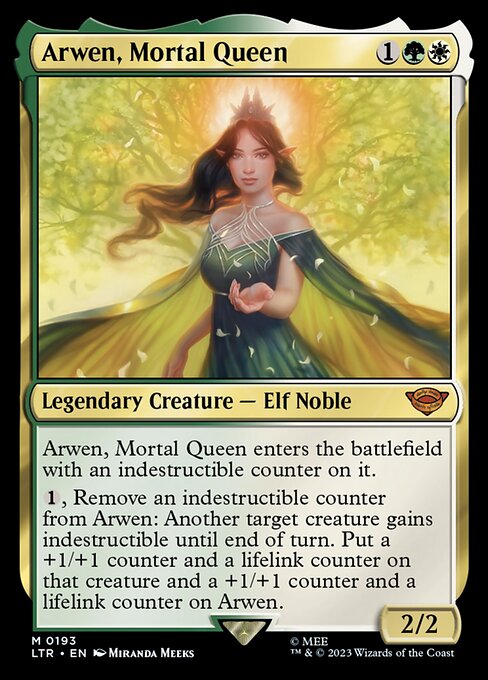
Grey Havens Navigator scries two. Arwen triggers once and adds one counter, because this was one scry event.
Legendary is a card supertype. If you control two legendary permanents with the same name, choose one to keep and put the other into your graveyard.

Errand-Rider of Gondor can let you keep its drawn card when you control a Ring-bearer, even if that creature was not originally legendary.
These rewards count the second individual card you draw in a turn. Your ordinary draw at the start of your own turn counts.
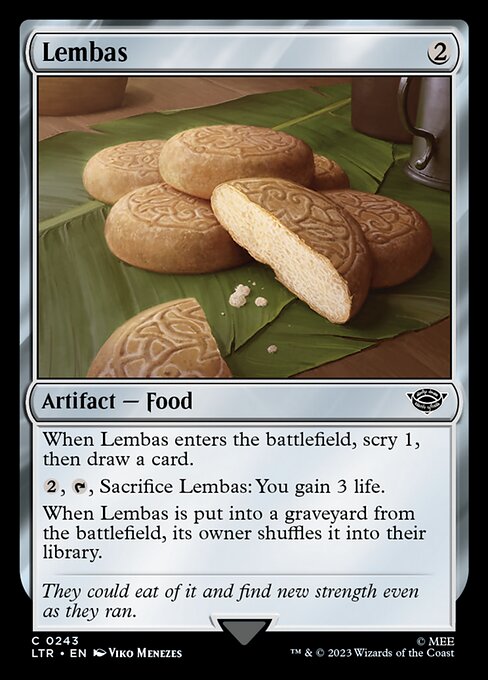
On your turn, play Lembas after your normal draw. Its card draw triggers Prince Imrahil once.
To sacrifice, move a permanent you control to its owner’s graveyard. It can pay a cost or happen because an effect tells you to.

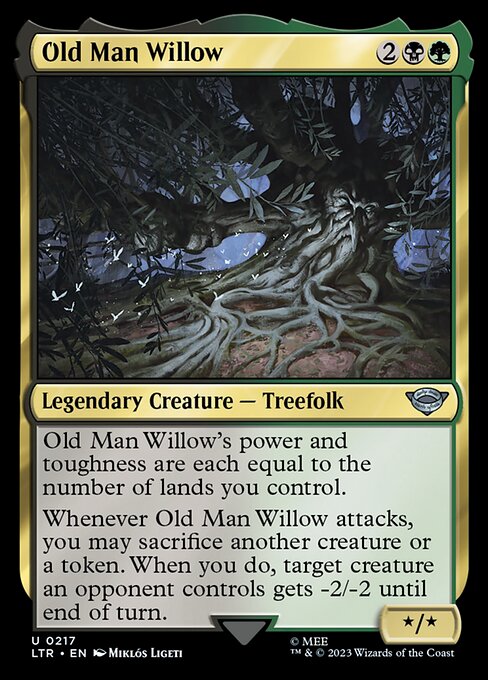
Improvised Club can sacrifice a Food or a creature. Old Man Willow can sacrifice another creature or any token, but not a nontoken Lembas.
Wordings that look familiar and are not. Read them before your first game.
Tap and sacrifice a Treasure token to make one mana of any color. It is a one-time resource.
Create the Treasure.
When you need mana, tap and sacrifice it.
Choose one color; spend it on a legal spell or ability.
At the table. Swarming of Moria makes a Treasure that can help cast an off-color spell once. You still need more fixing for repeated splash cards.
A single Treasure does not make an entire extra color reliable.
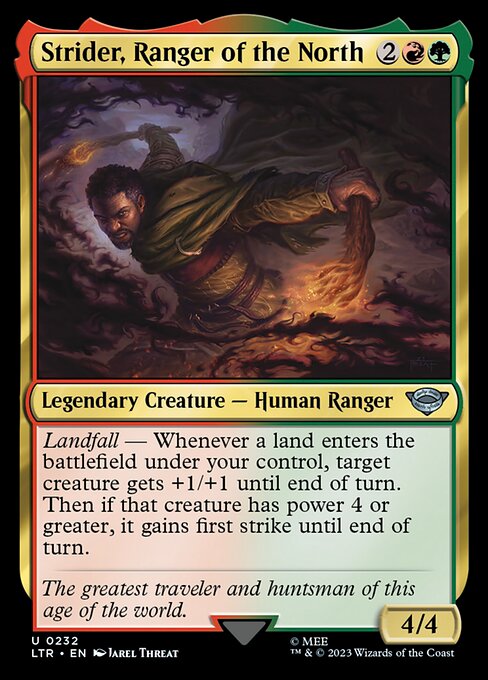
Landfall is an ability word highlighting a trigger when a land enters under your control. The card tells you the actual reward.
A land enters under your control.
Put the landfall trigger on the stack and choose any targets.
Resolve the printed effect.
At the table. Play a land before combat with Strider out. The target gets +1/+1, then gains first strike if its power is at least four.
A land put into your hand does not trigger landfall.
The creature deals combat damage in both the first-strike damage step and the regular damage step.
Resolve first-strike damage.
Remove creatures that die; players may act again.
Surviving double-strike creatures deal damage again.
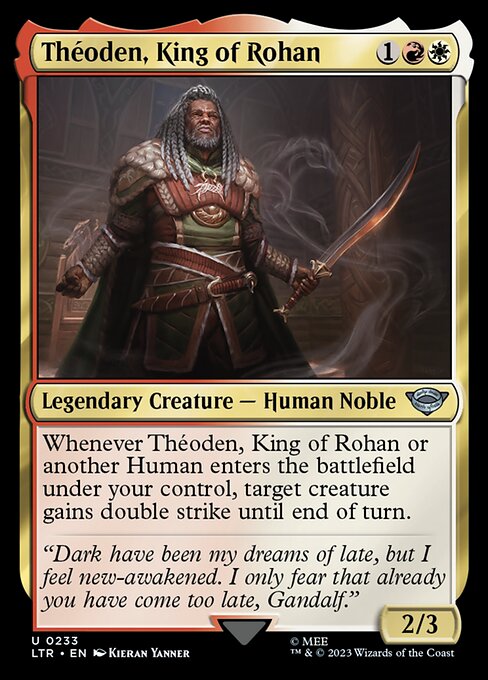
At the table. Théoden can give an attacker double strike when another Human enters. Two triggers on the same creature do not create a third damage step.
A blocked attacker without trample does not hit the player just because its blocker died in the first damage step.
Move that many cards from the top of a library to its owner’s graveyard. This does not draw or discard them.
Identify whose library the effect names.
Move the specified cards to that player’s graveyard.
Check any effect that counts cards there.
At the table. The Mouth of Sauron mills its chosen player (which can be you), then counts their instant and sorcery cards in the graveyard to determine how much to amass.
An empty library does not immediately lose the game; trying to draw from it does.
Every word on the cards and in the deck plans, defined once. Find a term, read its wording, then see it on a card.
A +1/+1 counter adds one power and one toughness; a −1/−1 counter subtracts one of each. These counters stay until removed or the object changes zones.
Watch out: If a permanent has both kinds, matching pairs are removed as a state-based action. A temporary +1/+1 effect is not a counter.
If you have no Army creature, create the specified 0/0 Army token. Then choose an Army you control, add the stated number of +1/+1 counters, and give it the named creature type if needed.
Watch out: Amass Goblins normally grows one Army. It does not make that many separate Goblins.
Pay the stated cost and discard the card to search for a land of the named type, reveal it and put it into your hand, then shuffle. This is an ability, not casting the card.
To counter a spell or ability is to remove it from the stack without its effects resolving. A countered spell normally goes to its owner’s graveyard.
Watch out: This use of “counter” is different from placing a marker such as a +1/+1 counter on a card.
Tap other untapped creatures you control with enough total power to turn this Vehicle into an artifact creature until the turn ends.
Watch out: The crew creatures do not become the Vehicle’s attackers. A newly played Vehicle still needs haste to attack that turn.
A mix of costs that lets you play early and keep using your mana.
From your hand, pay the cycling cost and discard this card to draw a card.
Watch out: Cycling is an activated ability, not casting the card. Typecycling searches for a specified kind of card instead.
Any positive amount of damage this source deals to a creature is enough to make that damage lethal.
Watch out: It works with a fight or other noncombat damage. Indestructible still prevents destruction.
This creature cannot attack.
Watch out: It can still block and use its abilities unless something else prevents that.
Move a permanent from the battlefield to its owner’s graveyard because an effect or lethal damage destroys it.
Watch out: Indestructible stops destruction. Sacrificing, exiling, and reducing toughness to 0 are different ways for a creature to leave.
Move a card from your hand to your graveyard.
Watch out: Discarding is not casting. It does not pay the card’s mana cost or produce its normal spell effect.
This creature deals combat damage in the first-strike damage step and again in the normal damage step if it is still in combat.
Watch out: If its blocker dies in the first step, a blocked attacker does not hit the player in the second step unless an ability such as trample allows it.
These rewards count the second individual card you draw in a turn. Your ordinary draw at the start of your own turn counts.
An Aura’s enchant line tells you what it may be attached to.
Watch out: An Aura cast as a spell targets what it will enchant. If it later becomes illegally attached, it normally goes to the graveyard.
Pay the equip cost to attach this Equipment to a target creature you control. Normally, activate equip only in your main phase when the stack is empty.
Watch out: The Equipment usually stays on the battlefield when the creature leaves. Moving it to another creature normally costs another equip activation.
Move the object to the exile zone. It is separate from the graveyard.
Watch out: A card in exile cannot normally be played. You need a rule or effect giving permission, such as a resolved Adventure.
The two creatures each deal damage equal to their power to the other at the same time.
Watch out: This is not combat. First strike and double strike do not add damage steps; deathtouch and lifelink still affect damage.
This creature deals combat damage in an earlier step, before creatures without first strike or double strike.
Watch out: A creature killed in that early damage step usually cannot deal its normal combat damage.
You may cast this spell when you could cast an instant, including during another player’s turn when you have priority.
Watch out: Flash changes when you may cast it. It does not let you cast from a different zone or avoid its costs.
An attacking creature with flying can be blocked only by creatures with flying or reach.
Watch out: A flying creature can block a creature without flying.
A standard Food token is an artifact with an ability costing two mana, tapping it, and sacrificing it to gain 3 life.
Watch out: Food is also an artifact type. Turning a card into a Food follows that effect’s text; the type alone does not grant an ability.
A Food token is an artifact with “{2}, {T}, Sacrifice this artifact: You gain 3 life.” Creating it does not gain life, and sacrificing it to another cost does not activate this ability.
Until your next turn, that creature attacks each combat if able and attacks a player other than you if able. In a two-player game it can still attack you. Goad does not untap it or let a newly cast creature attack without haste.
This creature may attack and use abilities with the tap or untap symbol even if you have not controlled it since your turn began.
Watch out: It still needs to be untapped to attack or pay a tap cost.
A permanent with hexproof cannot be targeted by spells or abilities its controller’s opponents control.
Watch out: Its controller may target it. Effects that do not target can still affect it.
This permanent cannot be destroyed by lethal damage or an effect that says “destroy.”
Watch out: It can still be exiled or sacrificed. A creature with toughness 0 or less still goes to the graveyard.
A keyword counter grants its named ability, such as trample, to the object it is on.
Watch out: A trample counter is not a +1/+1 counter. The named ability and the creature’s size are separate.
This label groups abilities that reward a land entering under your control. The rest of each card tells you its effect.
Watch out: A land entering from a spell can trigger landfall too. The label itself adds no rules; read the actual ability.
Legendary is a card supertype. If you control two legendary permanents with the same name, choose one to keep and put the other into your graveyard.
When this source deals damage, its controller gains that much life at the same time.
Watch out: This also works for noncombat damage. It uses the damage actually dealt, not simply the creature’s printed power.
This attacking creature cannot be blocked by just one creature; at least two blockers are needed.
Watch out: It can still go unblocked. Losing one blocker after blocks are declared does not undo the original block.
Put the stated number of cards from the top of the named player’s library into that player’s graveyard.
Watch out: Milling is not drawing. An empty library makes you lose when you must draw from it, not merely when its last card is milled.
This creature may block creatures with flying.
Watch out: Reach does not give it flying or make its own attacks harder to block.
Your chosen creature, made legendary by your Ring emblem.
Move a permanent you control from the battlefield to its owner’s graveyard.
Watch out: Sacrifice is not destruction: indestructible does not stop it. You cannot sacrifice a teammate’s permanent unless an effect specifically permits it.
To sacrifice, move a permanent you control to its owner’s graveyard. It can pay a cost or happen because an effect tells you to.
A Saga normally enters with a lore counter and gains another as your first main phase begins. Reaching chapter numbers triggers those chapter abilities.
Watch out: The new lore counter is not added during upkeep. When its final chapter ability is no longer on the stack, you normally sacrifice the Saga.
Look at the stated number of cards from the top of your library. Put any number on the bottom and the rest back on top, choosing their order.
Watch out: Scry does not draw a card. Cards you move to the bottom do not go to the graveyard.
Useful cards arriving late can suggest a color is open; one card is weak evidence.
If a permanent with a stun counter would untap, remove one stun counter instead and leave it tapped.
Watch out: The counter does not tap an untapped permanent by itself. Several stun counters can stop several separate untaps.
Cards helping each other perform a useful job.
Tap means turn a permanent sideways; untap means return it upright. A tap symbol in a cost means you must tap that permanent to pay.
Watch out: Being tapped by another effect does not activate an ability or produce mana. Creatures normally cannot pay their own tap-symbol costs until you have controlled them since your turn began.
Advance your Ring emblem by one level, then choose a creature you control as Ring-bearer. Your progress lasts all game, even if that creature dies.
An attacking creature can assign excess combat damage to what it is attacking after assigning lethal damage to every blocker.
Watch out: It does not automatically send all damage past a small blocker. Trample on a blocking creature does not send damage to the attacking player.
A standard Treasure token is an artifact you can tap and sacrifice to add one mana of any color.
Watch out: A Treasure is not a land. Using it spends the token; it does not remain for another turn.
From your hand, pay the listed cost and discard the card. Search your library for the named kind of card, reveal it, put it into your hand, then shuffle.
Watch out: Basic landcycling finds a basic land. Mountaincycling finds a Mountain card; Halflingcycling finds a Halfling card. This does not put the found card onto the battlefield.
Attacking does not tap this creature.
Watch out: It must still be untapped to be declared as an attacker. Vigilance does not remove summoning sickness.
When an opponent’s spell or ability targets this permanent, ward triggers. That spell or ability is countered unless the opponent pays the ward cost.
Watch out: Ward is not hexproof: the opponent can target it and choose whether to pay. An effect that does not target does not trigger ward.
 Prince Imrahil the Fair
 Bill the Pony
 Rise of the Witch-king
 Arwen Undómiel
 Old Man Willow
 Swarming of Moria
 Strider, Ranger of the North
 Théoden, King of Rohan
 The Mouth of Sauron
 Arwen, Mortal Queen
 Bewitching Leechcraft
 Barad-dûr
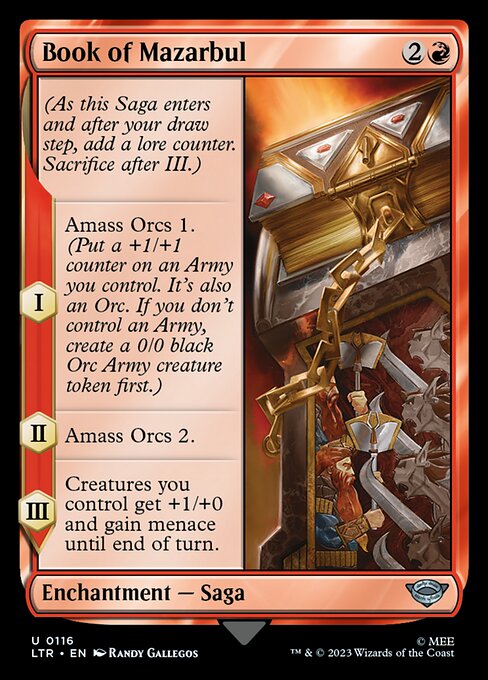 Book of Mazarbul
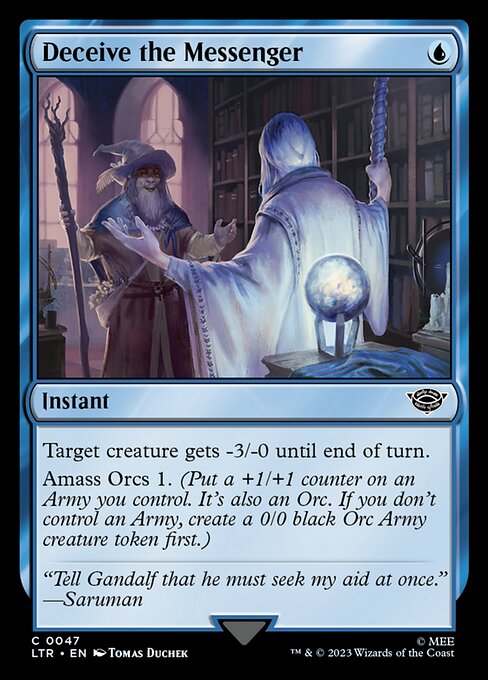 Deceive the Messenger
 Eagles of the North
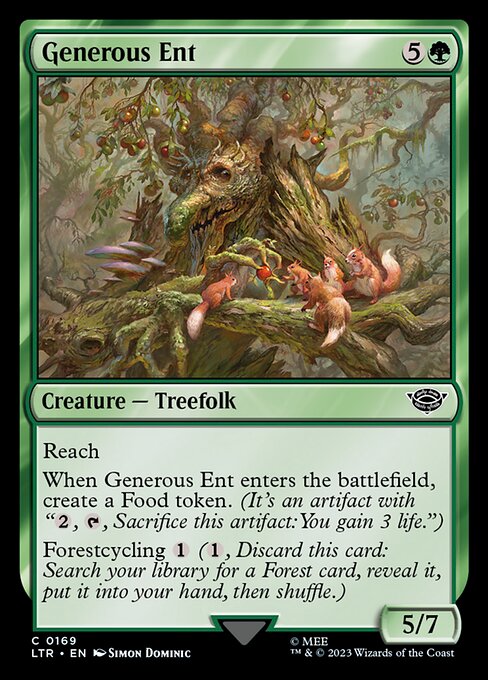 Generous Ent
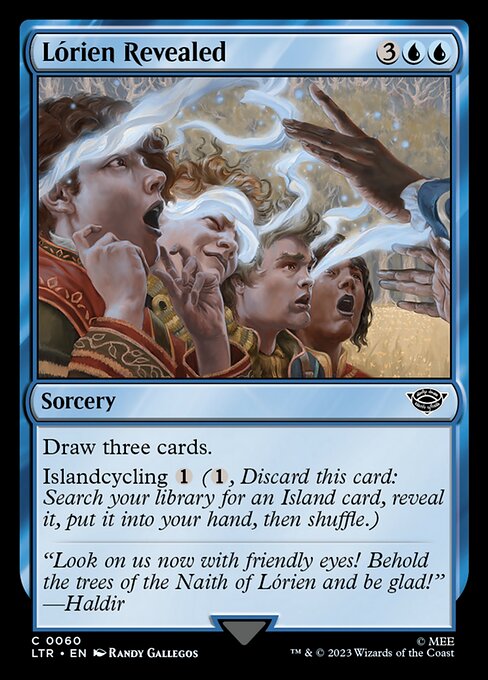 Lórien Revealed
 Boromir, Warden of the Tower
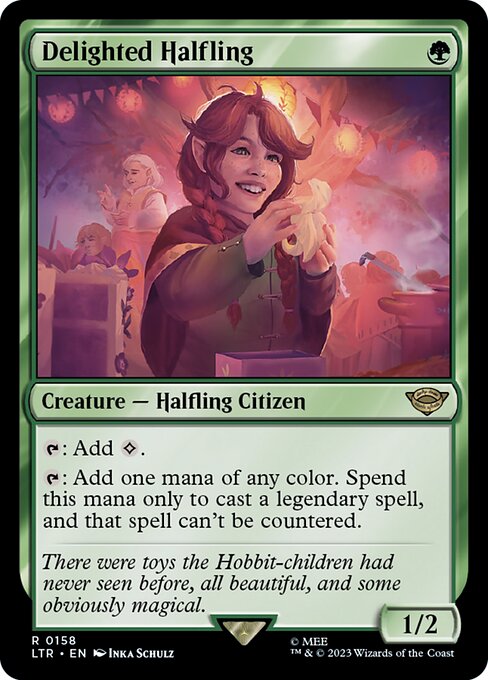 Delighted Halfling
 Glorious Gale
 Grond, the Gatebreaker
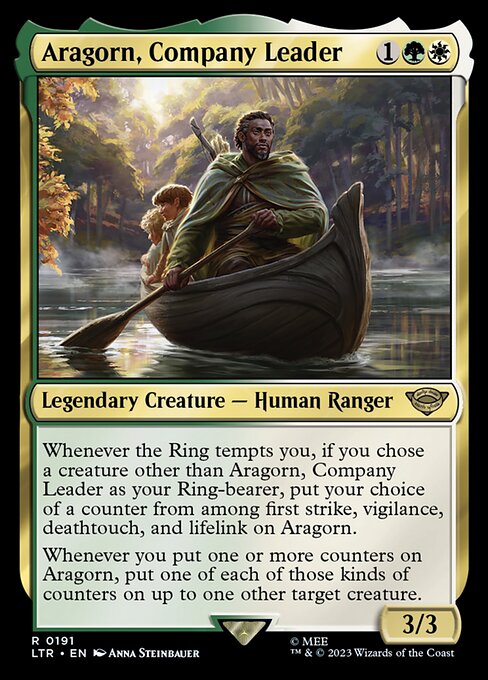 Aragorn, Company Leader
 Gothmog, Morgul Lieutenant
 Mirkwood Spider
 Mordor Trebuchet
 Shire Scarecrow
 Bitter Downfall
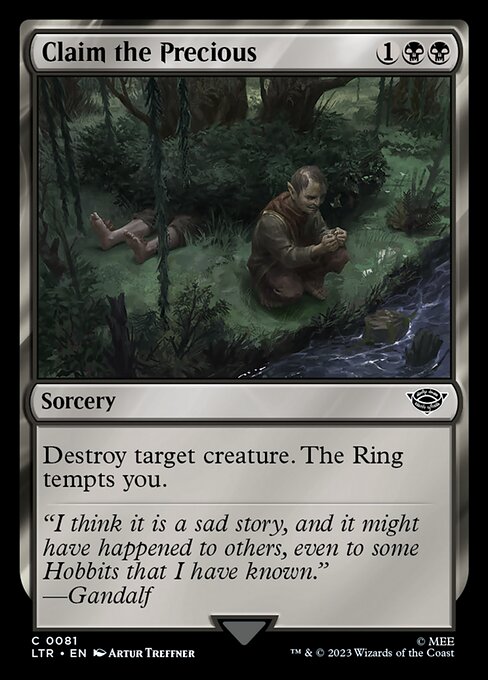 Claim the Precious
 East-Mark Cavalier
 Captain of Umbar
 Moria Marauder
 War of the Last Alliance
 Knights of Dol Amroth
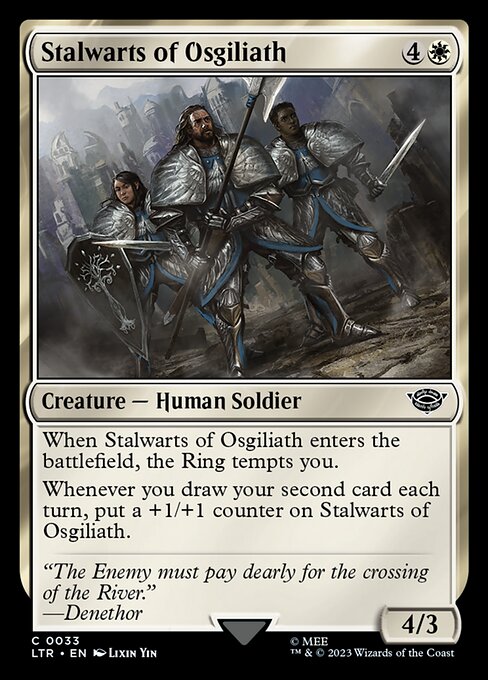 Stalwarts of Osgiliath
 Fog on the Barrow-Downs
 Gift of Strands
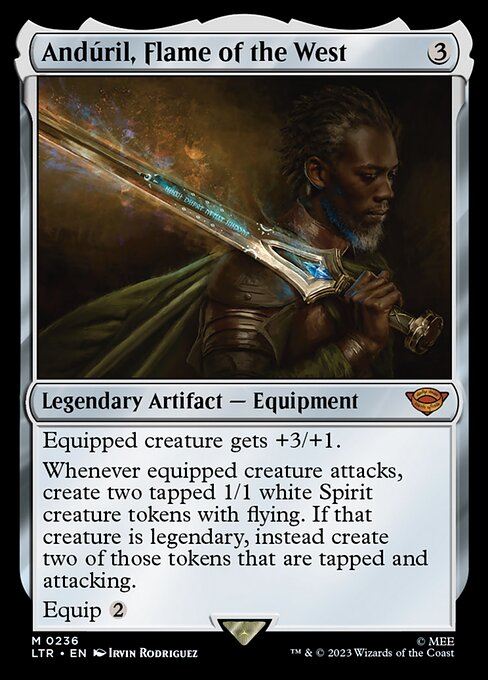 Andúril, Flame of the West
 Barrow-Blade
 Dúnedain Blade
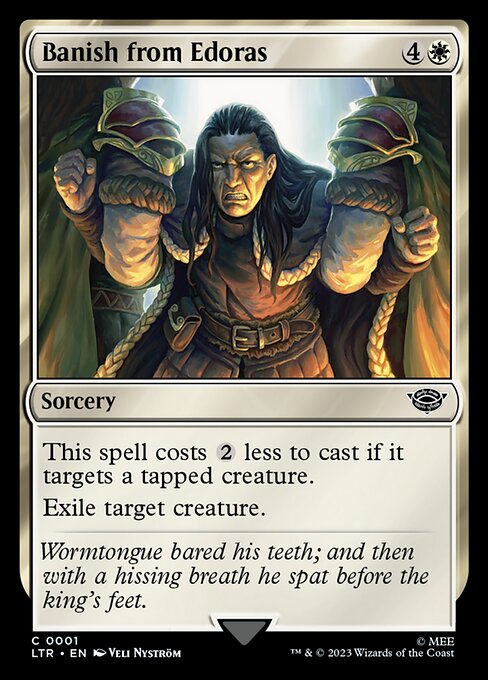 Banish from Edoras
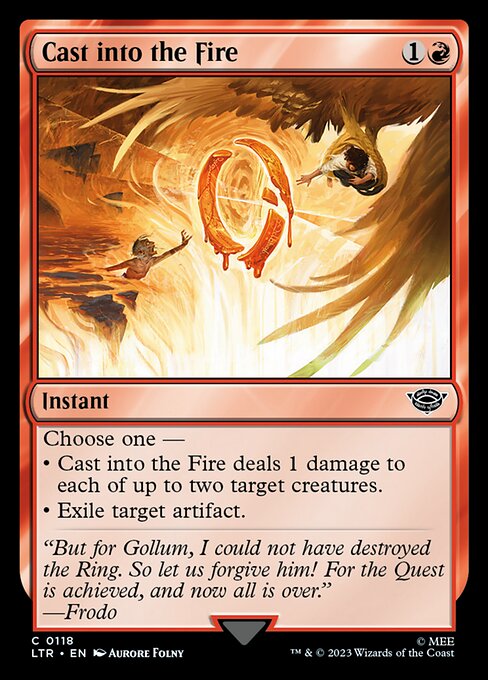 Cast into the Fire
 Council's Deliberation
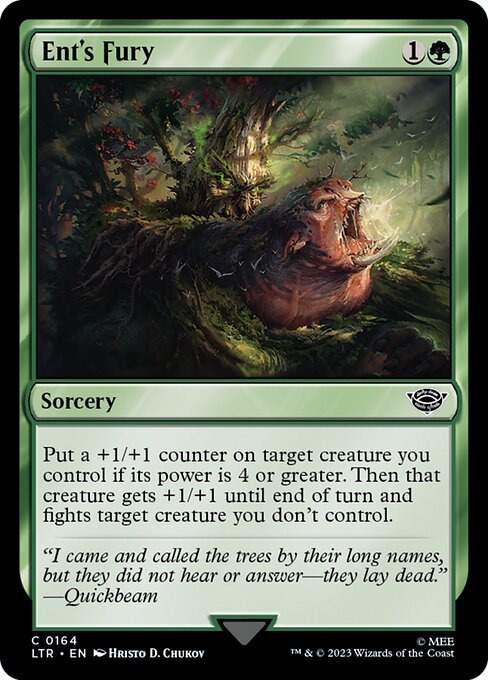 Ent's Fury
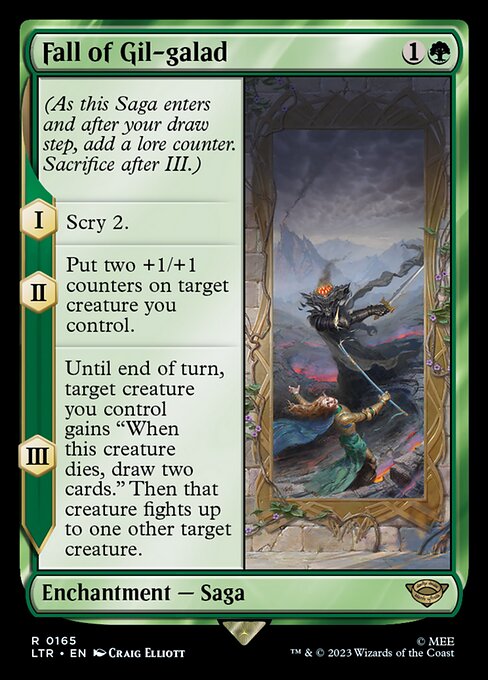 Fall of Gil-galad
 Gimli, Mournful Avenger
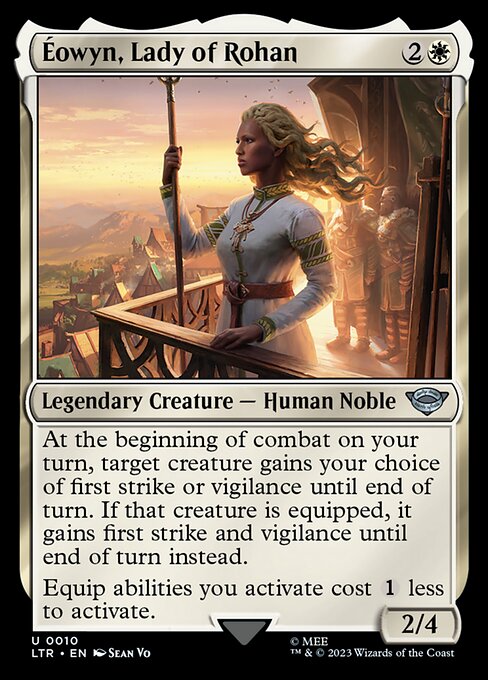 Éowyn, Lady of Rohan
 Borne Upon a Wind
 Galadhrim Bow
 Gandalf the White
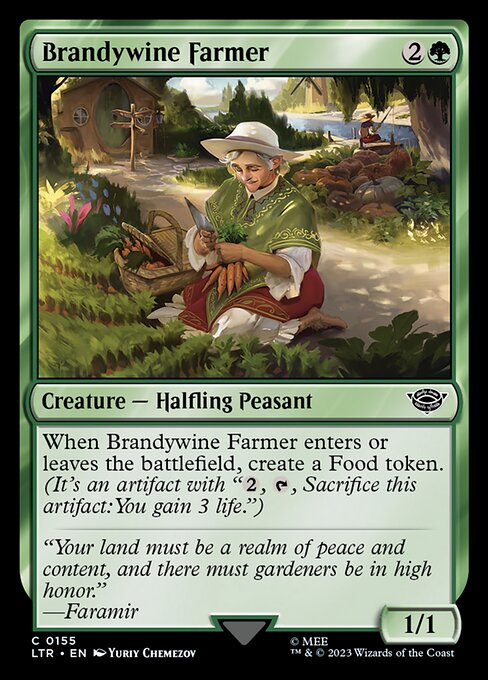 Brandywine Farmer
 Butterbur, Bree Innkeeper
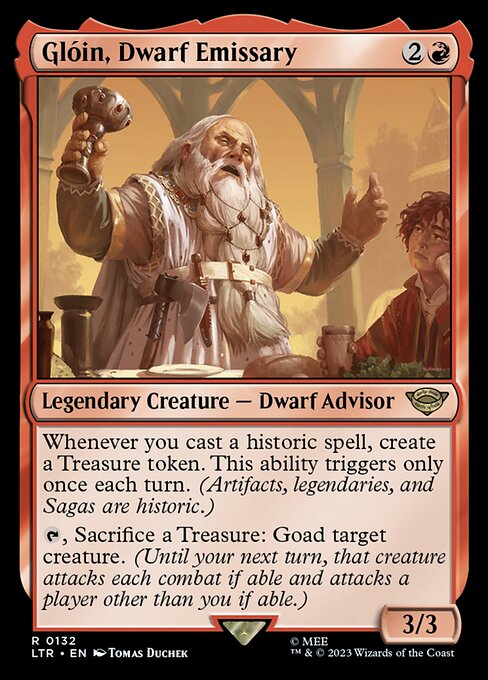 Glóin, Dwarf Emissary
 Éomer of the Riddermark
 Éomer, Marshal of Rohan
 Éowyn, Fearless Knight
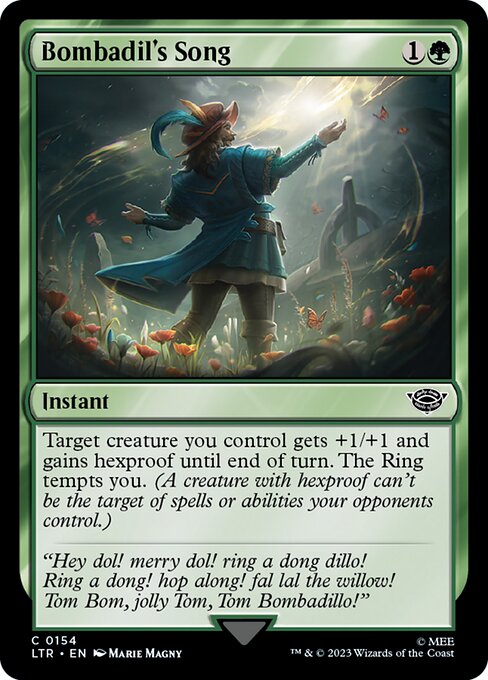 Bombadil's Song
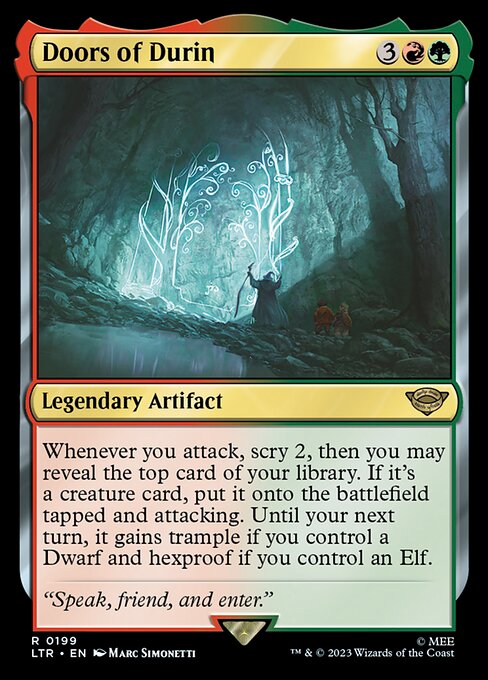 Doors of Durin
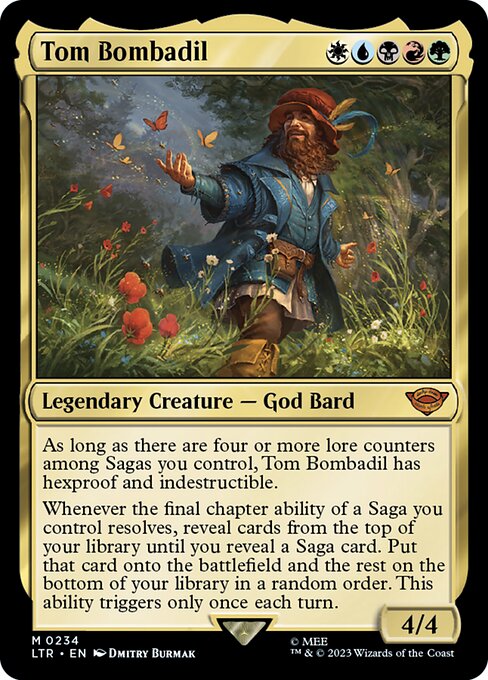 Tom Bombadil
 Dúnedain Rangers
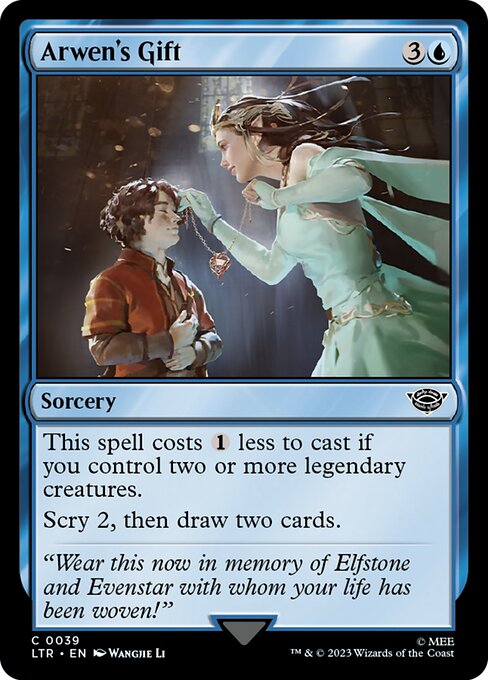 Arwen's Gift
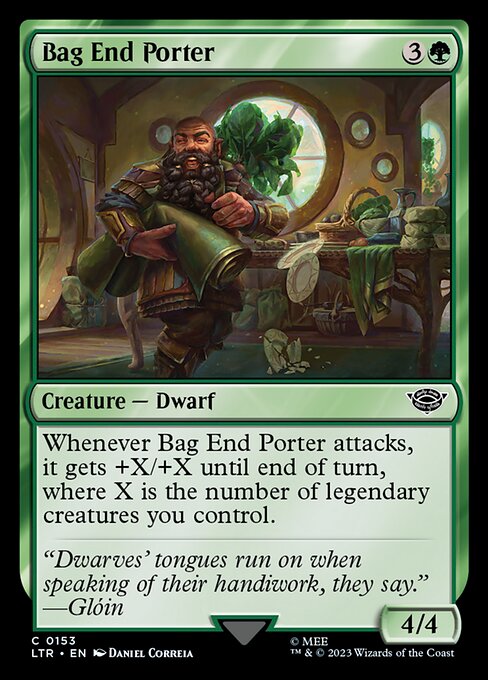 Bag End Porter
 Frodo, Sauron's Bane
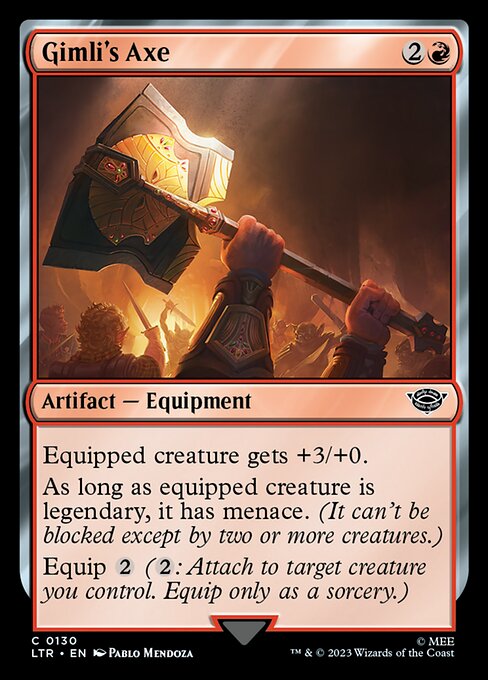 Gimli's Axe
 Lobelia Sackville-Baggins
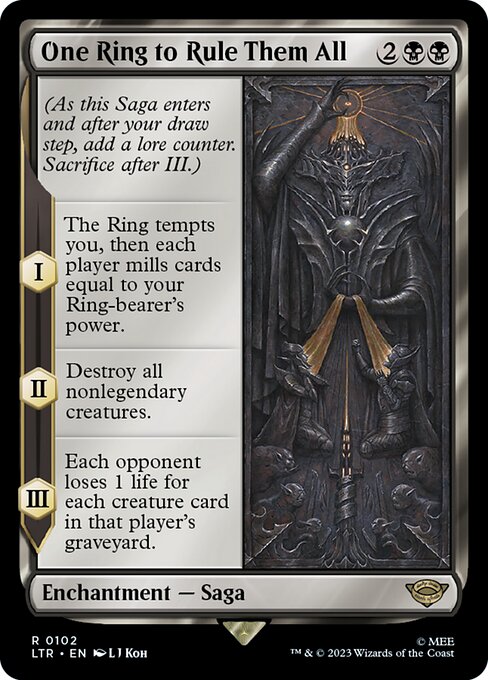 One Ring to Rule Them All
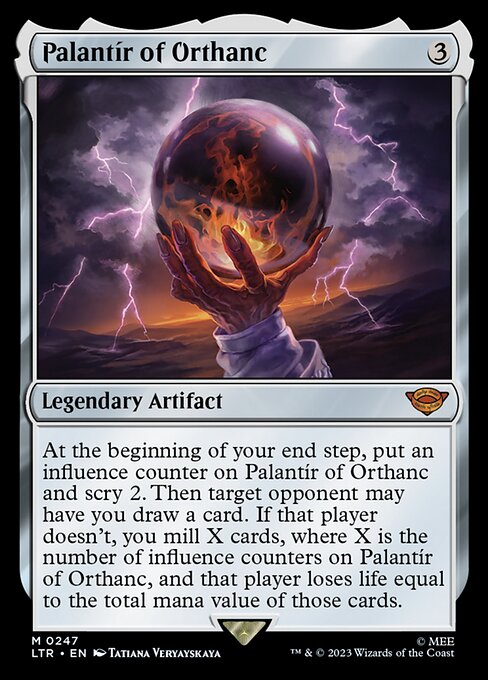 Palantír of Orthanc
 Pelargir Survivor
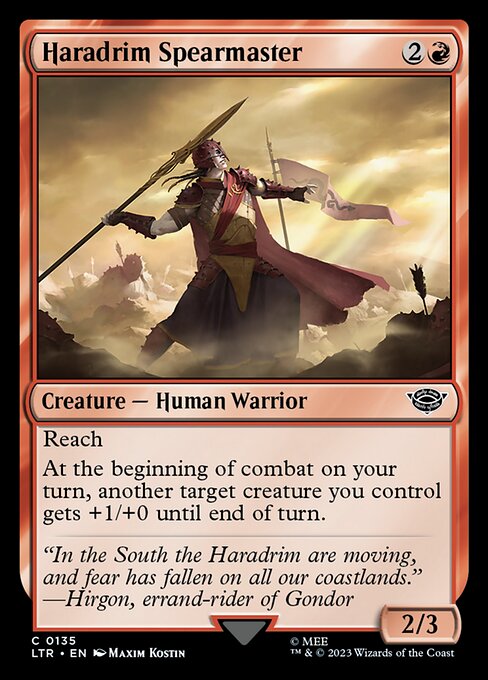 Haradrim Spearmaster
 Bill Ferny, Bree Swindler
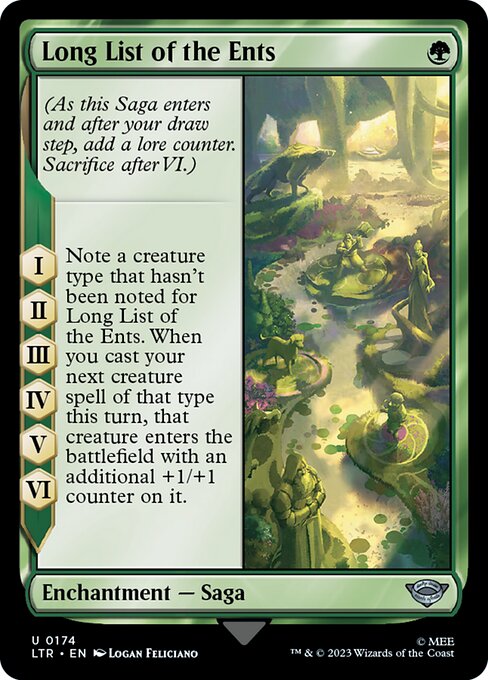 Long List of the Ents
 Aragorn, the Uniter
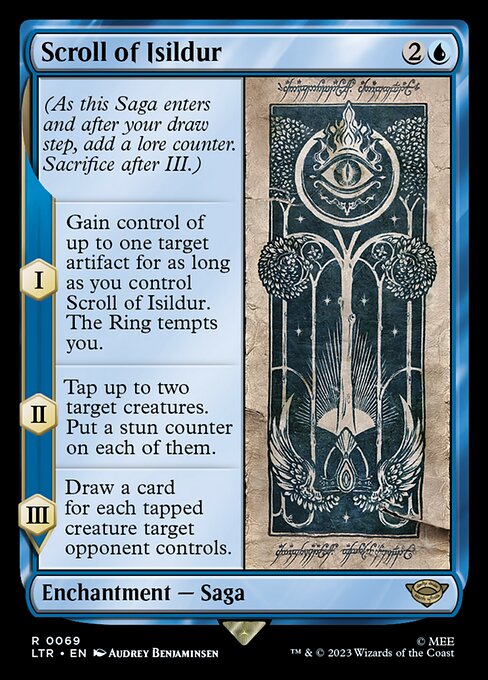 Scroll of Isildur
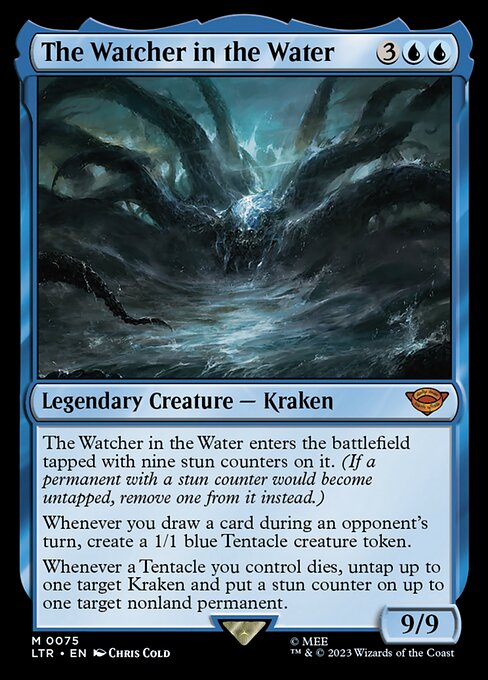 The Watcher in the Water
 Bilbo, Retired Burglar
 Enraged Huorn
 Gimli, Counter of Kills
 Flowering of the White Tree
 Pippin, Guard of the Citadel
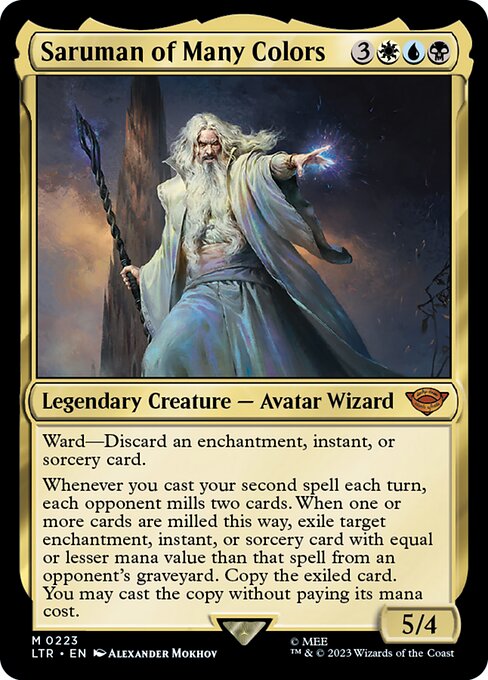 Saruman of Many Colors