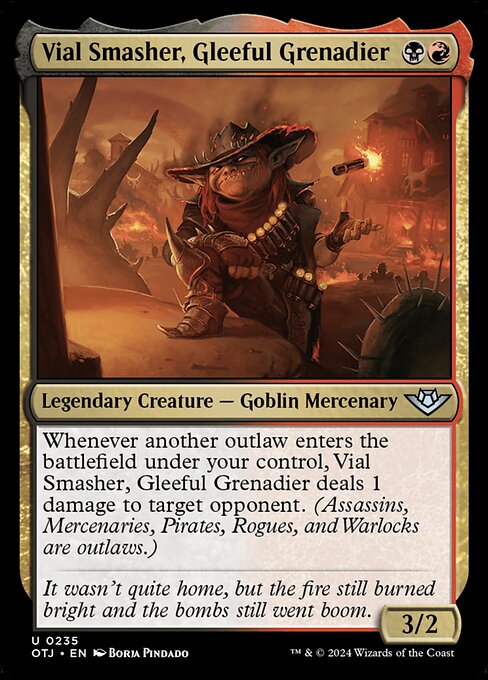
Vial Smasher, Gleeful Grenadier
Uncommon · Legendary Creature — Goblin Mercenary · At the table
Your Mercenary tokens trigger Vial Smasher when they enter, even though they are not cards.
The set’s mechanics with worked examples, then every word on the cards.
Assassins, Mercenaries, Pirates, Rogues and Warlocks are outlaws. Having any one of those types is enough.
Your Mercenary tokens trigger Vial Smasher when they enter, even though they are not cards.
You commit a crime when your spell or ability targets an opponent, something they control, or a card in their graveyard.

Target an opposing creature with removal to trigger Campaign’s return ability. Recast Campaign later to drain and draw again.
At sorcery speed, pay the plot cost to exile the card from your hand. Cast it for free at sorcery speed on a later turn.
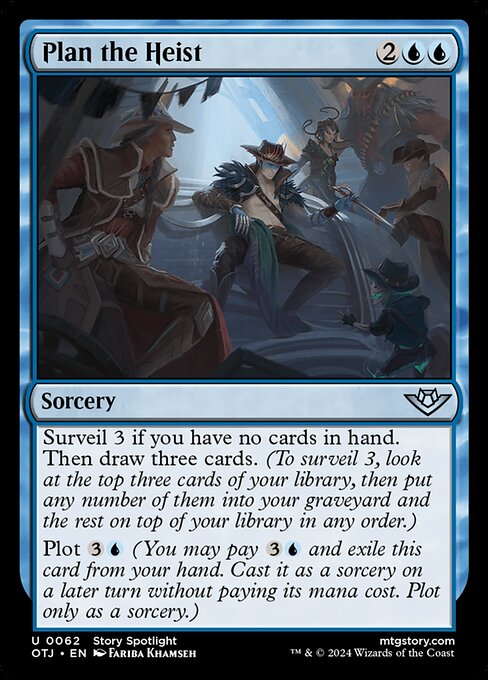
Plot Heist while you have mana, then cast it on a future turn when drawing three leaves mana available for another spell.
Tap other untapped creatures with enough total power to make the Mount saddled until end of turn.

Saddle Arynx before combat to gain its saddled attack benefits, while deciding which tapped creatures you can afford not to attack with.
Choose one or more modes and add their listed costs to the spell’s base cost.
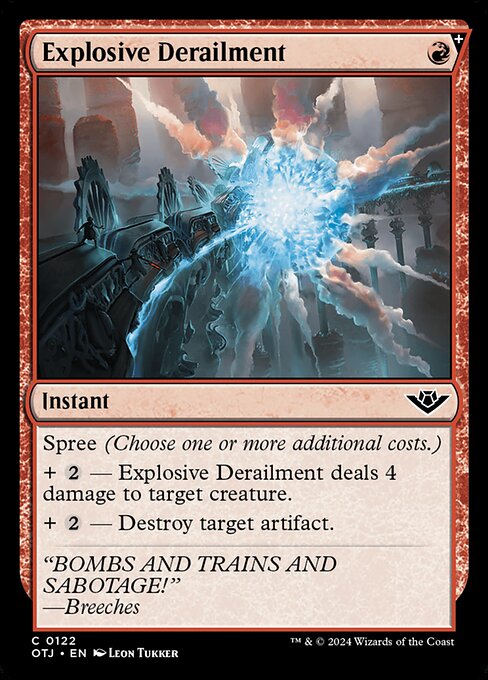
One mode costs three total mana; choosing both costs five and can damage a creature while destroying an artifact.
Desert is a land subtype that other cards count or search for. Each Desert has its own printed abilities.

Greenblade finds a Desert or basic land and grows as you control more Deserts. The searched card goes to your hand.
The red 1/1 Mercenary tokens can tap at sorcery speed to give a creature you control +1/+0 for the turn.

Ertha Jo creates a Mercenary and can copy its targeted ability, letting the bonus help one creature twice or two different creatures.
These two-color lands enter untapped only when you control two or fewer other lands.
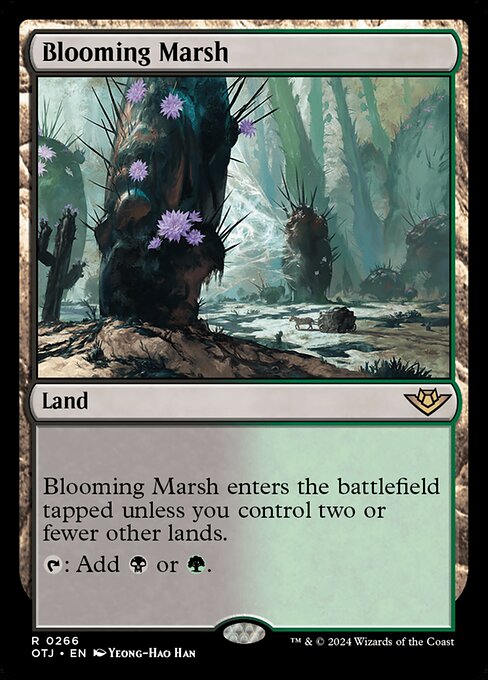
Playing Marsh as your third land can keep all three mana available that turn.
Bounties are an optional shared Commander mini-game using at least six different bounty cards.

Read the bounty’s capture condition and claim the current reward when you fulfill it during your turn.
Every word on the cards and in the deck plans, defined once. Find a term, read its wording, then see it on a card.
A +1/+1 counter adds one power and one toughness; a −1/−1 counter subtracts one of each. These counters stay until removed or the object changes zones.
Watch out: If a permanent has both kinds, matching pairs are removed as a state-based action. A temporary +1/+1 effect is not a counter.
You may cast the Adventure half instead of the permanent half. If the Adventure resolves, exile the card; you may later play its permanent half from there, paying the normal cost and following its timing.
Watch out: If the Adventure is countered or all its targets become illegal, it does not resolve and normally goes to the graveyard. You can also cast the permanent half directly.
Reduce the generic part of this spell’s cost by one for each permanent of the specified kind you control.
Watch out: It does not reduce the colored mana symbols. Check exactly what the card has affinity for.
These named counters track whatever the card’s abilities say. Their names alone do not give a universal bonus or penalty.
Watch out: For example, vanishing uses time counters as a countdown. Read the particular card before deciding what adding another counter will do.
Pay the cleave alternative cost to remove all text inside square brackets from the spell. The remaining text determines what it can target and affect.
To counter a spell or ability is to remove it from the stack without its effects resolving. A countered spell normally goes to its owner’s graveyard.
Watch out: This use of “counter” is different from placing a marker such as a +1/+1 counter on a card.
Tap other untapped creatures you control with enough total power to turn this Vehicle into an artifact creature until the turn ends.
Watch out: The crew creatures do not become the Vehicle’s attackers. A newly played Vehicle still needs haste to attack that turn.
You commit a crime when your spell or ability targets an opponent, something they control, or a card in their graveyard.
A mix of costs that lets you use your mana on early and late turns.
From your hand, pay the cycling cost and discard this card to draw a card.
Watch out: Cycling is an activated ability, not casting the card. Typecycling searches for a specified kind of card instead.
Any positive amount of damage this source deals to a creature is enough to make that damage lethal.
Watch out: It works with a fight or other noncombat damage. Indestructible still prevents destruction.
This creature cannot attack.
Watch out: It can still block and use its abilities unless something else prevents that.
Desert is a land subtype that other cards count or search for. Each Desert has its own printed abilities.
Move a permanent from the battlefield to its owner’s graveyard because an effect or lethal damage destroys it.
Watch out: Indestructible stops destruction. Sacrificing, exiling, and reducing toughness to 0 are different ways for a creature to leave.
Move a card from your hand to your graveyard.
Watch out: Discarding is not casting. It does not pay the card’s mana cost or produce its normal spell effect.
This label groups effects that count the basic land types among lands you control: Plains, Island, Swamp, Mountain, and Forest.
Watch out: Count types, not lands. A nonbasic land with a basic land type can count; a land with none of those types does not.
Doubling counters adds as many of that kind as are already there. Doubling power gives a modifier based on the creature’s power when the effect resolves; it does not necessarily change base power or add counters.
This creature deals combat damage in the first-strike damage step and again in the normal damage step if it is still in combat.
Watch out: If its blocker dies in the first step, a blocked attacker does not hit the player in the second step unless an ability such as trample allows it.
An Aura’s enchant line tells you what it may be attached to.
Watch out: An Aura cast as a spell targets what it will enchant. If it later becomes illegally attached, it normally goes to the graveyard.
Pay the equip cost to attach this Equipment to a target creature you control. Normally, activate equip only in your main phase when the stack is empty.
Watch out: The Equipment usually stays on the battlefield when the creature leaves. Moving it to another creature normally costs another equip activation.
Choose one or more modes and pay the escalate cost for each mode beyond the first. Each mode can be chosen only once unless the card says otherwise.
Move the object to the exile zone. It is separate from the graveyard.
Watch out: A card in exile cannot normally be played. You need a rule or effect giving permission, such as a resolved Adventure.
Reveal the top card. A land goes to your hand; otherwise the exploring creature gets a +1/+1 counter and you may put the revealed card in your graveyard. Exploring a land does not normally put it onto the battlefield. Nicanzil supplies a separate triggered ability.
The two creatures each deal damage equal to their power to the other at the same time.
Watch out: This is not combat. First strike and double strike do not add damage steps; deathtouch and lifelink still affect damage.
This creature deals combat damage in an earlier step, before creatures without first strike or double strike.
Watch out: A creature killed in that early damage step usually cannot deal its normal combat damage.
You may cast this spell when you could cast an instant, including during another player’s turn when you have priority.
Watch out: Flash changes when you may cast it. It does not let you cast from a different zone or avoid its costs.
You may cast this instant or sorcery from your graveyard by paying its flashback cost.
Watch out: Follow its normal timing. A spell cast with flashback is exiled when it leaves the stack, even if it is countered.
An attacking creature with flying can be blocked only by creatures with flying or reach.
Watch out: A flying creature can block a creature without flying.
A standard Food token is an artifact with an ability costing two mana, tapping it, and sacrificing it to gain 3 life.
Watch out: Food is also an artifact type. Turning a card into a Food follows that effect’s text; the type alone does not grant an ability.
A Food token is an artifact you can pay two mana to tap and sacrifice for three life. One Food cannot pay two sacrifice costs. A creature that becomes a Food may have summoning sickness for its tap ability.
This creature may attack and use abilities with the tap or untap symbol even if you have not controlled it since your turn began.
Watch out: It still needs to be untapped to attack or pay a tap cost.
A permanent with hexproof cannot be targeted by spells or abilities its controller’s opponents control.
Watch out: Its controller may target it. Effects that do not target can still affect it.
When this permanent enters, look at the stated number of library cards, exile one face down and put the others on the bottom randomly. Its separate ability says when you can play that card; hideaway alone grants no casting permission.
This permanent cannot be destroyed by lethal damage or an effect that says “destroy.”
Watch out: It can still be exiled or sacrificed. A creature with toughness 0 or less still goes to the graveyard.
Create a Clue artifact token. You may later pay two mana and sacrifice that Clue to draw a card. Investigating itself does not draw the card.
A keyword counter grants its named ability, such as trample, to the object it is on.
Watch out: A trample counter is not a +1/+1 counter. The named ability and the creature’s size are separate.
This label groups abilities that reward a land entering under your control. The rest of each card tells you its effect.
Watch out: A land entering from a spell can trigger landfall too. The label itself adds no rules; read the actual ability.
When this source deals damage, its controller gains that much life at the same time.
Watch out: This also works for noncombat damage. It uses the damage actually dealt, not simply the creature’s printed power.
A planeswalker’s loyalty is the number of loyalty counters on it. Its loyalty costs add or remove counters, and damage removes that much loyalty.
Watch out: A planeswalker with 0 loyalty goes to the graveyard. Adding more counters does not let you activate it a second time in the same turn.
When you discard this card, exile it instead. Its trigger lets you cast it for the madness cost then, even outside normal sorcery timing. If you decline, put it into your graveyard.
This attacking creature cannot be blocked by just one creature; at least two blockers are needed.
Watch out: It can still go unblocked. Losing one blocker after blocks are declared does not undo the original block.
The red 1/1 Mercenary tokens can tap at sorcery speed to give a creature you control +1/+0 for the turn.
Put the stated number of cards from the top of the named player’s library into that player’s graveyard.
Watch out: Milling is not drawing. An empty library makes you lose when you must draw from it, not merely when its last card is milled.
Assassins, Mercenaries, Pirates, Rogues and Warlocks are outlaws. Having any one of those types is enough.
At sorcery speed, pay the plot cost to exile the card from your hand. Cast it for free at sorcery speed on a later turn.
Choose any number of permanents or players that already have counters. Give each chosen one another counter of every kind it already has.
Watch out: You cannot add the first counter of a kind this way. If a chosen permanent has a harmful counter, that kind increases too.
Protection from a quality prevents damage from sources of that quality and stops their targeting, blocking, enchanting and equipping. It does not stop untargeted destruction or sacrifice effects.
Whenever you cast a noncreature spell, this creature gets +1/+1 until the turn ends.
Watch out: Lands are not spells. The prowess trigger can resolve even if the spell that triggered it is countered.
Raid checks whether you attacked with a creature this turn. That creature need not have dealt damage or still be on the battlefield. Read each card’s specific reward.
This creature may block creatures with flying.
Watch out: Reach does not give it flying or make its own attacks harder to block.
Move a permanent you control from the battlefield to its owner’s graveyard.
Watch out: Sacrifice is not destruction: indestructible does not stop it. You cannot sacrifice a teammate’s permanent unless an effect specifically permits it.
Tap other untapped creatures with enough total power to make the Mount saddled until end of turn.
Look at the stated number of cards from the top of your library. Put any number on the bottom and the rest back on top, choosing their order.
Watch out: Scry does not draw a card. Cards you move to the bottom do not go to the graveyard.
Repeated useful cards arriving late may indicate an open color; one card is weak evidence.
If an opponent lost life this turn, you may cast the spell for its spectacle cost instead of its mana cost. Normal timing and additional costs still apply.
Choose one or more modes and add their listed costs to the spell’s base cost.
If a permanent with a stun counter would untap, remove one stun counter instead and leave it tapped.
Watch out: The counter does not tap an untapped permanent by itself. Several stun counters can stop several separate untaps.
Look at the stated number of cards from the top of your library. Put any number into your graveyard and the rest back on top in your chosen order.
Watch out: Surveil does not draw a card. Unlike scry, unwanted cards go to the graveyard instead of the bottom.
Cards helping each other do a useful job.
Tap means turn a permanent sideways; untap means return it upright. A tap symbol in a cost means you must tap that permanent to pay.
Watch out: Being tapped by another effect does not activate an ability or produce mana. Creatures normally cannot pay their own tap-symbol costs until you have controlled them since your turn began.
An attacking creature can assign excess combat damage to what it is attacking after assigning lethal damage to every blocker.
Watch out: It does not automatically send all damage past a small blocker. Trample on a blocking creature does not send damage to the attacking player.
A standard Treasure token is an artifact you can tap and sacrifice to add one mana of any color.
Watch out: A Treasure is not a land. Using it spends the token; it does not remain for another turn.
Attacking does not tap this creature.
Watch out: It must still be untapped to be declared as an attacker. Vigilance does not remove summoning sickness.
When an opponent’s spell or ability targets this permanent, ward triggers. That spell or ability is countered unless the opponent pays the ward cost.
Watch out: Ward is not hexproof: the opponent can target it and choose whether to pay. An effect that does not target does not trigger ward.
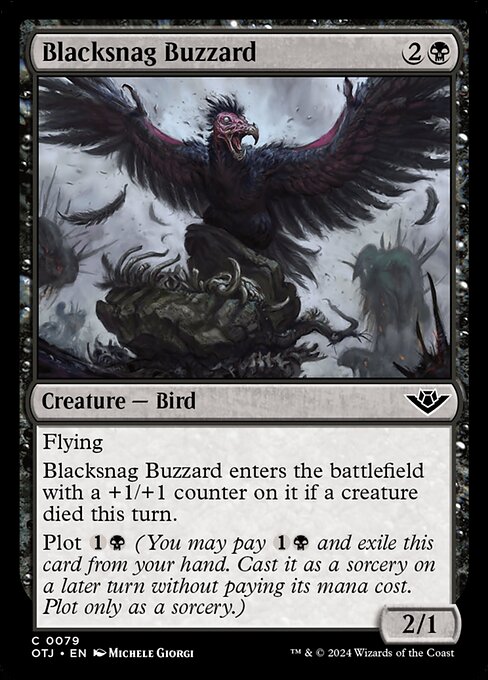 Blacksnag Buzzard
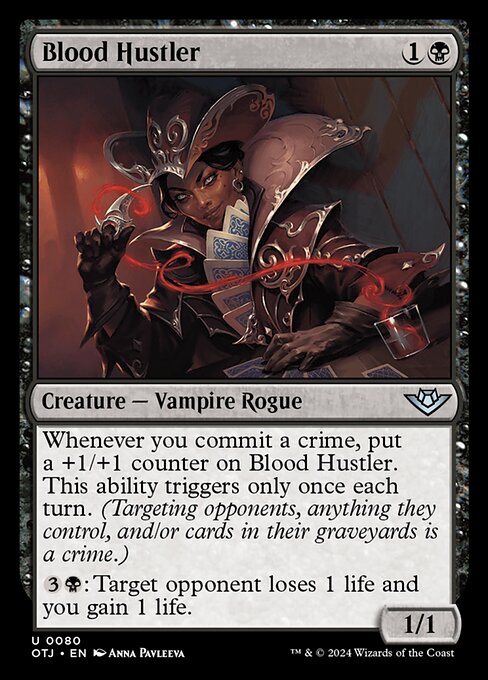 Blood Hustler
 Boneyard Desecrator
 Brazen Borrower // Petty Theft
 Hellspur Brute
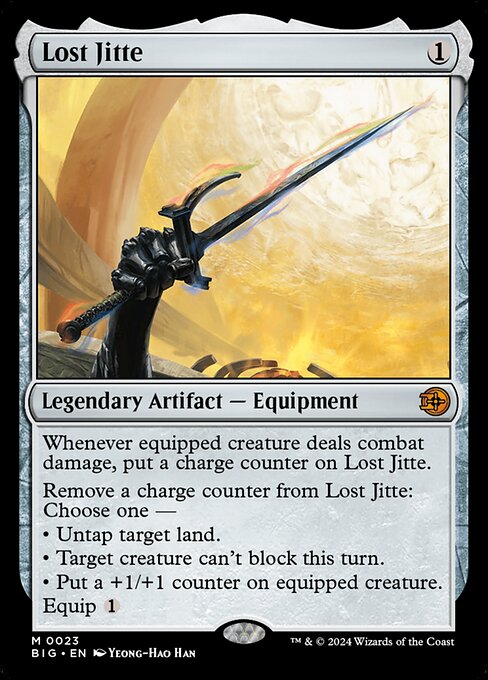 Lost Jitte
 Fierce Retribution
 Abrupt Decay
 Archmage's Charm
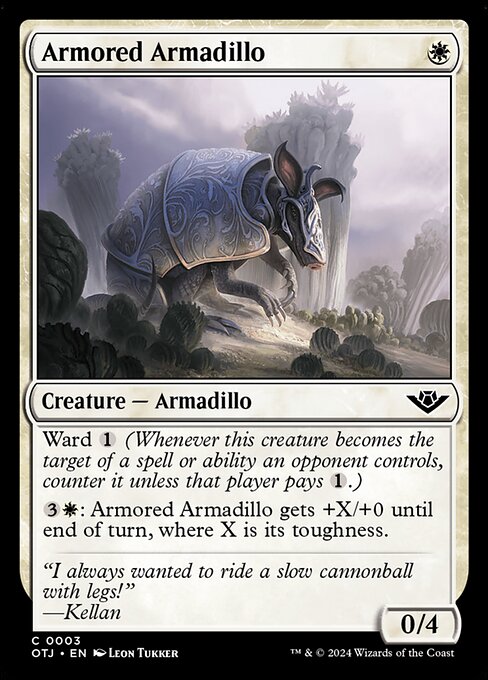 Armored Armadillo
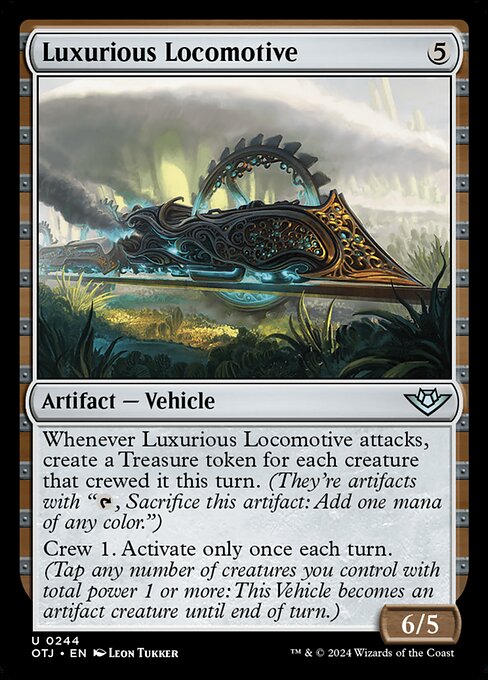 Luxurious Locomotive
 Mobile Homestead
 Unlicensed Hearse
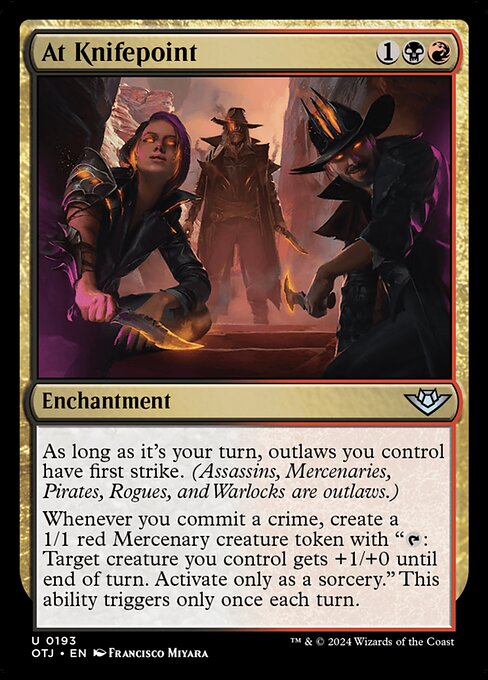 At Knifepoint
 Bandit's Haul
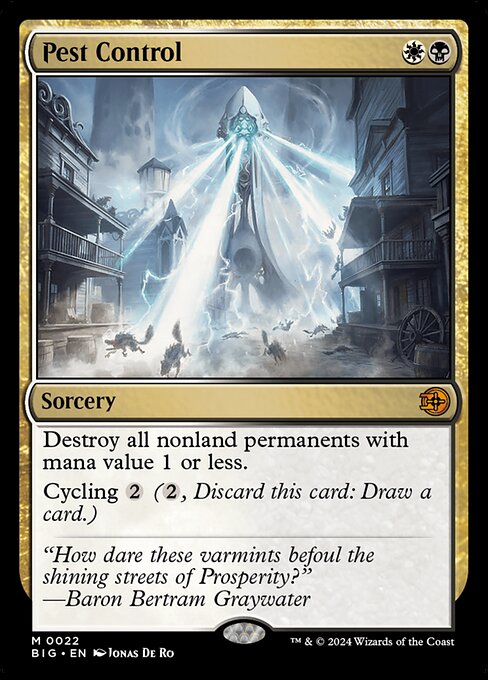 Pest Control
 Thornado
 Ankle Biter
 Rattleback Apothecary
 Servant of the Stinger
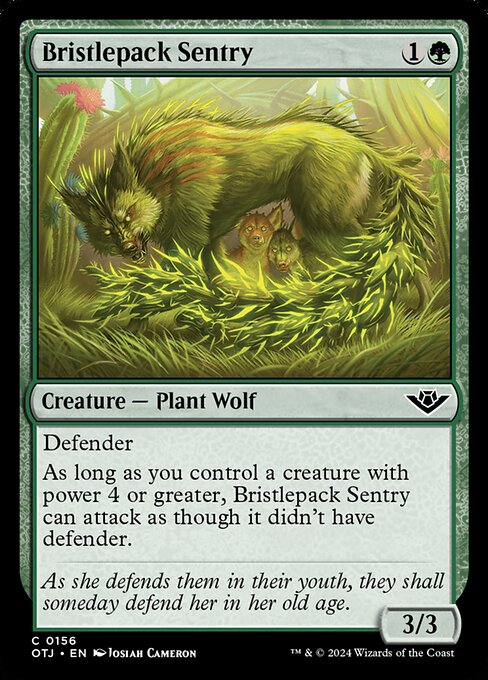 Bristlepack Sentry
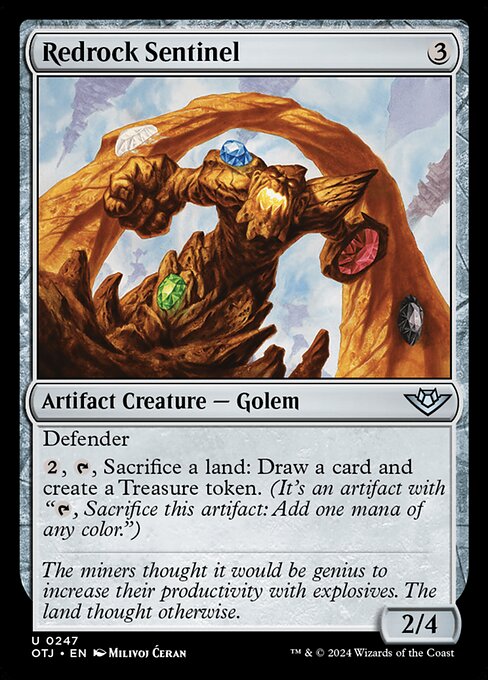 Redrock Sentinel
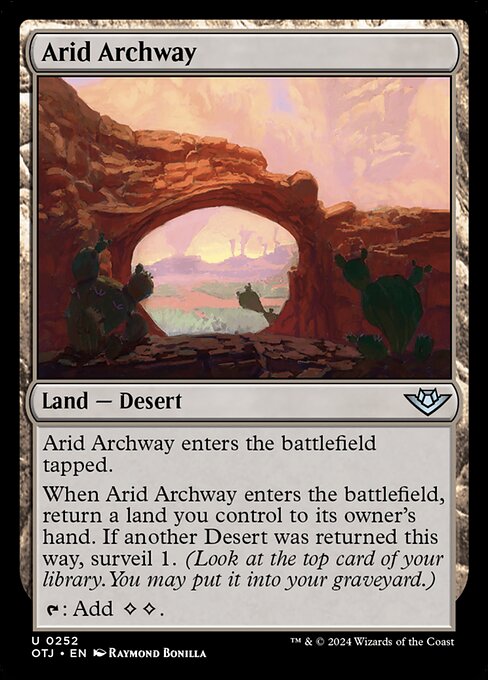 Arid Archway
 Cactarantula
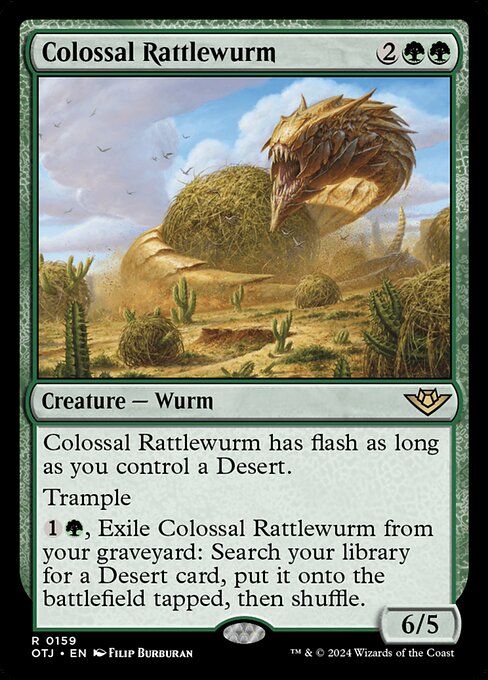 Colossal Rattlewurm
 Bedevil
 Boom Box
 Binding Negotiation
 Canyon Crab
 Collective Defiance
 Leyline Binding
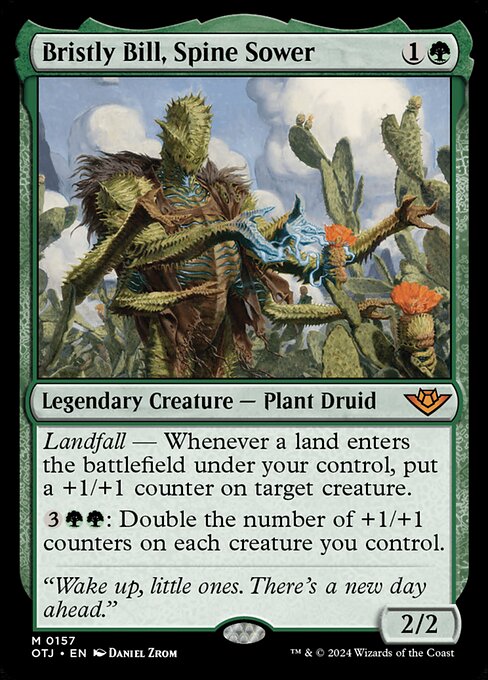 Bristly Bill, Spine Sower
 Ornery Tumblewagg
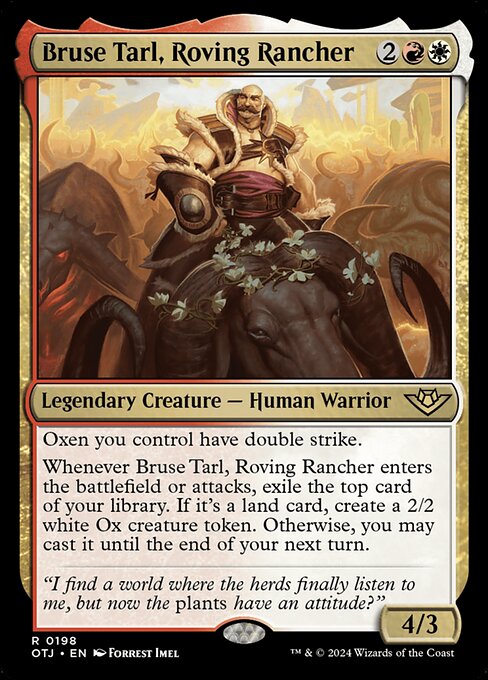 Bruse Tarl, Roving Rancher
 Omenport Vigilante
 Quick Draw
 Buried in the Garden
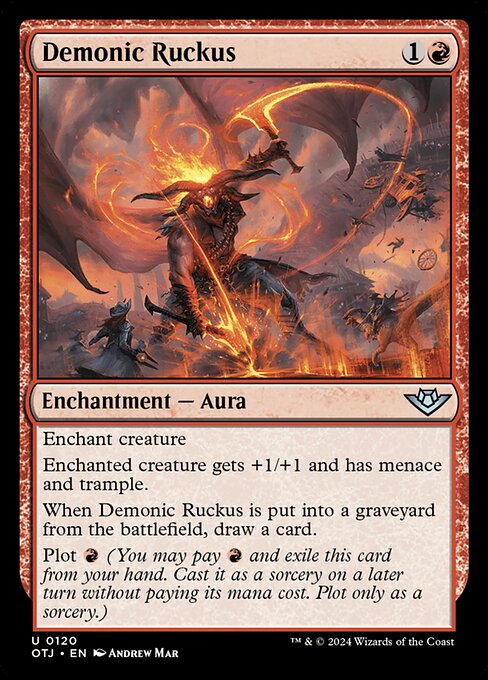 Demonic Ruckus
 Pariah
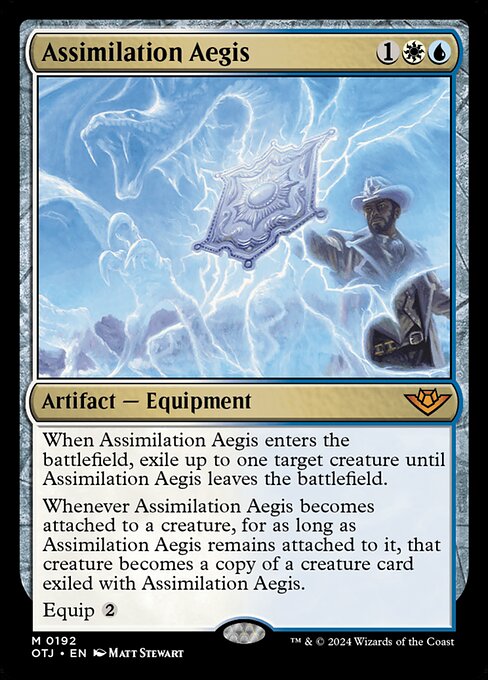 Assimilation Aegis
 Gold Pan
 Lavaspur Boots
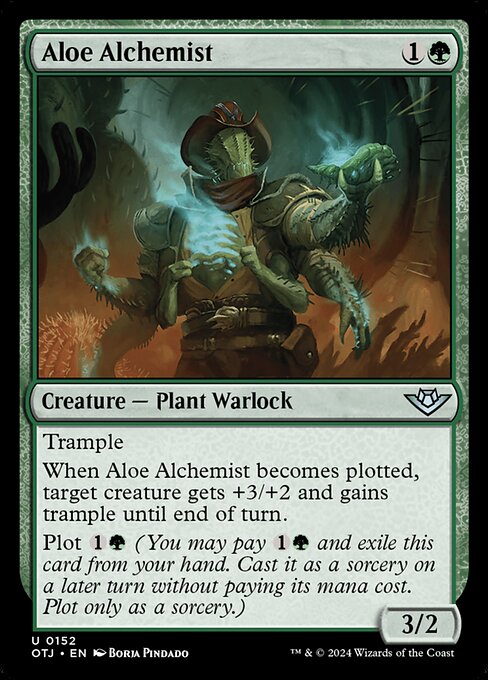 Aloe Alchemist
 Anguished Unmaking
 Annie Flash, the Veteran
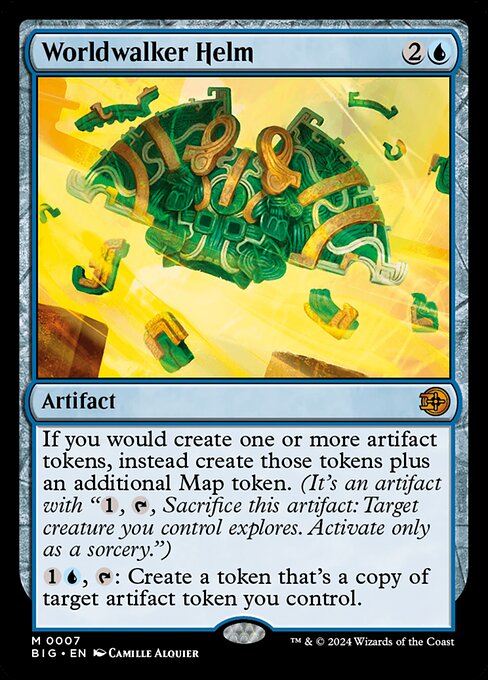 Worldwalker Helm
 Back for More
 Decisive Denial
 Primal Might
 Great Train Heist
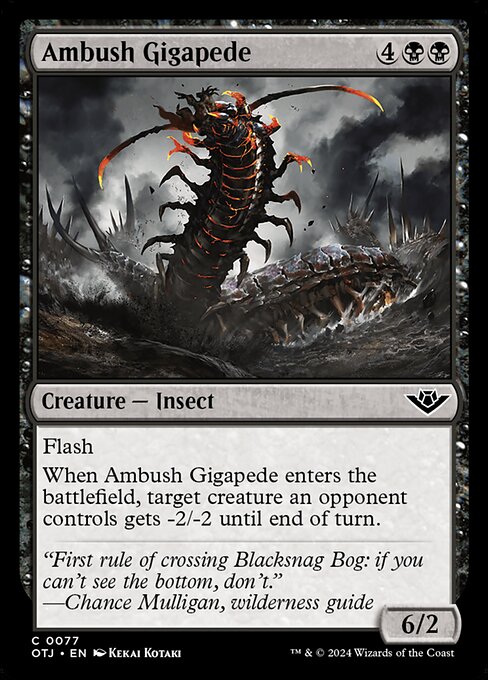 Ambush Gigapede
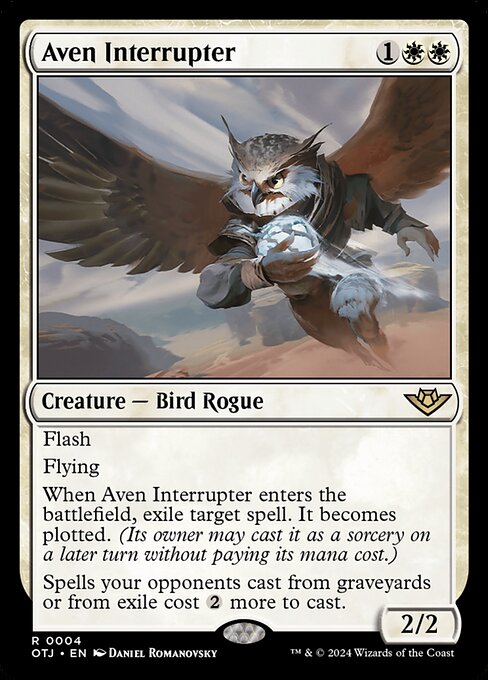 Aven Interrupter
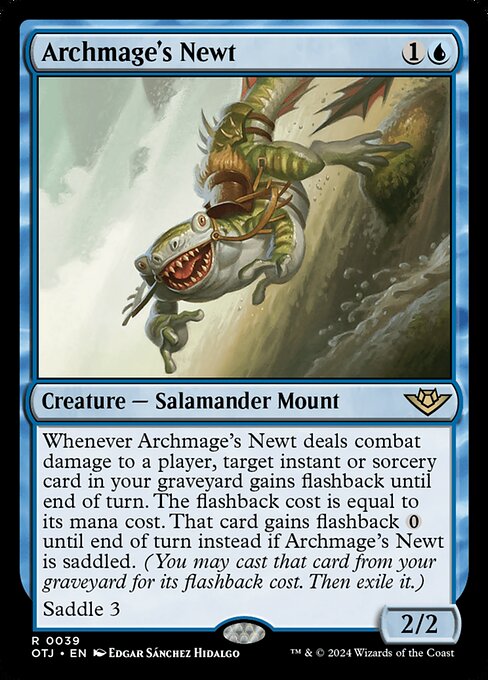 Archmage's Newt
 Siphon Insight
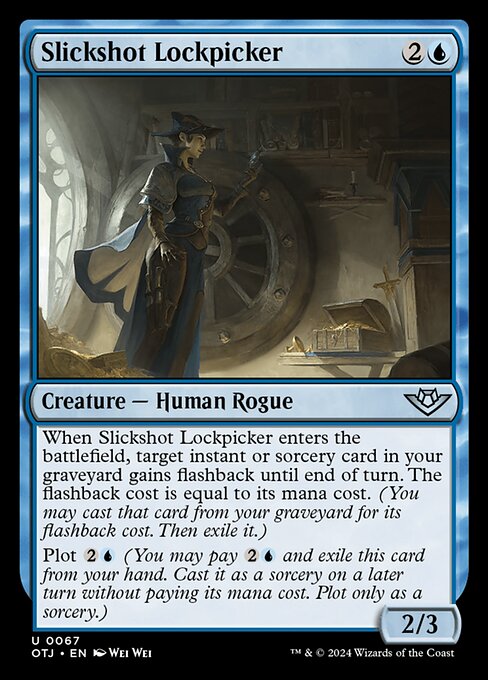 Slickshot Lockpicker
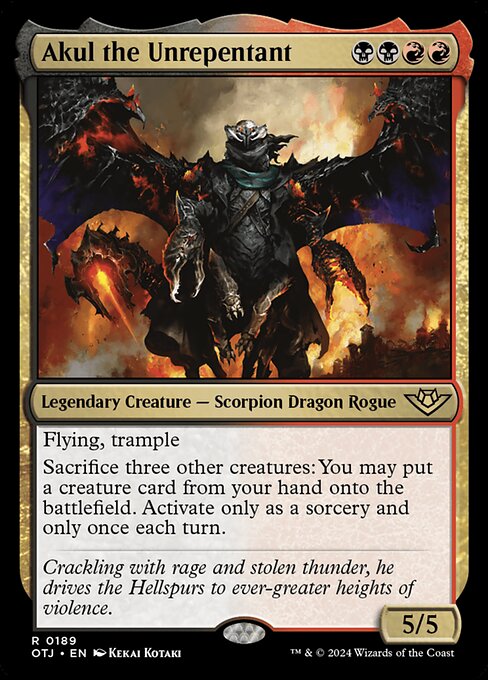 Akul the Unrepentant
 Archangel of Tithes
 Bristlebud Farmer
 Oko, Thief of Crowns
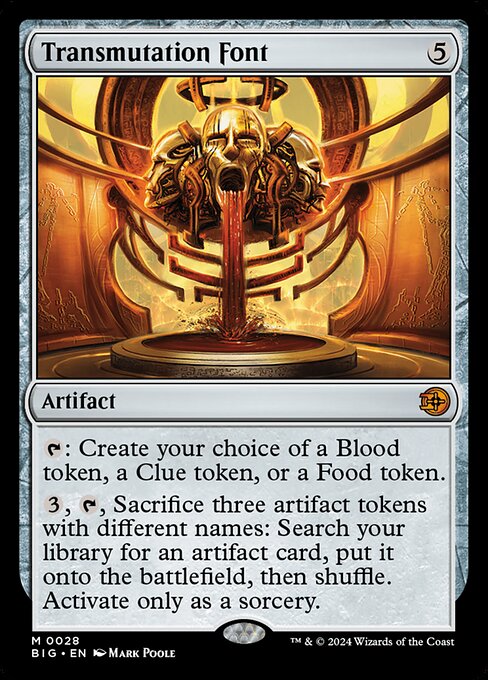 Transmutation Font
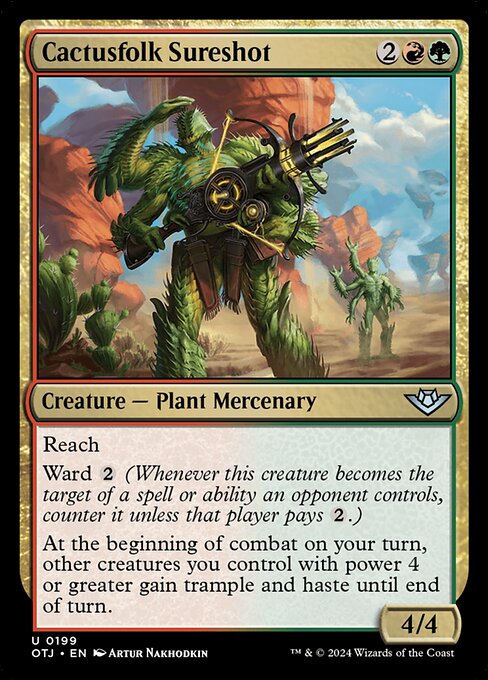 Cactusfolk Sureshot
 Calamity, Galloping Inferno
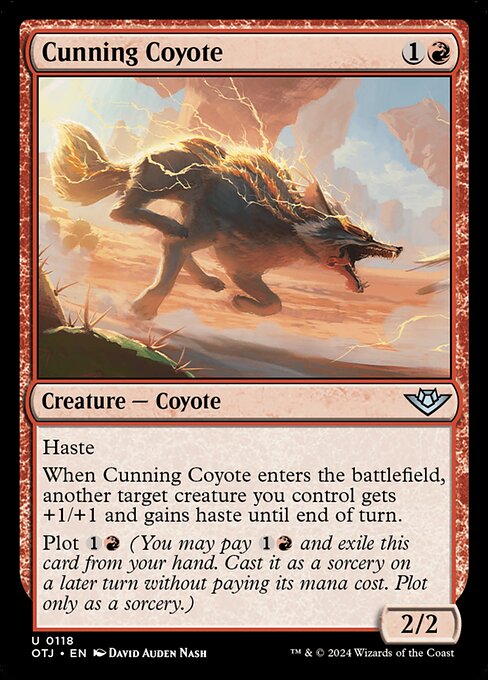 Cunning Coyote
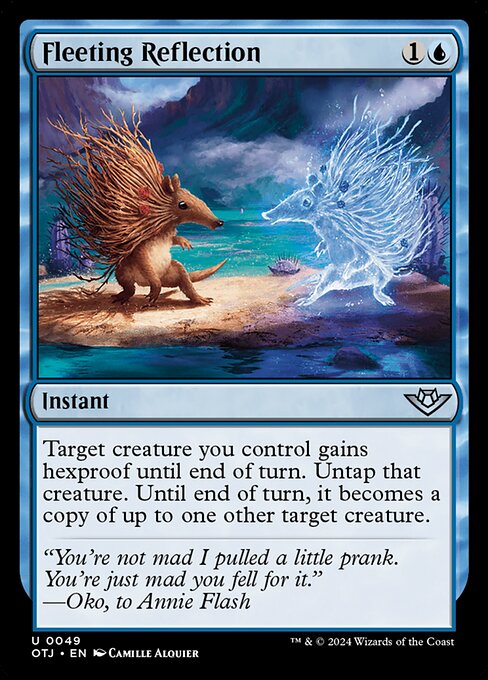 Fleeting Reflection
 Miriam, Herd Whisperer
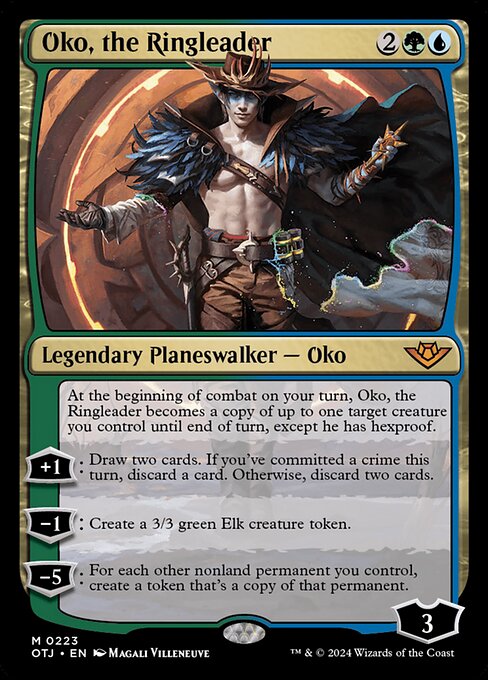 Oko, the Ringleader
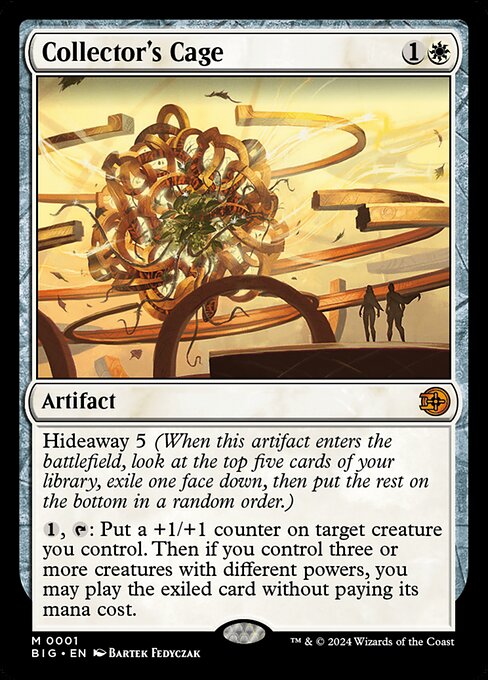 Collector's Cage
 Final Showdown
 Lotus Ring
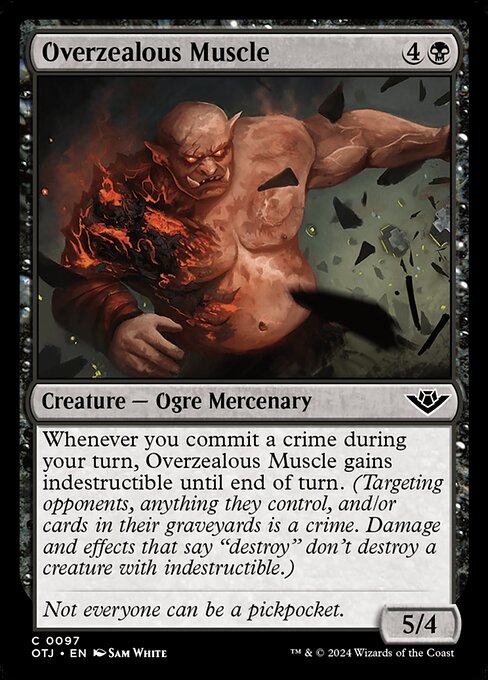 Overzealous Muscle
 Hostile Investigator
 Malcolm, the Eyes
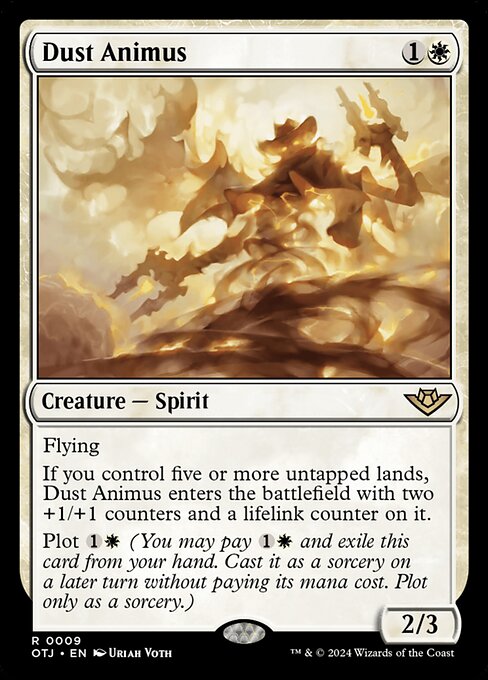 Dust Animus
 Inventive Wingsmith
 Vraska Joins Up
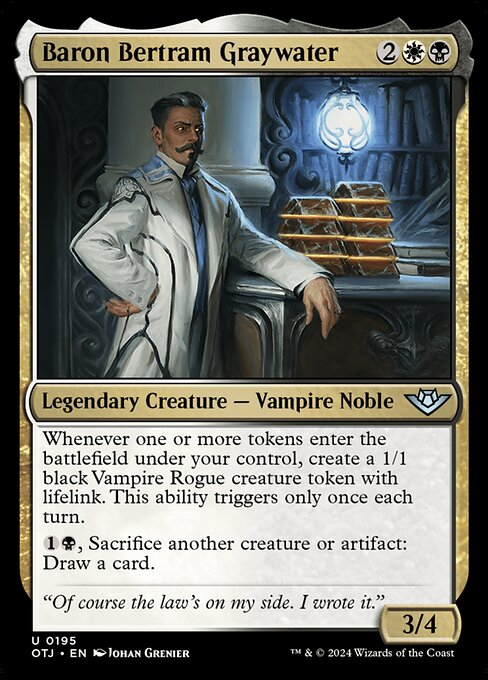 Baron Bertram Graywater
 Congregation Gryff
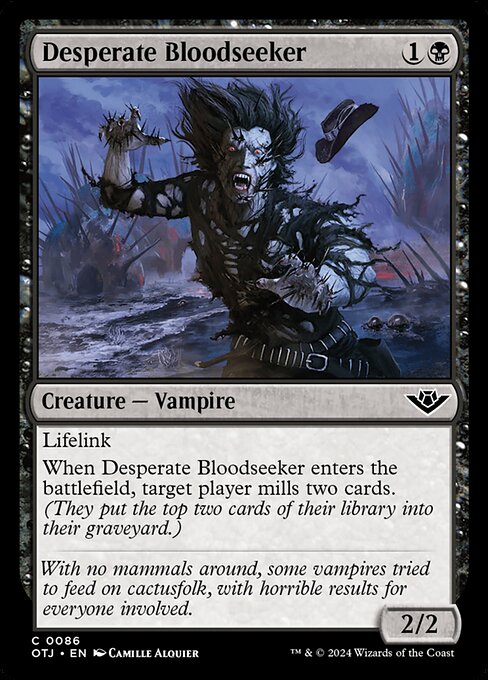 Desperate Bloodseeker
 Jace Reawakened
 Terminal Agony
 Breeches, the Blastmaker
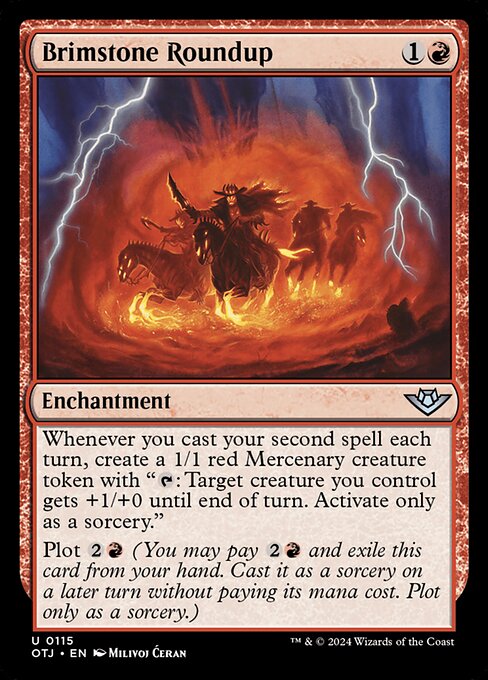 Brimstone Roundup
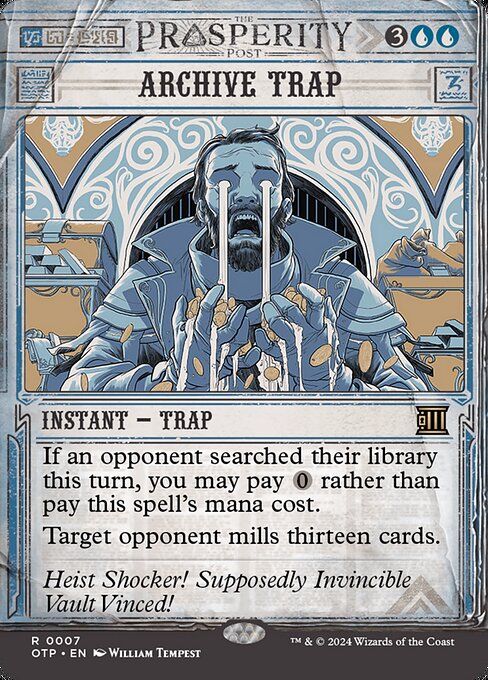 Archive Trap
 Deepmuck Desperado
 Caught in the Crossfire
 Beastbond Outcaster
 Contagion Engine
 Resilient Roadrunner
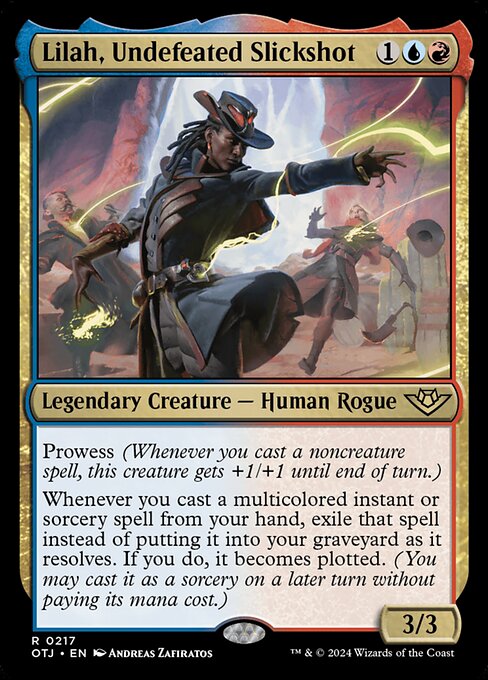 Lilah, Undefeated Slickshot
 Heartless Pillage
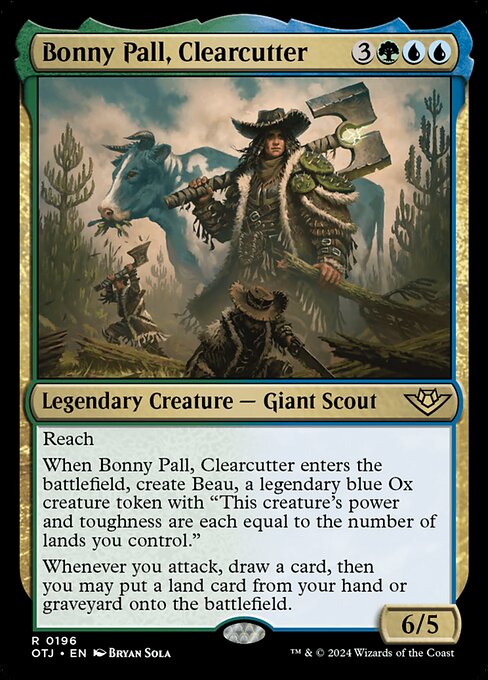 Bonny Pall, Clearcutter
 Bounding Felidar
 Bridled Bighorn
 Fortune, Loyal Steed
 Holy Cow
 Iron-Fist Pulverizer
 Skewer the Critics
 Dance of the Tumbleweeds
 Shackle Slinger
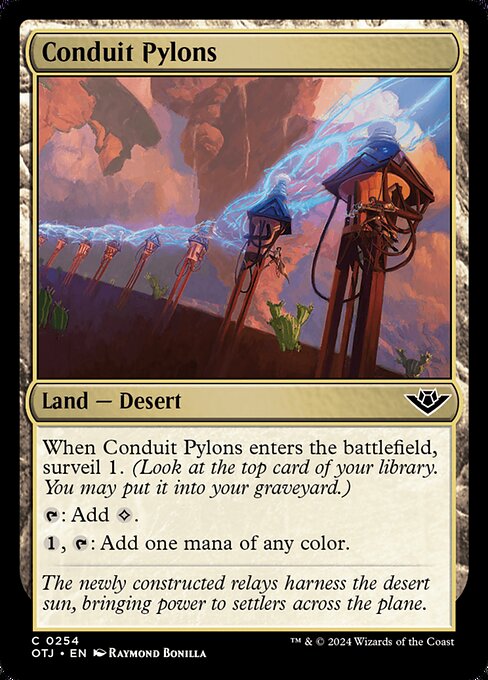 Conduit Pylons
 Consuming Ashes
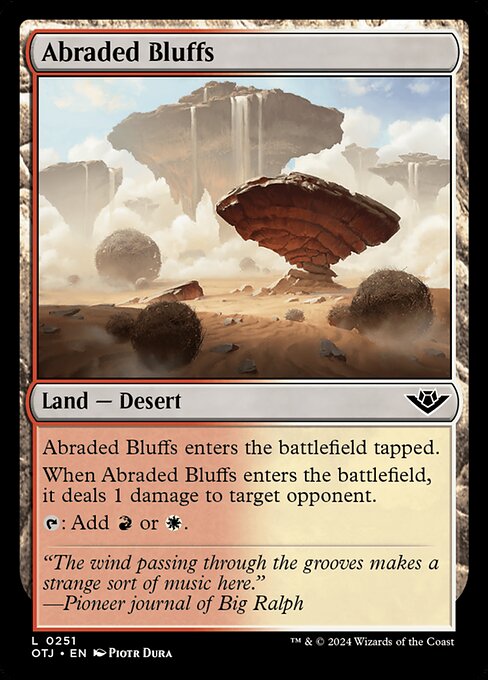 Abraded Bluffs
 Ancient Cornucopia
 Fake Your Own Death
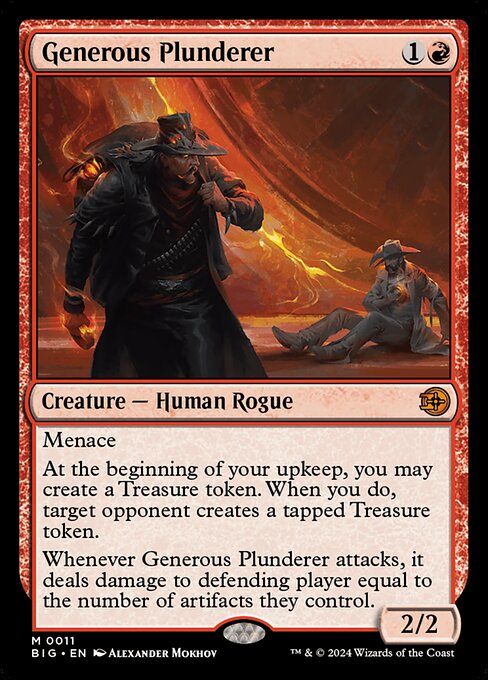 Generous Plunderer
 Claim Jumper
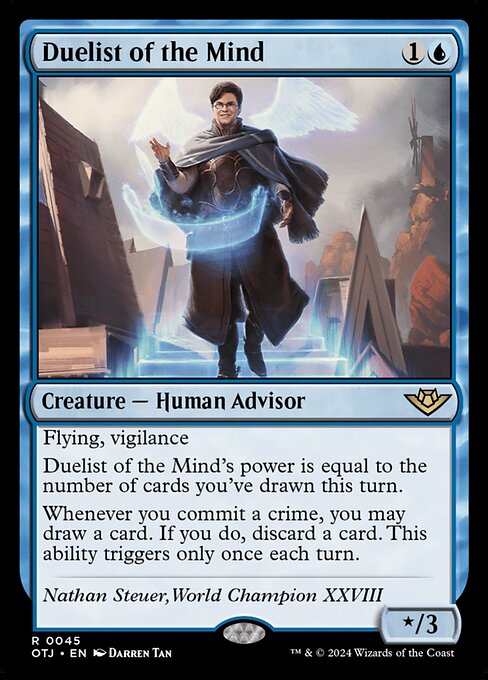 Duelist of the Mind
 Fblthp, Lost on the Range