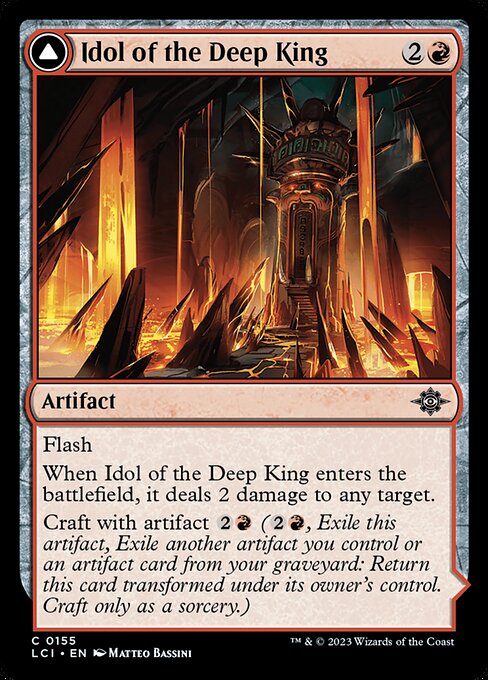
Idol of the Deep King // Sovereign's Macuahuitl
Common · Artifact // Artifact — Equipment · At the table
The Idol deals damage first; later its craft ability turns it into Equipment. An artifact you already used can become material.
The set’s mechanics with worked examples, then every word on the cards.
Pay the craft cost and exile this permanent plus the specified materials. It returns transformed under its owner’s control.
The Idol deals damage first; later its craft ability turns it into Equipment. An artifact you already used can become material.
These cards normally enter front face up. Transform turns the same permanent to its other face unless an effect explicitly exiles and returns it.
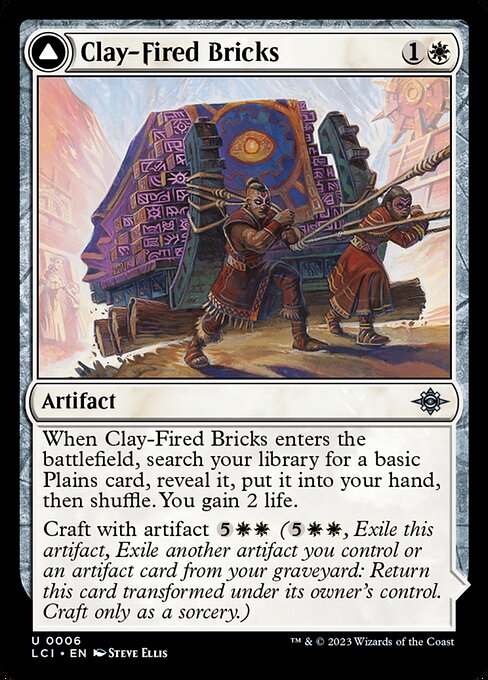
Find a Plains and gain life on the front. Craft later produces the Kiln, two Gnomes and a team-wide bonus.
You descended when a permanent card entered your graveyard from anywhere this turn.

A traded creature or a milled land can switch on the Mycoid’s end-step reward.
Descend 4 and 8 check the number of permanent cards currently in your graveyard. Fathomless descent scales with that number.
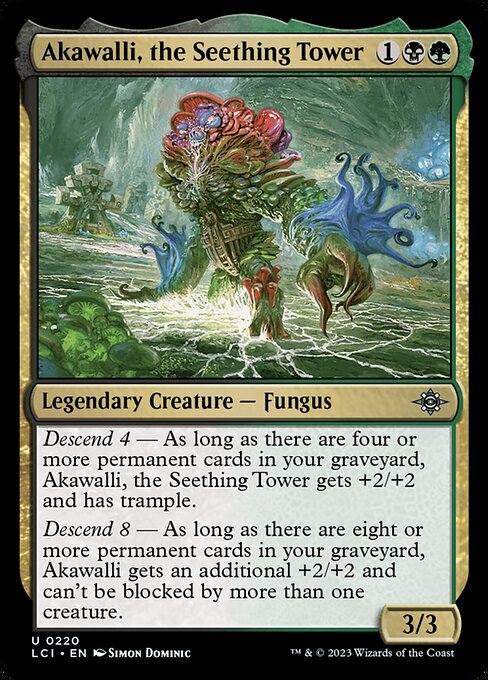
Four permanent cards make Akawalli larger and give it trample. Eight add another bonus and restrict its blockers.
Discover N exiles cards from your library until you find a nonland card with mana value N or less. Cast it for free or put it in your hand.
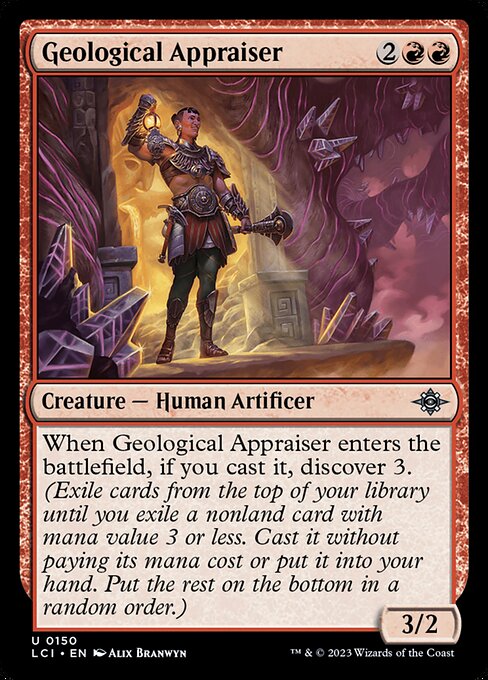
Casting the Appraiser discovers 3. Keep the discovered card in hand if casting it now would waste an effect.
Reveal the top card. A land goes to your hand; otherwise the exploring creature gets a +1/+1 counter and you may put the revealed card in your graveyard.

Scout either finds a land or becomes larger. Milling a permanent card also helps descend.
A Map is an artifact you can spend one mana to tap and sacrifice so a creature you control explores.
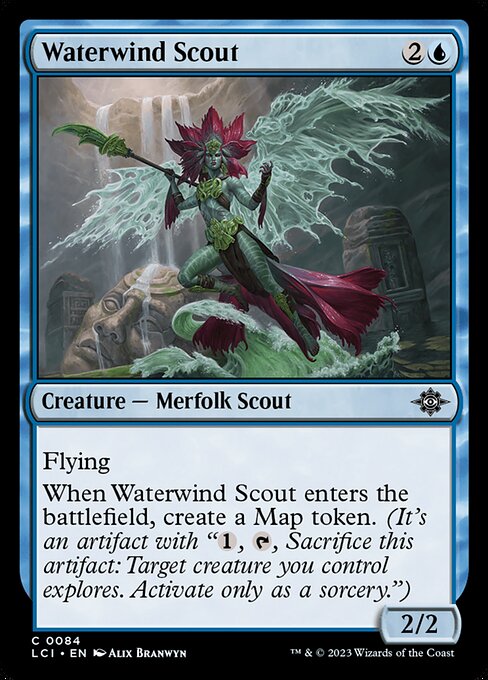
Scout leaves a Map behind. Keep it as an artifact for other rewards or cash it in when exploration matters more.
If a permanent with a finality counter would go from the battlefield to a graveyard, exile it instead.
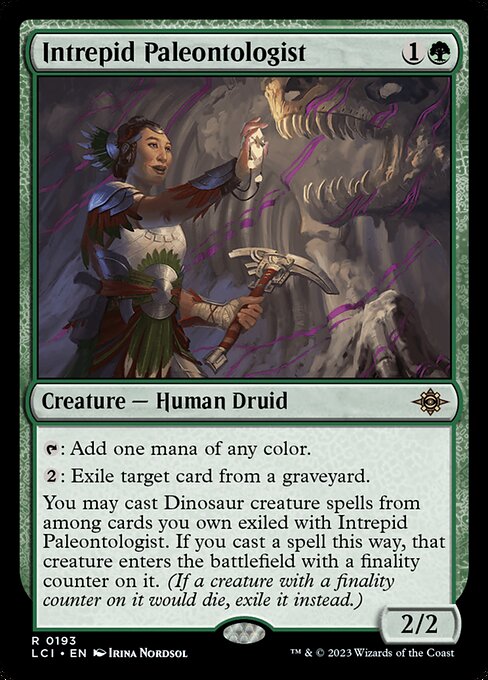
A Dinosaur returned through Paleontologist gets a finality counter, so its next would-be death normally exiles it.
Cave is a land subtype. Each Cave does only what its own text says; other cards can reward controlling or milling Caves.

Caves can improve the Colony’s reward. Count its stated zones rather than treating every nonbasic land as a Cave.
These dual lands enter tapped and can temporarily become creatures when you pay their activation cost.

When Anchorage attacks as a Bird, it makes a Map. You still need mana available to animate it before attacking.
Every word on the cards and in the deck plans, defined once. Find a term, read its wording, then see it on a card.
A +1/+1 counter adds one power and one toughness; a −1/−1 counter subtracts one of each. These counters stay until removed or the object changes zones.
Watch out: If a permanent has both kinds, matching pairs are removed as a state-based action. A temporary +1/+1 effect is not a counter.
You may cast the Adventure half instead of the permanent half. If the Adventure resolves, exile the card; you may later play its permanent half from there, paying the normal cost and following its timing.
Watch out: If the Adventure is countered or all its targets become illegal, it does not resolve and normally goes to the graveyard. You can also cast the permanent half directly.
When this creature attacks, each other attacking creature gets +1/+0 until end of turn. The creature with battle cry does not give itself the bonus.
Cave is a land subtype. Each Cave does only what its own text says; other cards can reward controlling or milling Caves.
These named counters track whatever the card’s abilities say. Their names alone do not give a universal bonus or penalty.
Watch out: For example, vanishing uses time counters as a countdown. Read the particular card before deciding what adding another counter will do.
To counter a spell or ability is to remove it from the stack without its effects resolving. A countered spell normally goes to its owner’s graveyard.
Watch out: This use of “counter” is different from placing a marker such as a +1/+1 counter on a card.
Pay the craft cost and exile this permanent plus the specified materials. It returns transformed under its owner’s control.
Tap other untapped creatures you control with enough total power to turn this Vehicle into an artifact creature until the turn ends.
Watch out: The crew creatures do not become the Vehicle’s attackers. A newly played Vehicle still needs haste to attack that turn.
A mix of costs that lets you use your mana on early and late turns.
From your hand, pay the cycling cost and discard this card to draw a card.
Watch out: Cycling is an activated ability, not casting the card. Typecycling searches for a specified kind of card instead.
Any positive amount of damage this source deals to a creature is enough to make that damage lethal.
Watch out: It works with a fight or other noncombat damage. Indestructible still prevents destruction.
This creature cannot attack.
Watch out: It can still block and use its abilities unless something else prevents that.
Descend 4 and 8 check the number of permanent cards currently in your graveyard. Fathomless descent scales with that number.
You descended when a permanent card entered your graveyard from anywhere this turn.
Move a permanent from the battlefield to its owner’s graveyard because an effect or lethal damage destroys it.
Watch out: Indestructible stops destruction. Sacrificing, exiling, and reducing toughness to 0 are different ways for a creature to leave.
Move a card from your hand to your graveyard.
Watch out: Discarding is not casting. It does not pay the card’s mana cost or produce its normal spell effect.
Discover N exiles cards from your library until you find a nonland card with mana value N or less. Cast it for free or put it in your hand.
Doubling counters adds as many of that kind as are already there. Doubling power gives a modifier based on the creature’s power when the effect resolves; it does not necessarily change base power or add counters.
This creature deals combat damage in the first-strike damage step and again in the normal damage step if it is still in combat.
Watch out: If its blocker dies in the first step, a blocked attacker does not hit the player in the second step unless an ability such as trample allows it.
An Aura’s enchant line tells you what it may be attached to.
Watch out: An Aura cast as a spell targets what it will enchant. If it later becomes illegally attached, it normally goes to the graveyard.
Pay the equip cost to attach this Equipment to a target creature you control. Normally, activate equip only in your main phase when the stack is empty.
Watch out: The Equipment usually stays on the battlefield when the creature leaves. Moving it to another creature normally costs another equip activation.
Move the object to the exile zone. It is separate from the graveyard.
Watch out: A card in exile cannot normally be played. You need a rule or effect giving permission, such as a resolved Adventure.
Reveal the top card. A land goes to your hand; otherwise the exploring creature gets a +1/+1 counter and you may put the revealed card in your graveyard.
The two creatures each deal damage equal to their power to the other at the same time.
Watch out: This is not combat. First strike and double strike do not add damage steps; deathtouch and lifelink still affect damage.
If a permanent with a finality counter would go from the battlefield to a graveyard, exile it instead.
Watch out: It does not die when this replacement sends it to exile, so ordinary “dies” abilities do not trigger.
If a permanent with a finality counter would go from the battlefield to a graveyard, exile it instead.
This creature deals combat damage in an earlier step, before creatures without first strike or double strike.
Watch out: A creature killed in that early damage step usually cannot deal its normal combat damage.
You may cast this spell when you could cast an instant, including during another player’s turn when you have priority.
Watch out: Flash changes when you may cast it. It does not let you cast from a different zone or avoid its costs.
You may cast this instant or sorcery from your graveyard by paying its flashback cost.
Watch out: Follow its normal timing. A spell cast with flashback is exiled when it leaves the stack, even if it is countered.
An attacking creature with flying can be blocked only by creatures with flying or reach.
Watch out: A flying creature can block a creature without flying.
Pay the cycling cost and discard this card to find a Forest card, reveal it, put it in your hand and shuffle. This is an activated ability, not casting a creature.
This creature may attack and use abilities with the tap or untap symbol even if you have not controlled it since your turn began.
Watch out: It still needs to be untapped to attack or pay a tap cost.
A permanent with hexproof cannot be targeted by spells or abilities its controller’s opponents control.
Watch out: Its controller may target it. Effects that do not target can still affect it.
This permanent cannot be destroyed by lethal damage or an effect that says “destroy.”
Watch out: It can still be exiled or sacrificed. A creature with toughness 0 or less still goes to the graveyard.
Pay the cycling cost and discard this card to find an Island card, reveal it, put it in your hand and shuffle. This is an activated ability, not casting a creature.
When this source deals damage, its controller gains that much life at the same time.
Watch out: This also works for noncombat damage. It uses the damage actually dealt, not simply the creature’s printed power.
A planeswalker’s loyalty is the number of loyalty counters on it. Its loyalty costs add or remove counters, and damage removes that much loyalty.
Watch out: A planeswalker with 0 loyalty goes to the graveyard. Adding more counters does not let you activate it a second time in the same turn.
A Map is an artifact you can spend one mana to tap and sacrifice so a creature you control explores.
This attacking creature cannot be blocked by just one creature; at least two blockers are needed.
Watch out: It can still go unblocked. Losing one blocker after blocks are declared does not undo the original block.
Put the stated number of cards from the top of the named player’s library into that player’s graveyard.
Watch out: Milling is not drawing. An empty library makes you lose when you must draw from it, not merely when its last card is milled.
Pay the cycling cost and discard this card to find a Plains card, reveal it, put it in your hand and shuffle. This is an activated ability, not casting a creature.
This creature may block creatures with flying.
Watch out: Reach does not give it flying or make its own attacks harder to block.
Move a permanent you control from the battlefield to its owner’s graveyard.
Watch out: Sacrifice is not destruction: indestructible does not stop it. You cannot sacrifice a teammate’s permanent unless an effect specifically permits it.
A Saga normally enters with a lore counter and gains another as your first main phase begins. Reaching chapter numbers triggers those chapter abilities.
Watch out: The new lore counter is not added during upkeep. When its final chapter ability is no longer on the stack, you normally sacrifice the Saga.
Look at the stated number of cards from the top of your library. Put any number on the bottom and the rest back on top, choosing their order.
Watch out: Scry does not draw a card. Cards you move to the bottom do not go to the graveyard.
Repeated useful cards arriving late may indicate an open color; one card is weak evidence.
If a permanent with a stun counter would untap, remove one stun counter instead and leave it tapped.
Watch out: The counter does not tap an untapped permanent by itself. Several stun counters can stop several separate untaps.
Look at the stated number of cards from the top of your library. Put any number into your graveyard and the rest back on top in your chosen order.
Watch out: Surveil does not draw a card. Unlike scry, unwanted cards go to the graveyard instead of the bottom.
Pay the cycling cost and discard this card to find a Swamp card, reveal it, put it in your hand and shuffle. This is an activated ability, not casting a creature.
Cards helping each other do a useful job.
Tap means turn a permanent sideways; untap means return it upright. A tap symbol in a cost means you must tap that permanent to pay.
Watch out: Being tapped by another effect does not activate an ability or produce mana. Creatures normally cannot pay their own tap-symbol costs until you have controlled them since your turn began.
An attacking creature can assign excess combat damage to what it is attacking after assigning lethal damage to every blocker.
Watch out: It does not automatically send all damage past a small blocker. Trample on a blocking creature does not send damage to the attacking player.
These cards normally enter front face up. Transform turns the same permanent to its other face unless an effect explicitly exiles and returns it.
A standard Treasure token is an artifact you can tap and sacrifice to add one mana of any color.
Watch out: A Treasure is not a land. Using it spends the token; it does not remain for another turn.
From your hand, pay the listed cost and discard the card. Search your library for the named kind of card, reveal it, put it into your hand, then shuffle.
Watch out: Basic landcycling finds a basic land. Mountaincycling finds a Mountain card; Halflingcycling finds a Halfling card. This does not put the found card onto the battlefield.
Attacking does not tap this creature.
Watch out: It must still be untapped to be declared as an attacker. Vigilance does not remove summoning sickness.
When an opponent’s spell or ability targets this permanent, ward triggers. That spell or ability is countered unless the opponent pays the ward cost.
Watch out: Ward is not hexproof: the opponent can target it and choose whether to pay. An effect that does not target does not trigger ward.
 Abuelo's Awakening
 Adaptive Gemguard
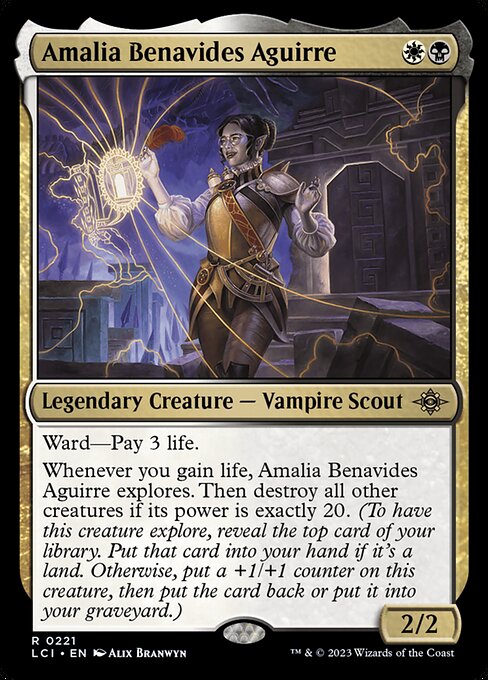 Amalia Benavides Aguirre
 Kellan, Daring Traveler // Journey On
 Sanguine Evangelist
 Calamitous Cave-In
 Cavernous Maw
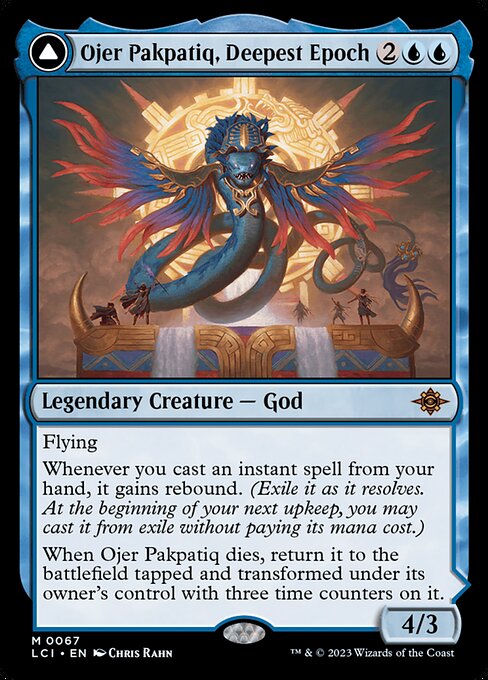 Ojer Pakpatiq, Deepest Epoch // Temple of Cyclical Time
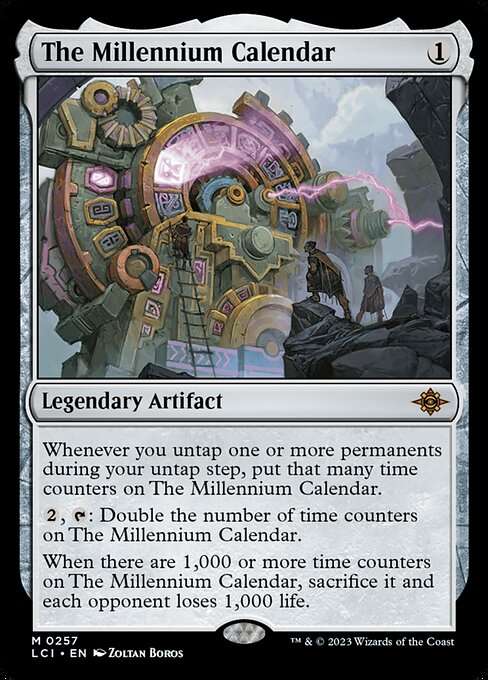 The Millennium Calendar
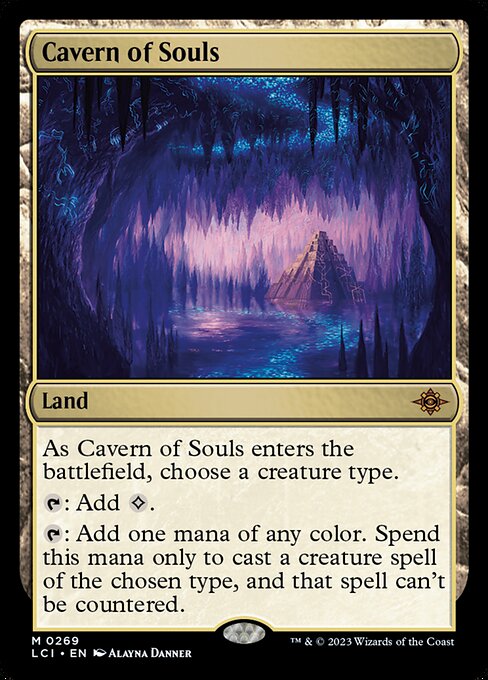 Cavern of Souls
 Chimil, the Inner Sun
 Confounding Riddle
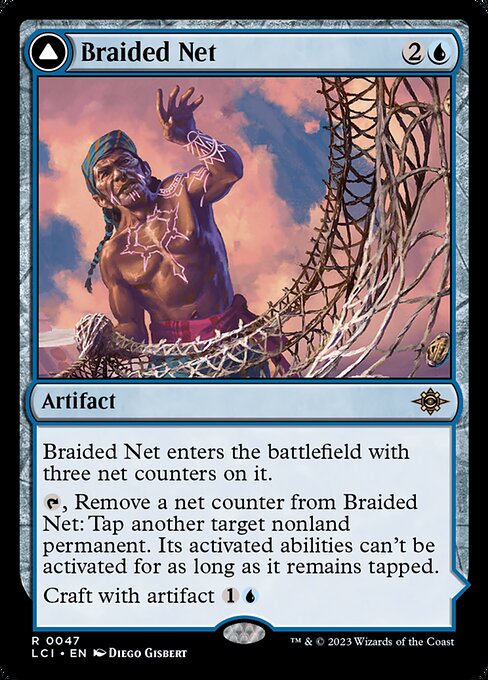 Braided Net // Braided Quipu
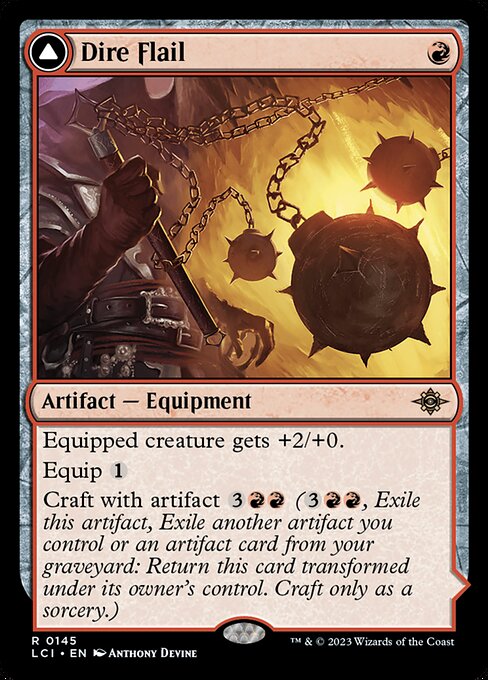 Dire Flail // Dire Blunderbuss
 Careening Mine Cart
 Magmatic Galleon
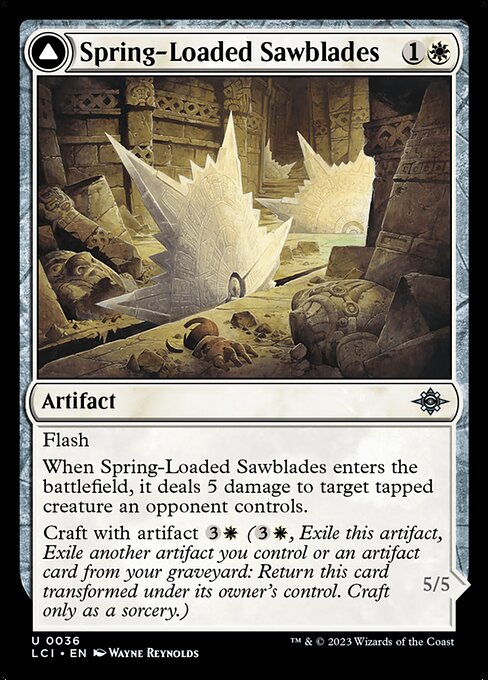 Spring-Loaded Sawblades // Bladewheel Chariot
 Marauding Brinefang
 Nurturing Bristleback
 Rampaging Spiketail
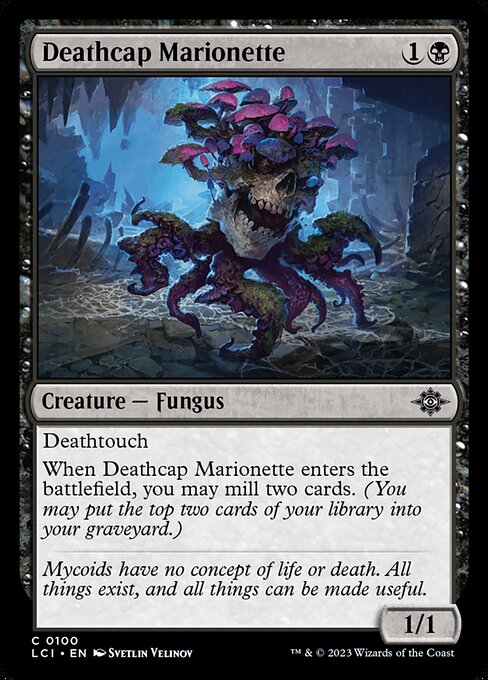 Deathcap Marionette
 Grasping Shadows // Shadows' Lair
 Hunter's Blowgun
 Shipwreck Sentry
 Basking Capybara
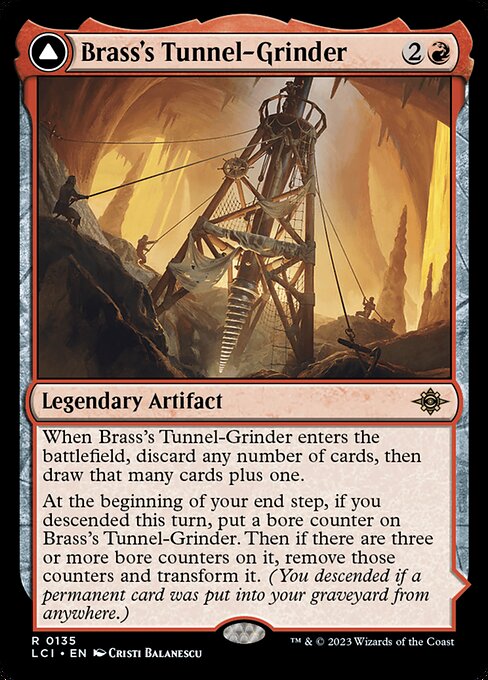 Brass's Tunnel-Grinder // Tecutlan, the Searing Rift
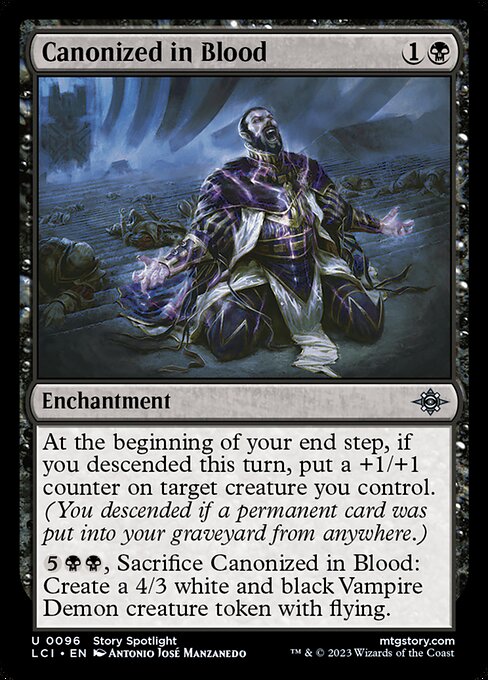 Canonized in Blood
 Abrade
 Bitter Triumph
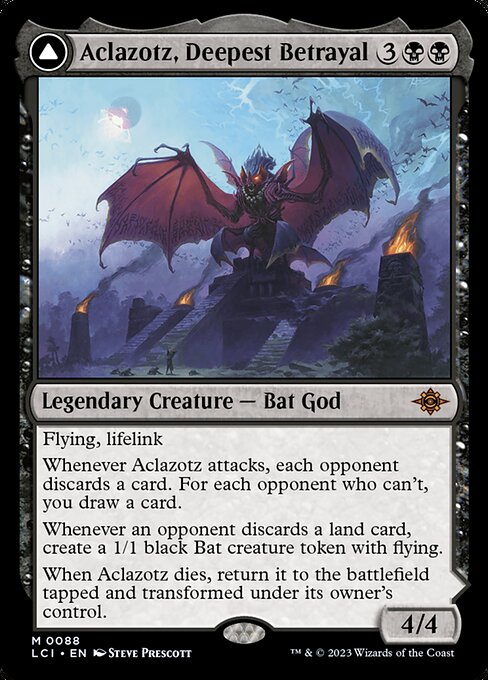 Aclazotz, Deepest Betrayal // Temple of the Dead
 Ancestral Reminiscence
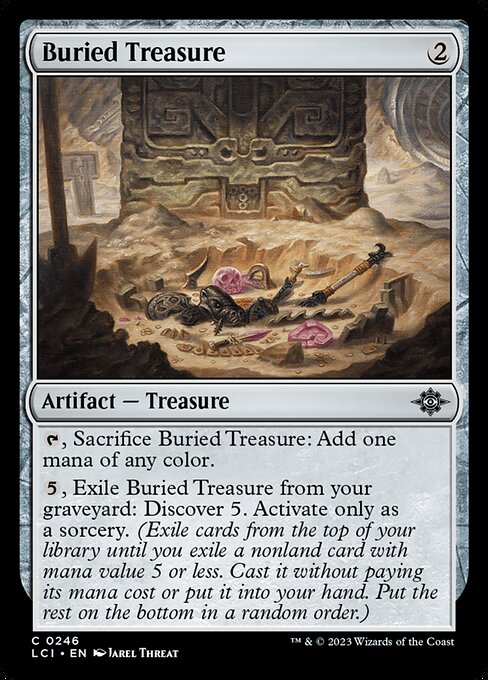 Buried Treasure
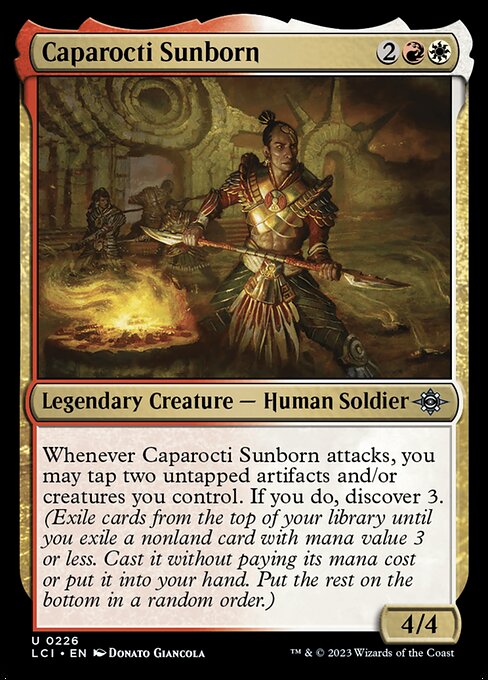 Caparocti Sunborn
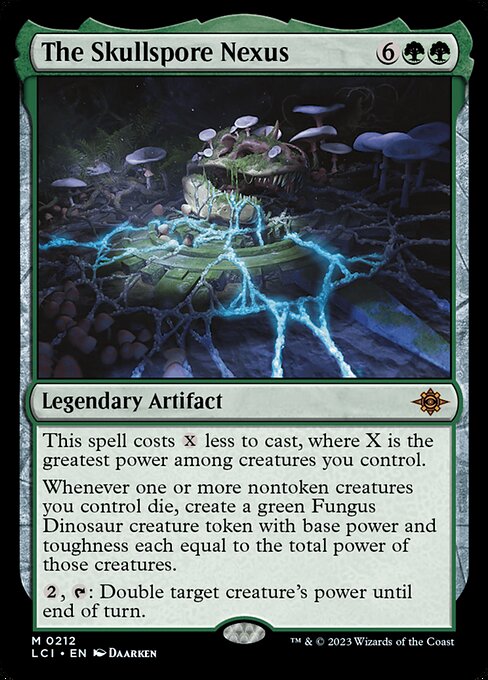 The Skullspore Nexus
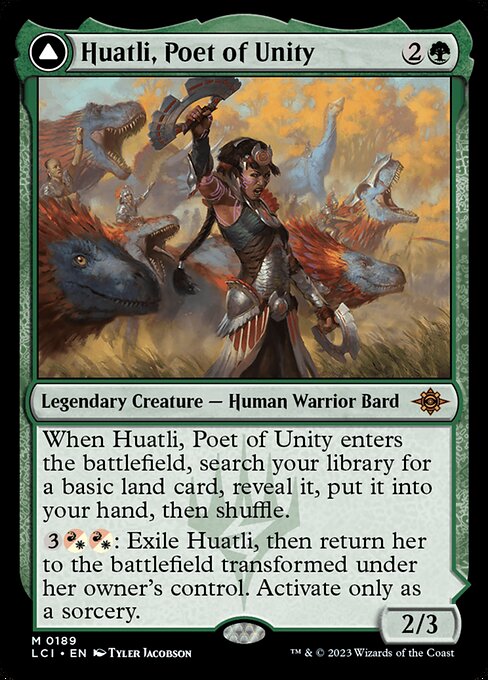 Huatli, Poet of Unity // Roar of the Fifth People
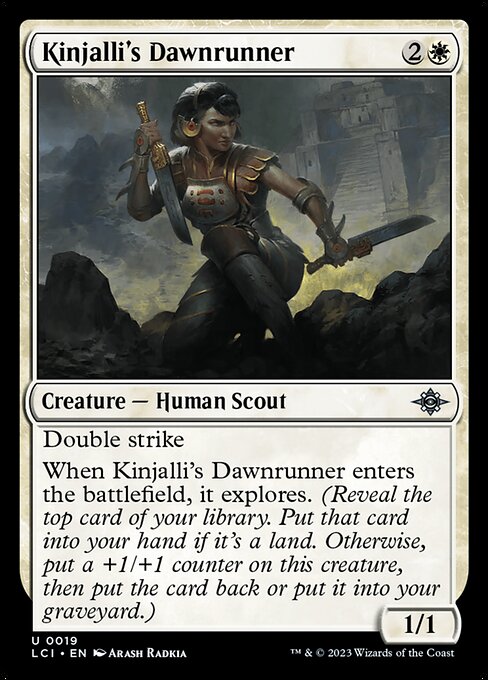 Kinjalli's Dawnrunner
 Dead Weight
 Eaten by Piranhas
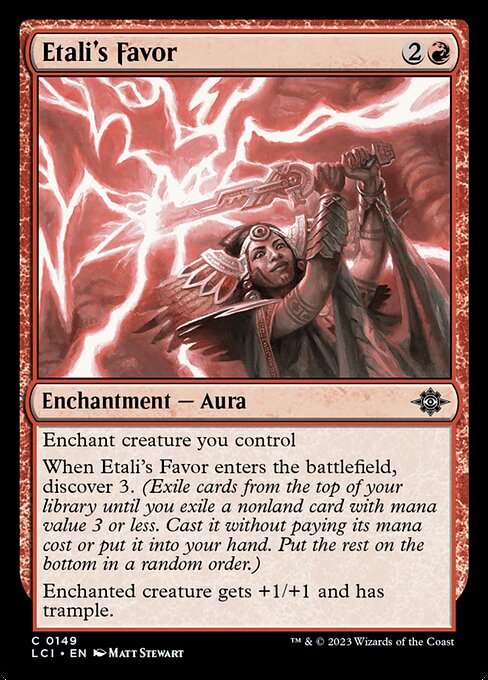 Etali's Favor
 Bloodthorn Flail
 Deconstruction Hammer
 Diamond Pick-Axe
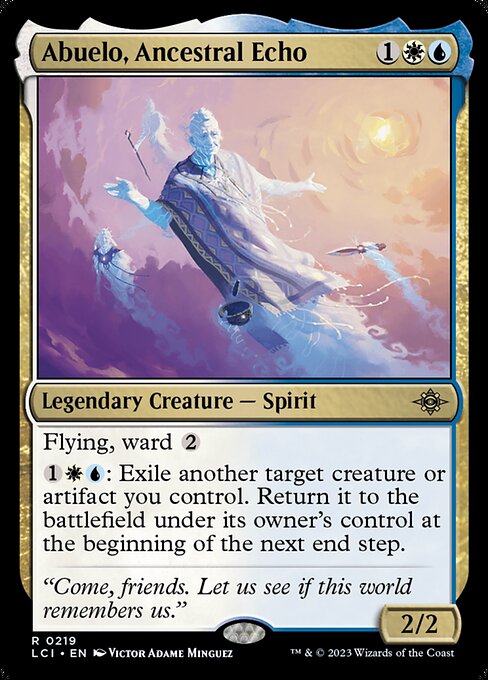 Abuelo, Ancestral Echo
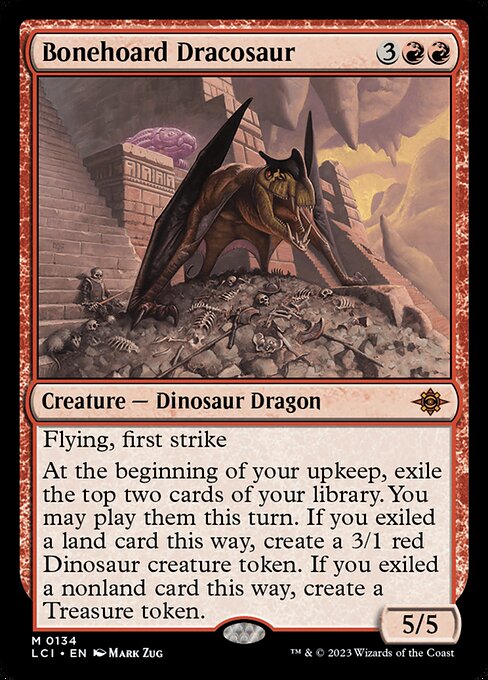 Bonehoard Dracosaur
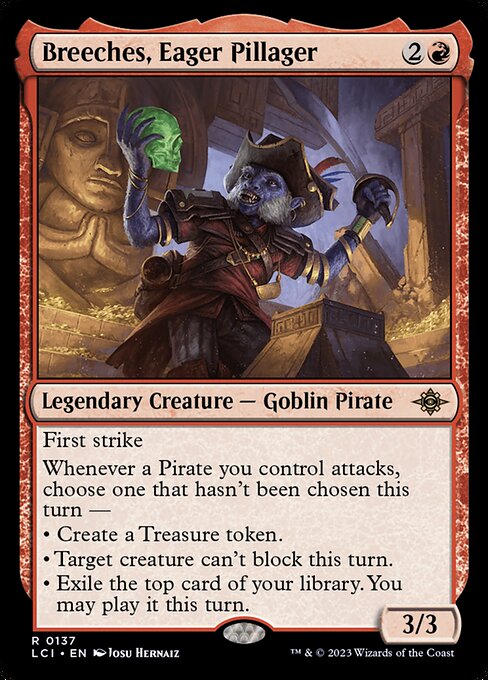 Breeches, Eager Pillager
 Brackish Blunder
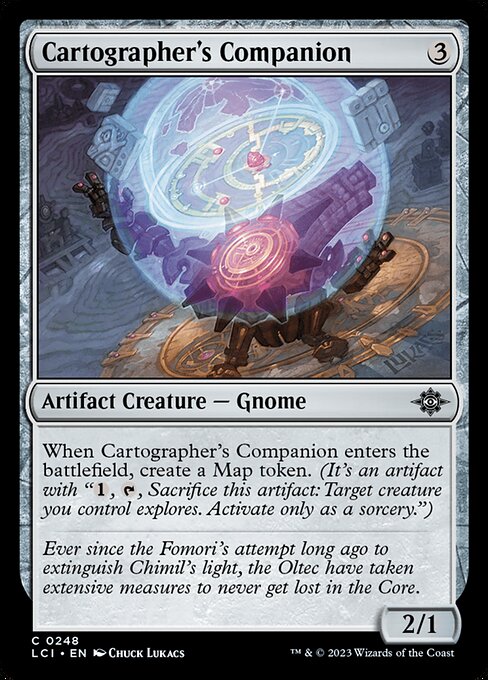 Cartographer's Companion
 Malamet Battle Glyph
 Queen's Bay Paladin
 Soulcoil Viper
 Ancestors' Aid
 Cogwork Wrestler
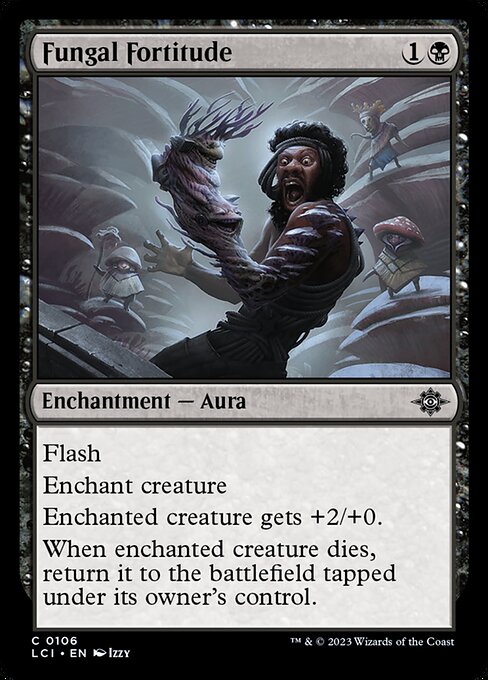 Fungal Fortitude
 Self-Reflection
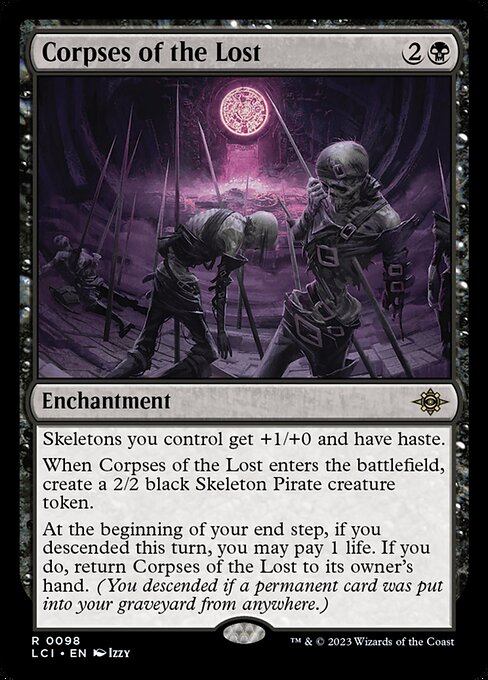 Corpses of the Lost
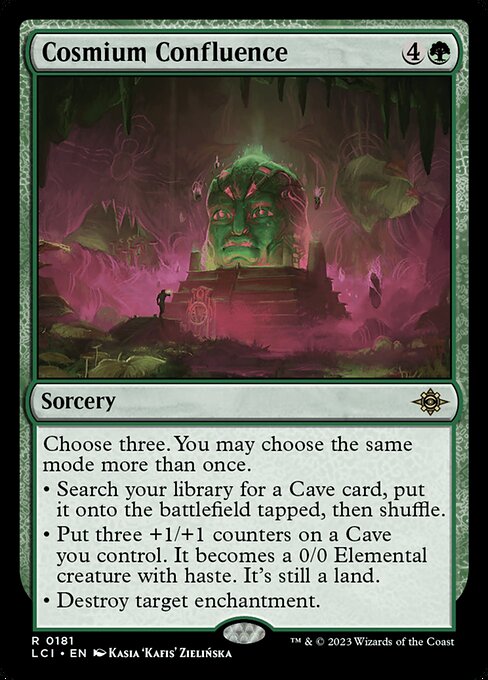 Cosmium Confluence
 Disturbed Slumber
 Bedrock Tortoise
 Deeproot Pilgrimage
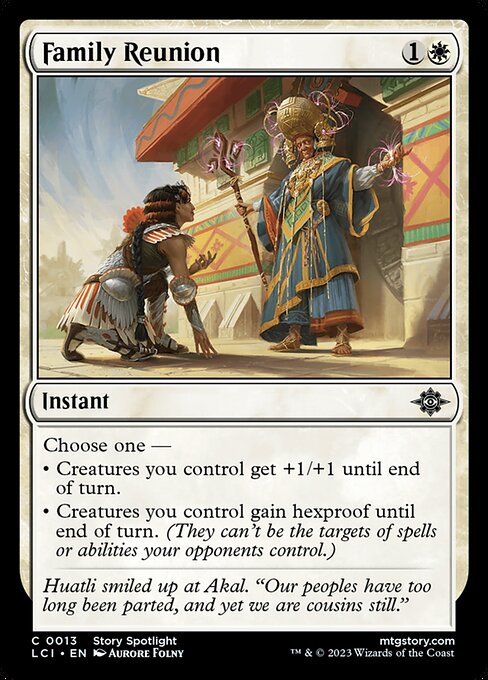 Family Reunion
 Vanguard of the Rose
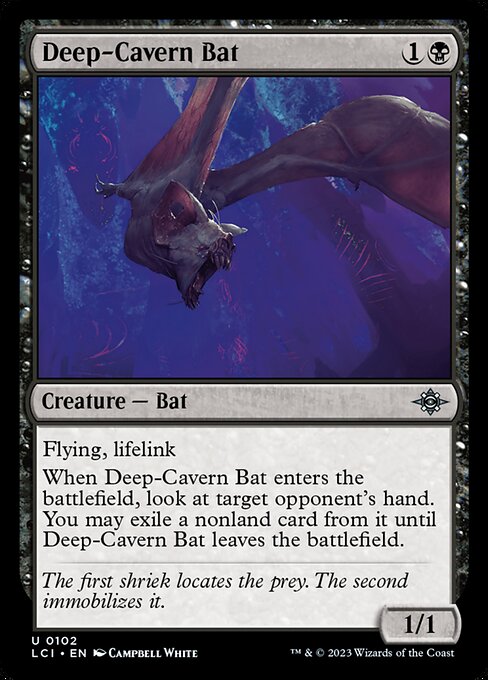 Deep-Cavern Bat
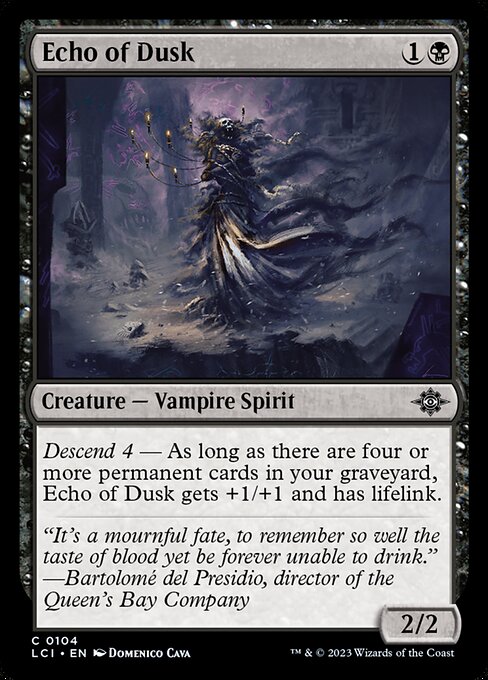 Echo of Dusk
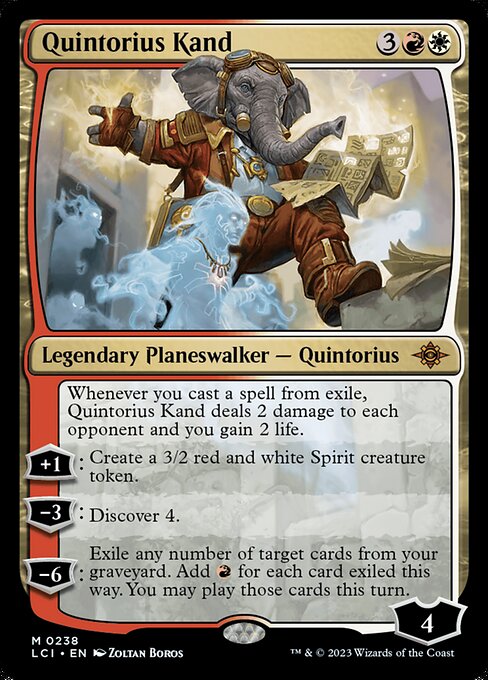 Quintorius Kand
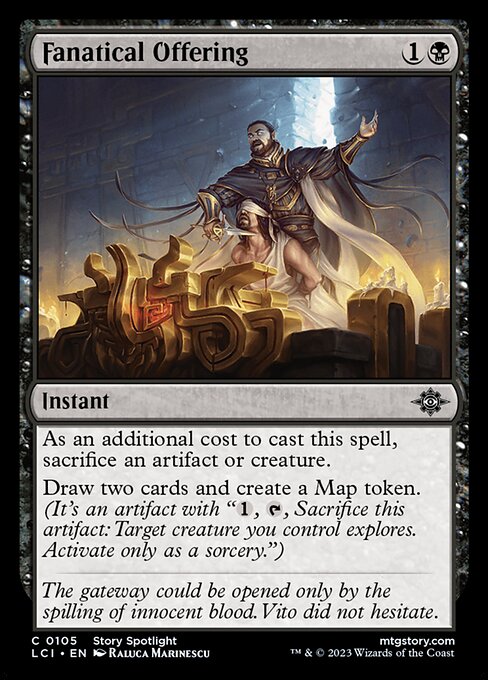 Fanatical Offering
 Deep Goblin Skulltaker
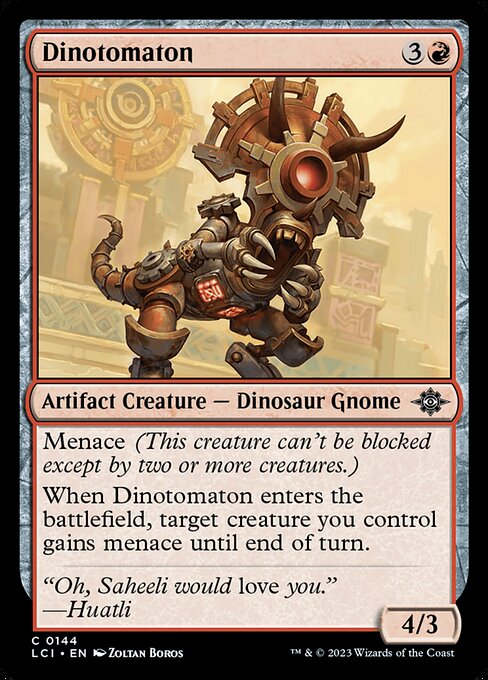 Dinotomaton
 Restless Vents
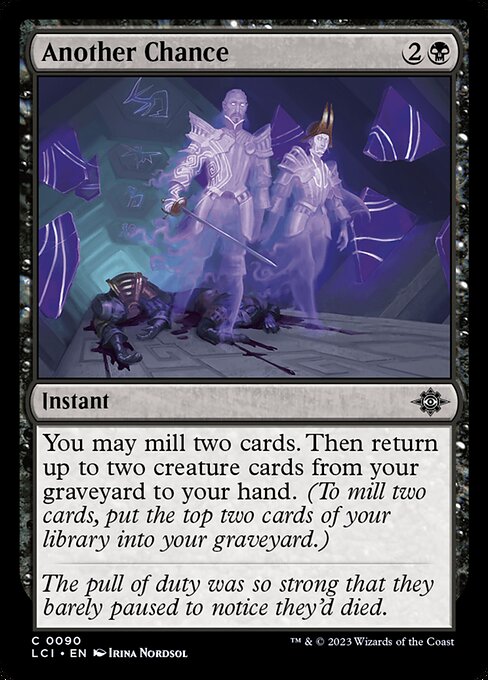 Another Chance
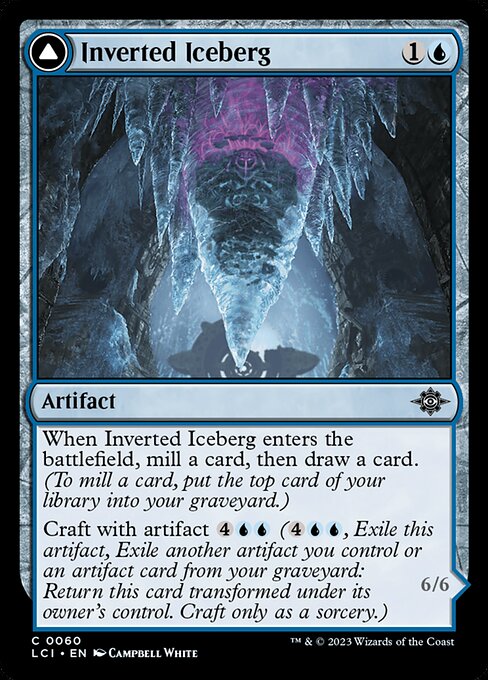 Inverted Iceberg // Iceberg Titan
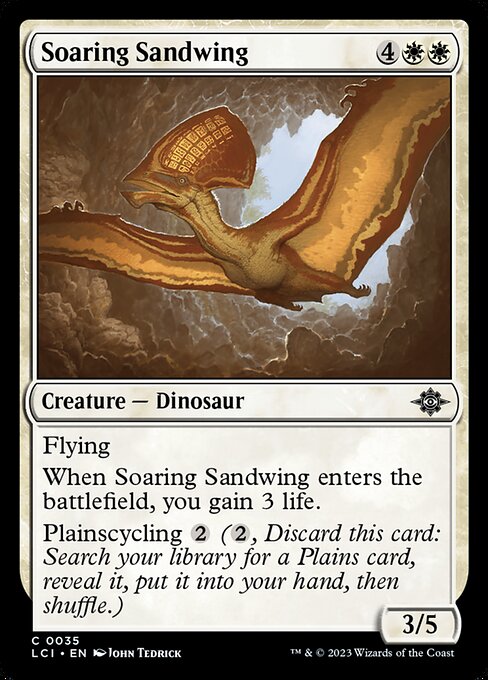 Soaring Sandwing
 Colossadactyl
 Abyssal Gorestalker
 Acolyte of Aclazotz
 Attentive Sunscribe
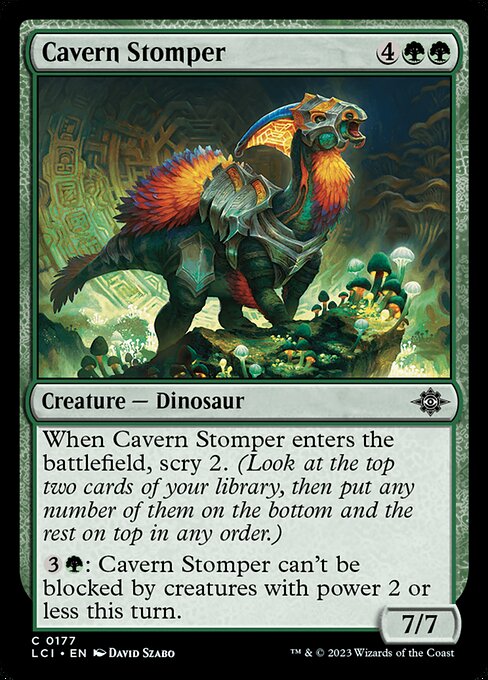 Cavern Stomper
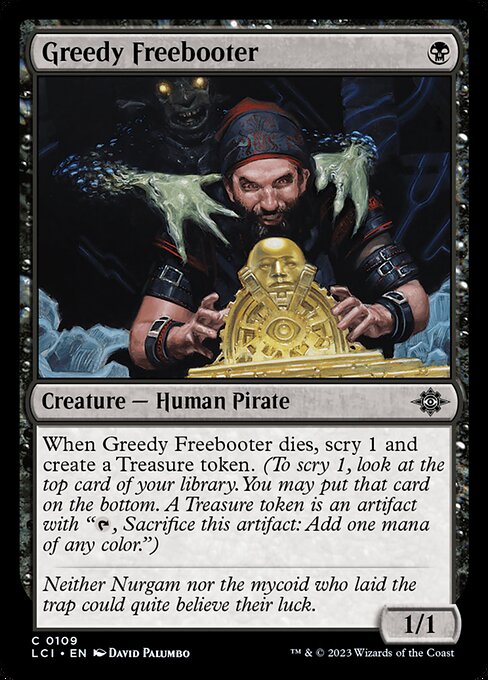 Greedy Freebooter
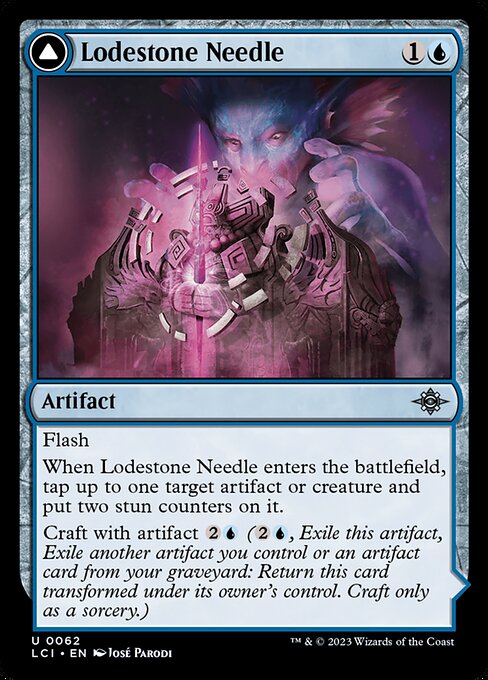 Lodestone Needle // Guidestone Compass
 Pugnacious Hammerskull
 Waylaying Pirates
 Starving Revenant
 Acrobatic Leap
 Belligerent Yearling
 Child of the Volcano
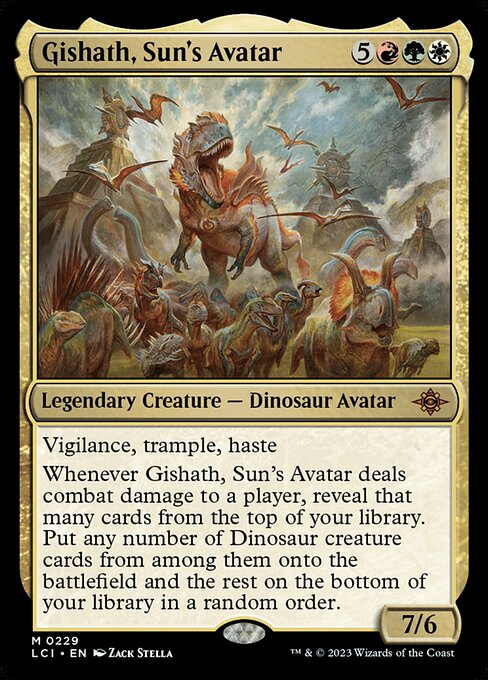 Gishath, Sun's Avatar
 Hermitic Nautilus
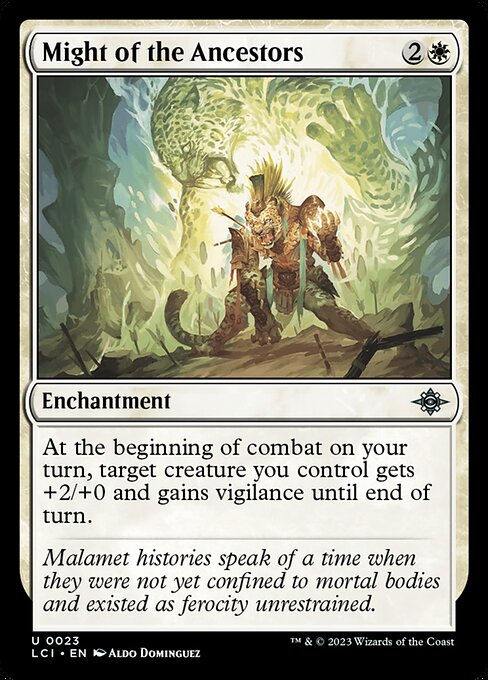 Might of the Ancestors
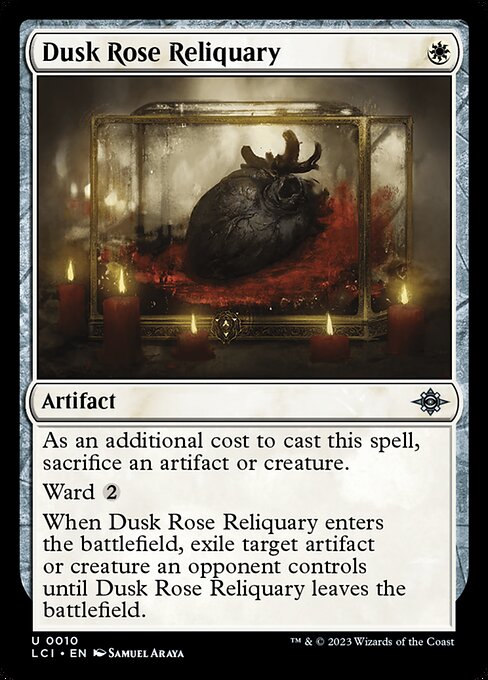 Dusk Rose Reliquary