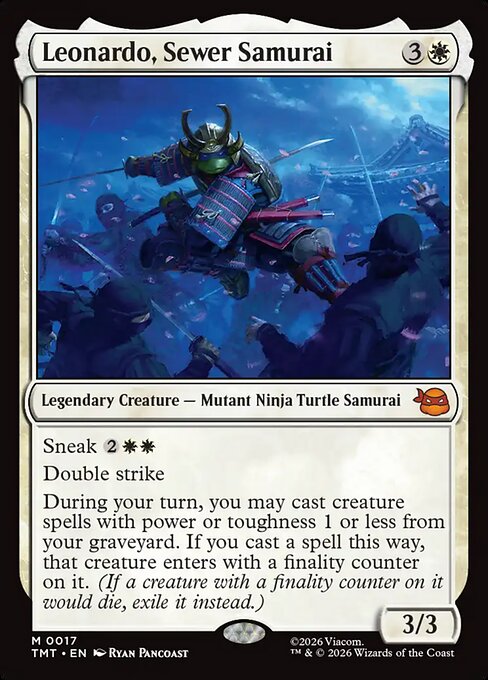
Leonardo, Sewer Samurai
Mythic · Legendary Creature — Mutant Ninja Turtle Samurai · At the table
Let an evasive creature through, return it while casting the Ninja, and replay its useful enter or leave effect later.
The set’s mechanics with worked examples, then every word on the cards.
During your own declare-blockers step, after blocks, cast for the sneak cost and return an unblocked attacker you control to hand.
Let an evasive creature through, return it while casting the Ninja, and replay its useful enter or leave effect later.
A Mutagen token is an artifact you can pay one mana to tap and sacrifice, adding a +1/+1 counter to a target creature at sorcery speed.

Use a spare main-phase mana to grow a creature, while keeping in mind artifact-count rewards.
These abilities check whether a permanent left the battlefield while you controlled it this turn.

Sacrifice a Food or Mutagen before casting Foot Mystic to receive its Ninja token.
Alliance abilities trigger when another creature enters under your control.

A creature that makes a second body provides two alliance events.
A Food token is an artifact with a two-mana, tap-and-sacrifice ability that gains three life.

Spend the Food only when its life or departure is worth more than retaining an artifact.
A Class starts at level 1. Its level abilities unlock additional text at sorcery speed.

Develop enough creatures before spending a whole turn on a level that needs them.
Every word on the cards and in the deck plans, defined once. Find a term, read its wording, then see it on a card.
A +1/+1 counter adds one power and one toughness; a −1/−1 counter subtracts one of each. These counters stay until removed or the object changes zones.
Watch out: If a permanent has both kinds, matching pairs are removed as a state-based action. A temporary +1/+1 effect is not a counter.
Reduce the generic part of this spell’s cost by one for each permanent of the specified kind you control.
Watch out: It does not reduce the colored mana symbols. Check exactly what the card has affinity for.
Alliance abilities trigger when another creature enters under your control.
An ability-word label for abilities that discard the card from your hand as a cost. Follow its printed cost and effect; this is an activated ability, not casting the card.
These named counters track whatever the card’s abilities say. Their names alone do not give a universal bonus or penalty.
Watch out: For example, vanishing uses time counters as a countdown. Read the particular card before deciding what adding another counter will do.
A Class starts at level 1. Its level abilities unlock additional text at sorcery speed.
To counter a spell or ability is to remove it from the stack without its effects resolving. A countered spell normally goes to its owner’s graveyard.
Watch out: This use of “counter” is different from placing a marker such as a +1/+1 counter on a card.
Tap other untapped creatures you control with enough total power to turn this Vehicle into an artifact creature until the turn ends.
Watch out: The crew creatures do not become the Vehicle’s attackers. A newly played Vehicle still needs haste to attack that turn.
Enough useful low-cost plays to act before your expensive threats.
From your hand, pay the cycling cost and discard this card to draw a card.
Watch out: Cycling is an activated ability, not casting the card. Typecycling searches for a specified kind of card instead.
Any positive amount of damage this source deals to a creature is enough to make that damage lethal.
Watch out: It works with a fight or other noncombat damage. Indestructible still prevents destruction.
Move a permanent from the battlefield to its owner’s graveyard because an effect or lethal damage destroys it.
Watch out: Indestructible stops destruction. Sacrificing, exiling, and reducing toughness to 0 are different ways for a creature to leave.
These abilities check whether a permanent left the battlefield while you controlled it this turn.
Move a card from your hand to your graveyard.
Watch out: Discarding is not casting. It does not pay the card’s mana cost or produce its normal spell effect.
Follow what is being doubled. Doubling power or toughness adds a modifier based on its current value; doubling counters adds as many of that kind as are already present.
This creature deals combat damage in the first-strike damage step and again in the normal damage step if it is still in combat.
Watch out: If its blocker dies in the first step, a blocked attacker does not hit the player in the second step unless an ability such as trample allows it.
An Aura’s enchant line tells you what it may be attached to.
Watch out: An Aura cast as a spell targets what it will enchant. If it later becomes illegally attached, it normally goes to the graveyard.
An ability-word label for abilities that trigger when this creature is dealt damage. Follow the effect printed after the label.
Pay the equip cost to attach this Equipment to a target creature you control. Normally, activate equip only in your main phase when the stack is empty.
Watch out: The Equipment usually stays on the battlefield when the creature leaves. Moving it to another creature normally costs another equip activation.
Move the object to the exile zone. It is separate from the graveyard.
Watch out: A card in exile cannot normally be played. You need a rule or effect giving permission, such as a resolved Adventure.
The two creatures each deal damage equal to their power to the other at the same time.
Watch out: This is not combat. First strike and double strike do not add damage steps; deathtouch and lifelink still affect damage.
If a permanent with a finality counter would go from the battlefield to a graveyard, exile it instead.
Watch out: It does not die when this replacement sends it to exile, so ordinary “dies” abilities do not trigger.
This creature deals combat damage in an earlier step, before creatures without first strike or double strike.
Watch out: A creature killed in that early damage step usually cannot deal its normal combat damage.
You may cast this spell when you could cast an instant, including during another player’s turn when you have priority.
Watch out: Flash changes when you may cast it. It does not let you cast from a different zone or avoid its costs.
An attacking creature with flying can be blocked only by creatures with flying or reach.
Watch out: A flying creature can block a creature without flying.
A standard Food token is an artifact with an ability costing two mana, tapping it, and sacrificing it to gain 3 life.
Watch out: Food is also an artifact type. Turning a card into a Food follows that effect’s text; the type alone does not grant an ability.
A Food token is an artifact with a two-mana, tap-and-sacrifice ability that gains three life.
Pay the printed cycling cost and discard this card to search for a Forest card, reveal it, put it into your hand and shuffle. This does not put the land onto the battlefield.
This permanent enters with the stated number of +1/+1 counters. When another creature enters, you may move one of its +1/+1 counters onto that creature.
This creature may attack and use abilities with the tap or untap symbol even if you have not controlled it since your turn began.
Watch out: It still needs to be untapped to attack or pay a tap cost.
A permanent with hexproof cannot be targeted by spells or abilities its controller’s opponents control.
Watch out: Its controller may target it. Effects that do not target can still affect it.
Each split mana symbol can be paid using either half. For example, {W/U} costs one white or one blue mana; {2/B} costs two mana of any type or one black mana.
Watch out: Choose separately for each symbol. A {W/U} card is both white and blue even if you use only one color to cast it.
This permanent cannot be destroyed by lethal damage or an effect that says “destroy.”
Watch out: It can still be exiled or sacrificed. A creature with toughness 0 or less still goes to the graveyard.
Pay the printed cycling cost and discard this card to search for an Island card, reveal it, put it into your hand and shuffle. This does not put the land onto the battlefield.
A keyword counter grants its named ability, such as trample, to the object it is on.
Watch out: A trample counter is not a +1/+1 counter. The named ability and the creature’s size are separate.
As you cast the spell, you may pay its extra kicker cost. The card tells you what changes if you do.
Watch out: You decide and pay while casting. You do not get to add kicker after the spell has resolved.
This label groups abilities that reward a land entering under your control. The rest of each card tells you its effect.
Watch out: A land entering from a spell can trigger landfall too. The label itself adds no rules; read the actual ability.
When this source deals damage, its controller gains that much life at the same time.
Watch out: This also works for noncombat damage. It uses the damage actually dealt, not simply the creature’s printed power.
This attacking creature cannot be blocked by just one creature; at least two blockers are needed.
Watch out: It can still go unblocked. Losing one blocker after blocks are declared does not undo the original block.
Put the stated number of cards from the top of the named player’s library into that player’s graveyard.
Watch out: Milling is not drawing. An empty library makes you lose when you must draw from it, not merely when its last card is milled.
This permanent enters with the stated number of +1/+1 counters. When it goes from the battlefield to a graveyard, you may put a +1/+1 counter on a target artifact creature for each +1/+1 counter it had.
A Mutagen token is an artifact you can pay one mana to tap and sacrifice, adding a +1/+1 counter to a target creature at sorcery speed.
Pay the printed cycling cost and discard this card to search for a Plains card, reveal it, put it into your hand and shuffle. This does not put the land onto the battlefield.
This creature may block creatures with flying.
Watch out: Reach does not give it flying or make its own attacks harder to block.
Cast this card from your graveyard by discarding a land card in addition to paying its normal costs. Retrace does not itself exile the spell afterward.
Move a permanent you control from the battlefield to its owner’s graveyard.
Watch out: Sacrifice is not destruction: indestructible does not stop it. You cannot sacrifice a teammate’s permanent unless an effect specifically permits it.
A Saga normally enters with a lore counter and gains another as your first main phase begins. Reaching chapter numbers triggers those chapter abilities.
Watch out: The new lore counter is not added during upkeep. When its final chapter ability is no longer on the stack, you normally sacrifice the Saga.
Look at the stated number of cards from the top of your library. Put any number on the bottom and the rest back on top, choosing their order.
Watch out: Scry does not draw a card. Cards you move to the bottom do not go to the graveyard.
Repeated useful late cards may suggest an open color; one card is weak evidence.
During your own declare-blockers step, after blocks, cast for the sneak cost and return an unblocked attacker you control to hand.
If a permanent with a stun counter would untap, remove one stun counter instead and leave it tapped.
Watch out: The counter does not tap an untapped permanent by itself. Several stun counters can stop several separate untaps.
The actual cards and mana that let a payoff work.
Look at the stated number of cards from the top of your library. Put any number into your graveyard and the rest back on top in your chosen order.
Watch out: Surveil does not draw a card. Unlike scry, unwanted cards go to the graveyard instead of the bottom.
Pay the printed cycling cost and discard this card to search for a Swamp card, reveal it, put it into your hand and shuffle. This does not put the land onto the battlefield.
Tap means turn a permanent sideways; untap means return it upright. A tap symbol in a cost means you must tap that permanent to pay.
Watch out: Being tapped by another effect does not activate an ability or produce mana. Creatures normally cannot pay their own tap-symbol costs until you have controlled them since your turn began.
An attacking creature can assign excess combat damage to what it is attacking after assigning lethal damage to every blocker.
Watch out: It does not automatically send all damage past a small blocker. Trample on a blocking creature does not send damage to the attacking player.
From your hand, pay the listed cost and discard the card. Search your library for the named kind of card, reveal it, put it into your hand, then shuffle.
Watch out: Basic landcycling finds a basic land. Mountaincycling finds a Mountain card; Halflingcycling finds a Halfling card. This does not put the found card onto the battlefield.
Attacking does not tap this creature.
Watch out: It must still be untapped to be declared as an attacker. Vigilance does not remove summoning sickness.
When an opponent’s spell or ability targets this permanent, ward triggers. That spell or ability is countered unless the opponent pays the ward cost.
Watch out: Ward is not hexproof: the opponent can target it and choose whether to pay. An effect that does not target does not trigger ward.
 Action News Crew
 Agent Bishop, Man in Black
 Arcbound Ravager
 Don & Raph, Hard Science
 Krang, Master Mind
 East Wind Avatar
 EPF Point Squad
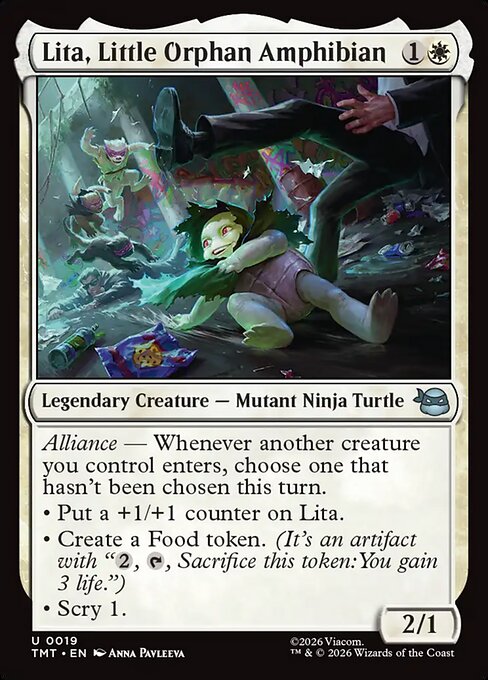 Lita, Little Orphan Amphibian
 Umezawa's Jitte
 Weather Maker
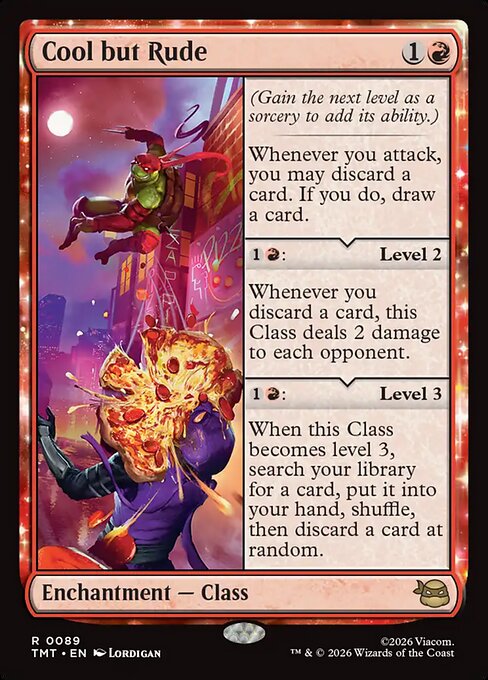 Cool but Rude
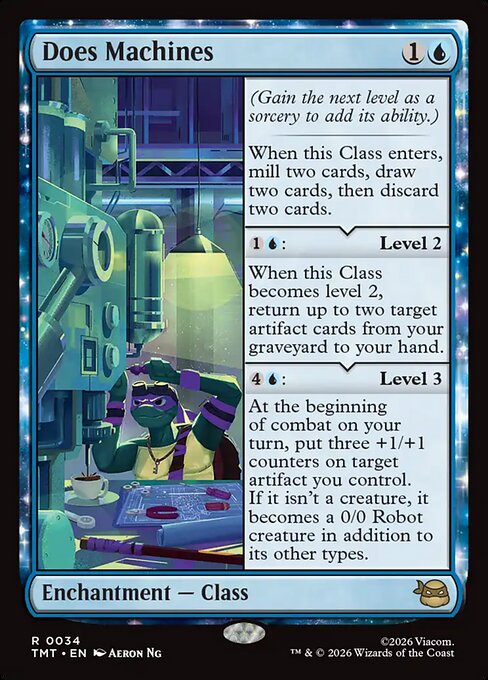 Does Machines
 Party Dude
 Fugitive Droid
 Negate
 Ooze Spill
 Turtle Blimp
 Turtle Van
 Bebop, Warthog Warrior
 Jennika, Bad Apple Big Sister
 Rocksteady, Crash Courser
 Dark Leo & Shredder
 Frog Butler
 Madame Null, Power Broker
 Anchovy & Banana Pizza
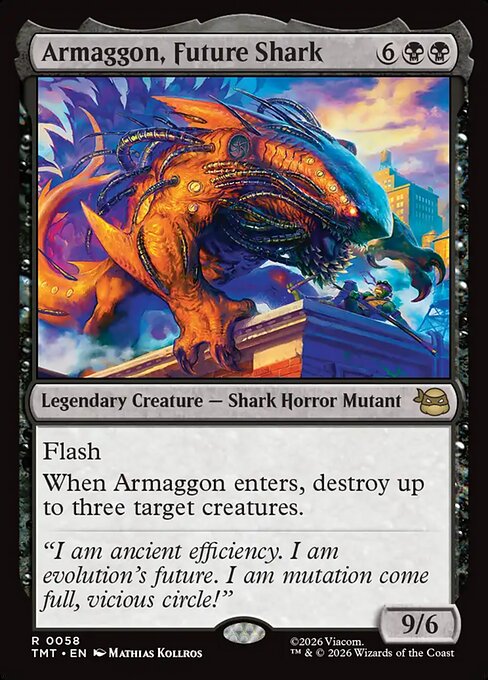 Armaggon, Future Shark
 Foot Elite
 Insectoid Exterminator
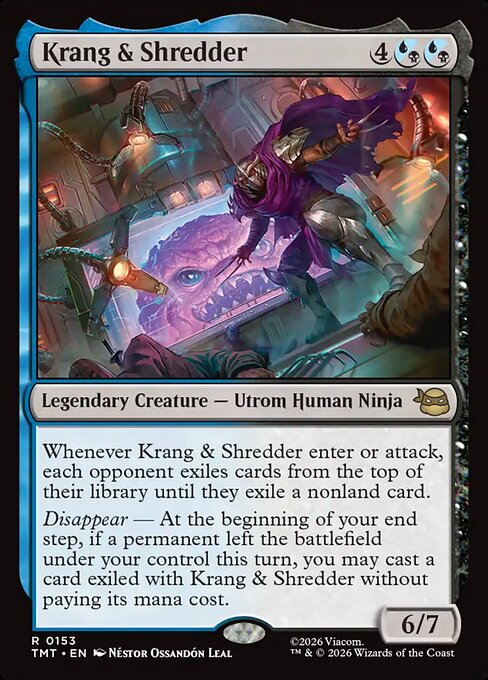 Krang & Shredder
 April, Reporter of the Weird
 Bebop & Rocksteady
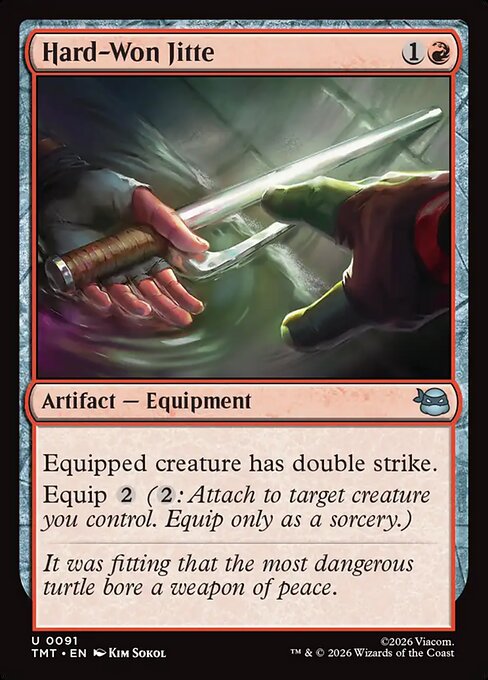 Hard-Won Jitte
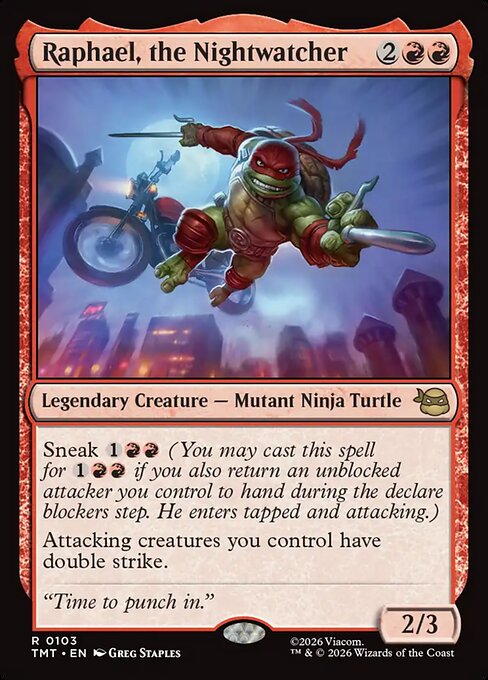 Raphael, the Nightwatcher
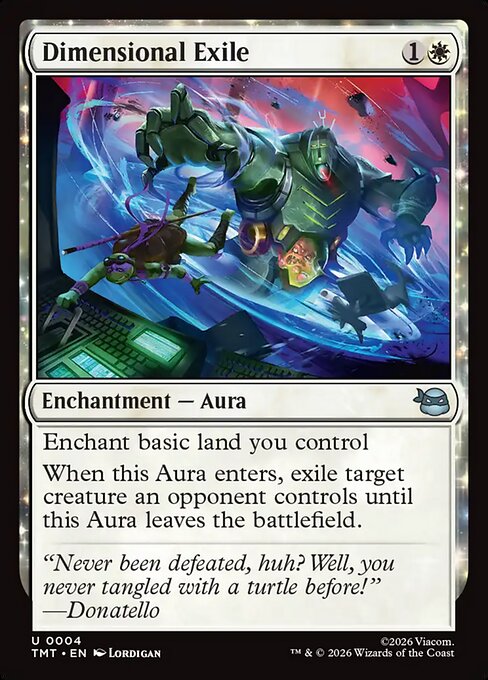 Dimensional Exile
 Retro-Mutation
 Uneasy Alliance
 Raphael, Ninja Destroyer
 Silverclad Ferocidons
 Bespoke Bō
 Conqueror's Flail
 Bot Bashing Time
 Death in the Family
 Novel Nunchaku
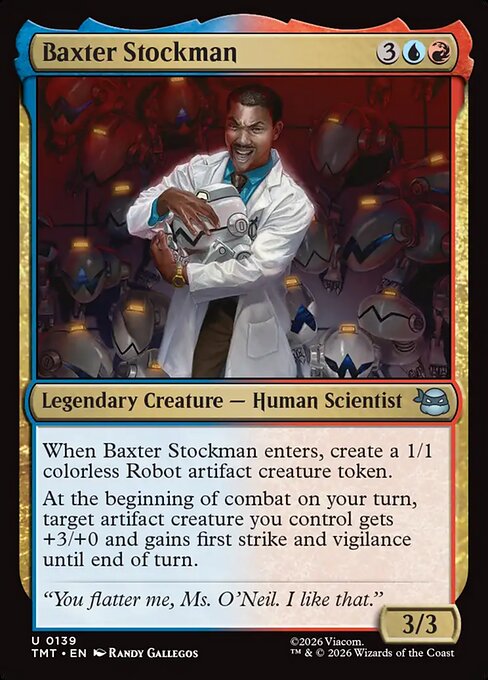 Baxter Stockman
 Leonardo, Leader in Blue
 Mouser Attack!
 Guac & Marshmallow Pizza
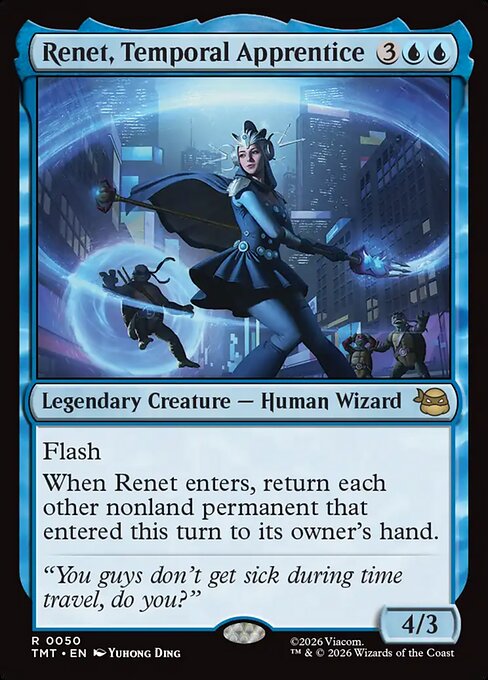 Renet, Temporal Apprentice
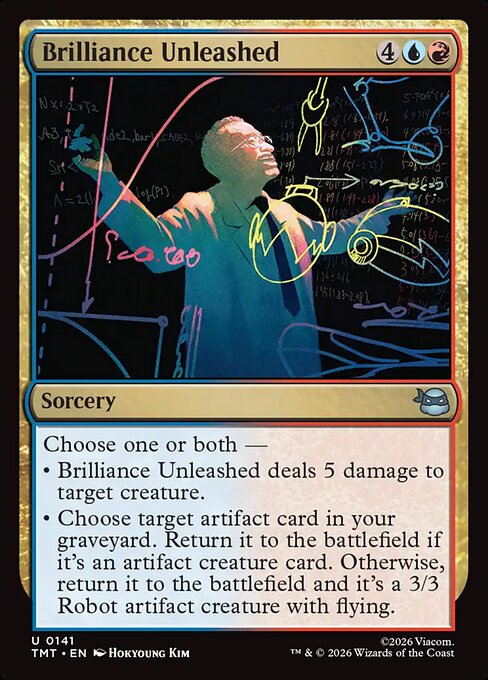 Brilliance Unleashed
 Buzz Bots
 Donatello, Way with Machines
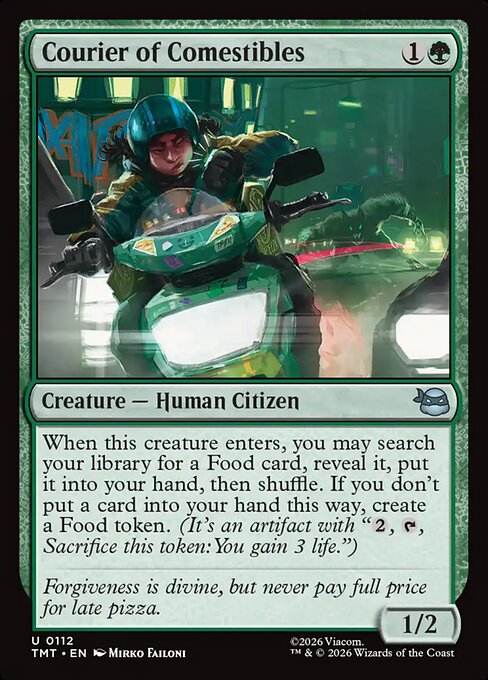 Courier of Comestibles
 Featherbrained Filcher
 Cytoplast Manipulator
 Broadcast Takeover
 Casey Jones, Jury-Rig Justiciar
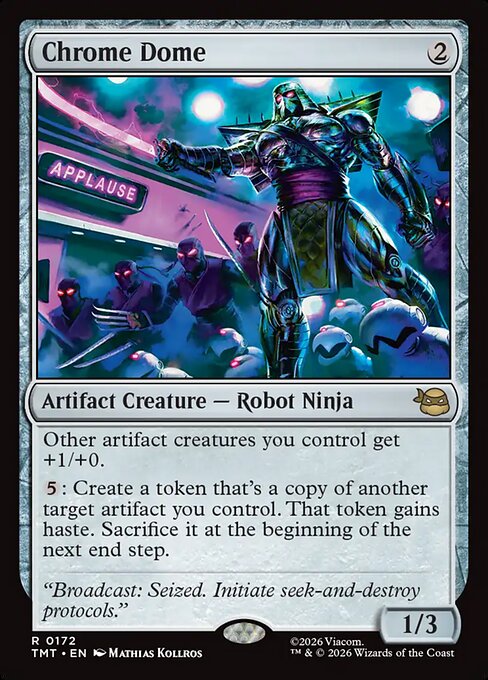 Chrome Dome
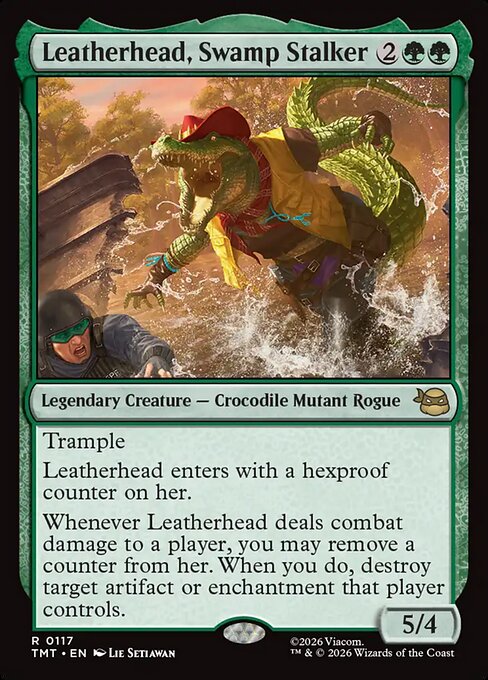 Leatherhead, Swamp Stalker
 Mondo Gecko
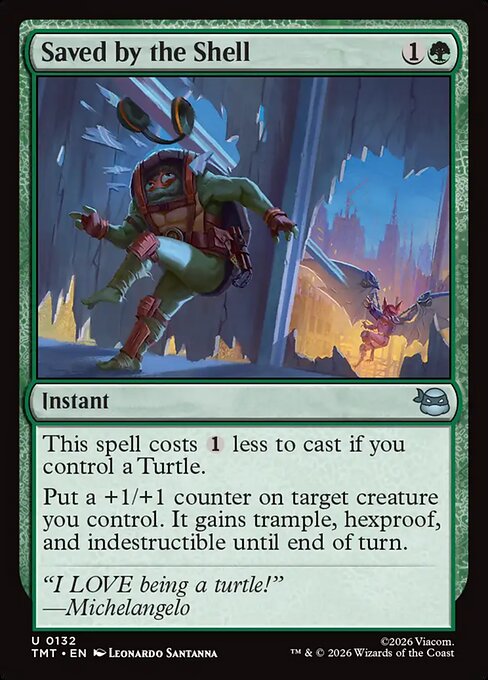 Saved by the Shell
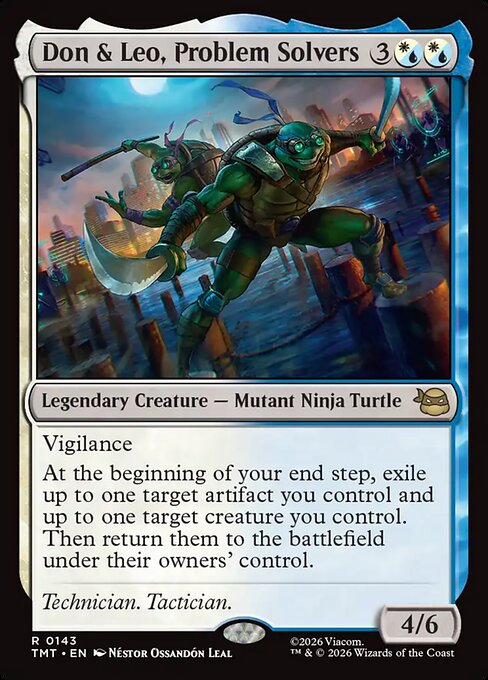 Don & Leo, Problem Solvers
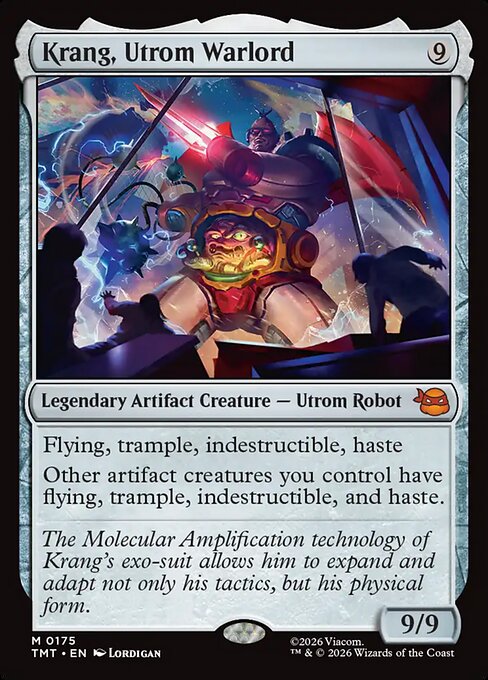 Krang, Utrom Warlord
 Old Hob, Alleycat Blues
 Stockman, Mad Fly-entist
 Stomped by the Foot
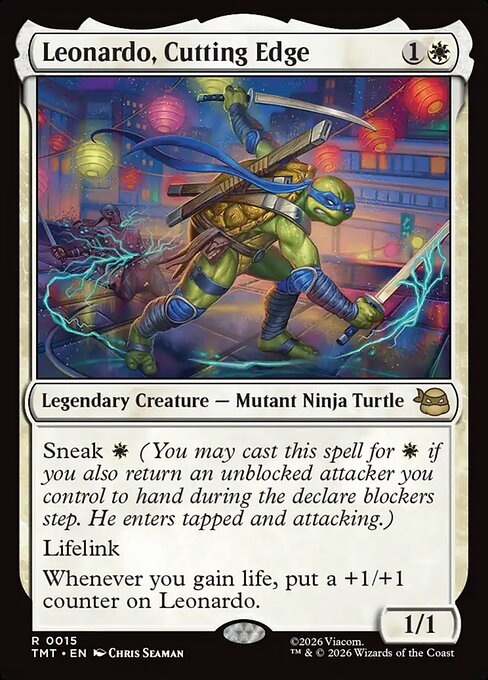 Leonardo, Cutting Edge
 Shadowspear
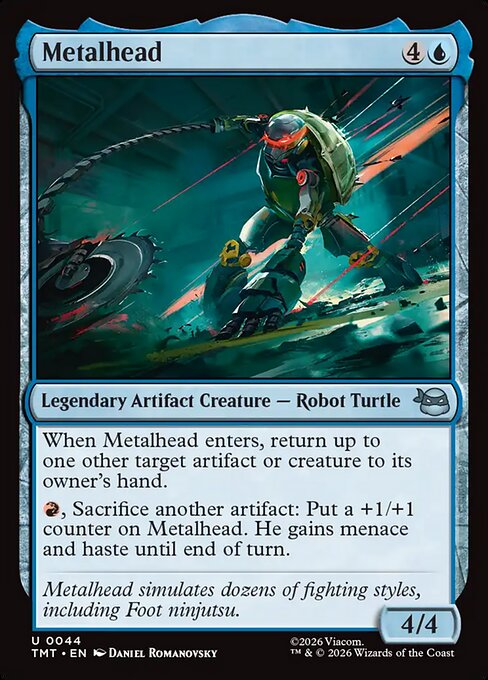 Metalhead
 Ashcoat of the Shadow Swarm
 Kitsune's Technique
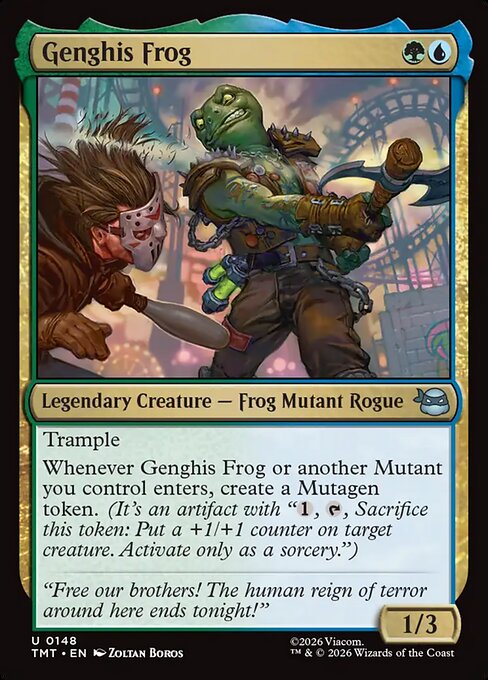 Genghis Frog
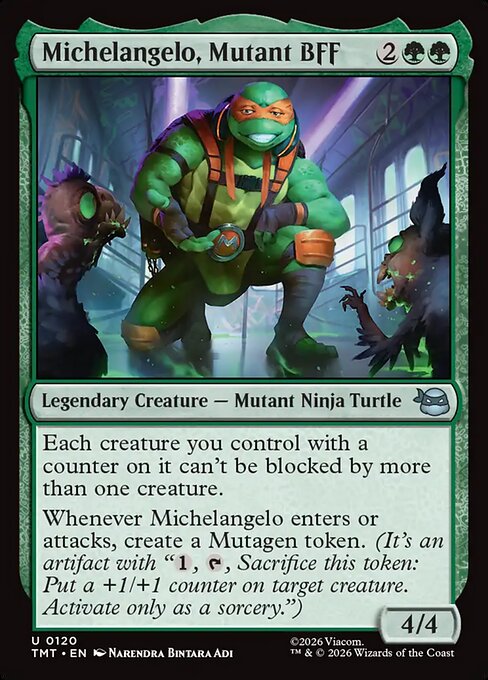 Michelangelo, Mutant BFF
 Mona Lisa, Science Geek
 Primordial Pachyderm
 Waves of Aggression
 The Cloning of Shredder
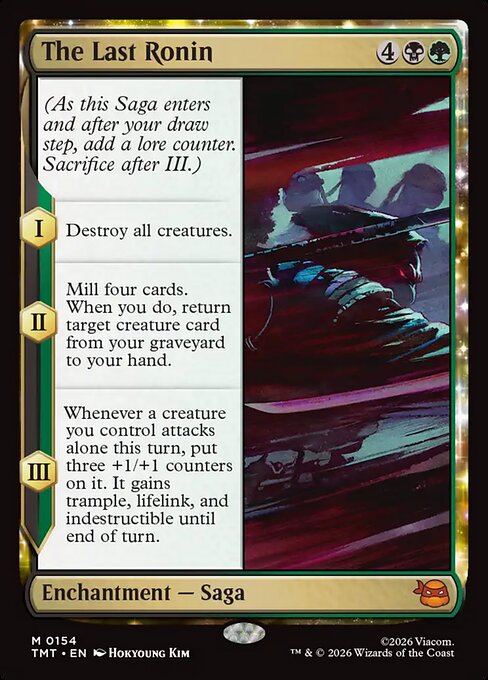 The Last Ronin
 April O'Neil, Kunoichi Trainee
 Dream Beavers
 Hamato Guardian Stance
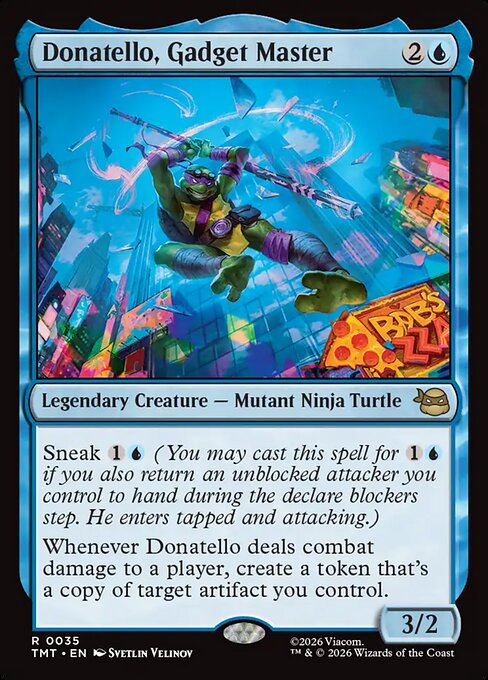 Donatello, Gadget Master
 Donatello's Technique
 Utrom Scientists
 Undercity Sewers
 General Traag, Heart of Stone
 Groundchuck & Dirtbag
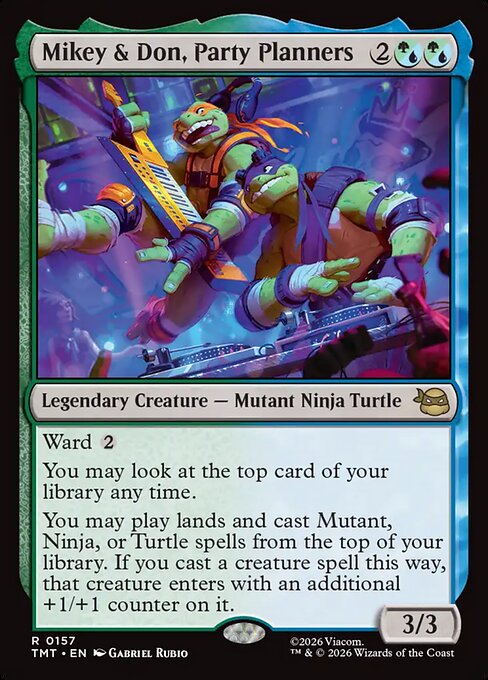 Mikey & Don, Party Planners
 Punk Frogs